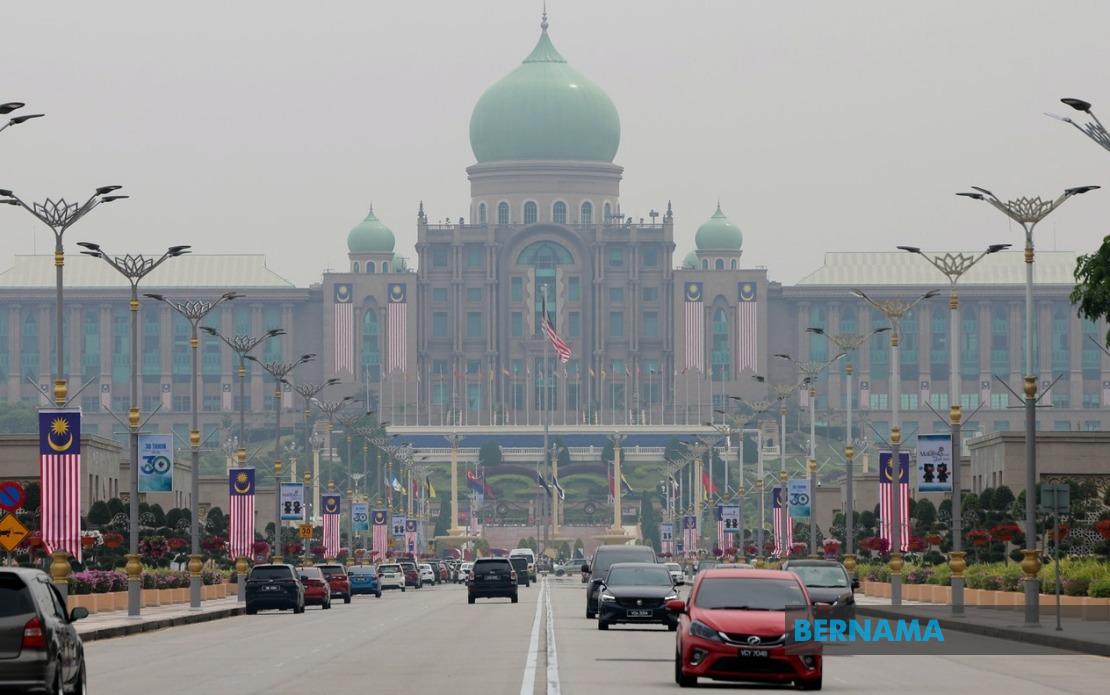
The transboundary haze crisis engulfing parts of Southeast Asia is set to occupy a prominent place in discussions between Prime Minister Datuk Seri Anwar Ibrahim and Sultan Hassanal Bolkiah during their bilateral summit in Bandar Seri Begawan beginning tomorrow. The environmental challenge, which has deteriorated significantly in recent weeks, represents one of the most pressing shared concerns between Malaysia and Brunei at present, according to Malaysian High Commissioner Datuk Mohd Aini Atan.
The 27th Malaysia-Brunei Annual Leaders' Consultation, commonly referred to as ALC-27, functions as the primary high-level diplomatic channel through which both nations address strategic matters of mutual importance. These annual summits have become institutionalised forums where leaders can frankly exchange views on issues ranging from trade and defence to environmental management and regional security. The inclusion of senior state officials from Malaysian territories most affected by pollution signals the gravity with which federal authorities regard the current situation.
Sarawak has emerged as the region's primary casualty in the current pollution episode, with air quality measurements revealing dangerous concentrations of particulates across multiple population centres. The Malaysian Air Pollutant Index Management System recorded readings that classified several towns as experiencing health-threatening conditions. Serian, a town in the southwestern region of the state, registered the most severe measurements at 204, designating conditions as "very unhealthy" according to international benchmarks. Such levels pose genuine risks to public health, particularly for vulnerable populations including children, the elderly, and those with pre-existing respiratory conditions.
Beyond Serian, the contamination extends across Sarawak's urban landscape. Kuching, the state capital and commercial hub, recorded an API reading of 195, positioning it in the hazardous category. Samarahan, the densely populated area adjacent to the state's administrative centre, measured 182. Agricultural areas and smaller towns also experienced degraded air quality, with Sri Aman registering 179, Sarikei at 158, and Sibu at 152. These readings, compiled at 5 p.m. local time, underscore the pervasive nature of the pollution affecting communities across different economic sectors and geographic zones.
The presence of Sarawak Premier Tan Sri Abang Johari Tun Openg and Sabah Chief Minister Datuk Seri Hajiji Noor in the Malaysian delegation signals that this discussion will transcend conventional diplomatic courtesy. Both state leaders bring direct knowledge of the air quality crisis's impact on their constituencies, from economic disruption to healthcare system strain. Their participation ensures that the conversation will address practical governance challenges rather than remaining confined to abstract bilateral frameworks.
For Malaysian policymakers, the Brunei engagement offers an opportunity to coordinate regional responses to a problem that increasingly demands transnational solutions. Haze episodes of this magnitude typically originate from multiple sources across the broader region, including land-clearing activities in neighbouring territories. Diplomatic channels like the ALC-27 provide platforms for Malaysia to present evidence regarding pollution sources and negotiate collaborative mitigation strategies with adjacent nations.
Brunei's own strategic interest in this matter is understandable. While the sultanate has not experienced pollution levels as acute as Sarawak's, it remains vulnerable to transboundary air movement patterns. The neighbouring sultanate's commitment to environmental stewardship and its position as a relatively affluent, stable nation means that regional air quality degradation carries both diplomatic and reputational implications. Engagement at the leaders' level demonstrates mutual recognition that environmental challenges transcend borders and require coordinated governmental response.
The 27th iteration of this annual consultation format reflects decades of institutional relationship-building between Kuala Lumpur and Bandar Seri Begawan. Malaysia and Brunei share extensive ties across security, maritime affairs, education, and commerce. Yet environmental management has increasingly occupied bilateral agendas, reflecting both countries' recognition that ecological challenges pose economic and public health threats regardless of international boundaries. The haze crisis exemplifies this reality starkly.
From a Southeast Asian perspective, the Malaysian-Brunei discussion carries broader implications. The region has grappled repeatedly with transnational haze episodes, particularly during dry seasons when agricultural burning and land-clearing operations intensify. Previous crises have prompted calls for stronger regional enforcement mechanisms and international oversight of land-use practices. Conversations between major regional actors provide opportunities to advocate for sustainable practices and accountability from operators whose activities generate harmful emissions affecting neighbouring populations.
The timing of Anwar's visit and the comprehensive delegation accompanying him reflect Kuala Lumpur's determination to elevate this issue within bilateral discussions. Environmental diplomacy has gained prominence in recent years as nations recognise that unilateral action proves insufficient for addressing pollution generated by cross-border activity. Malaysia's approach suggests it is pursuing a multi-layered strategy encompassing direct bilateral engagement, coordination with affected state governments, and advocacy within regional frameworks.
Looking ahead, Malaysian authorities will likely press for concrete commitments regarding transboundary monitoring, information-sharing protocols, and collaborative enforcement. Brunei's economic and political stability positions it as a valuable partner in advancing regional environmental governance standards. The haze discussion during ALC-27 should therefore be viewed not as a singular diplomatic exchange but as part of Malaysia's broader effort to build consensus around sustainable practices and mutual accountability within Southeast Asia's emerging environmental governance architecture.

