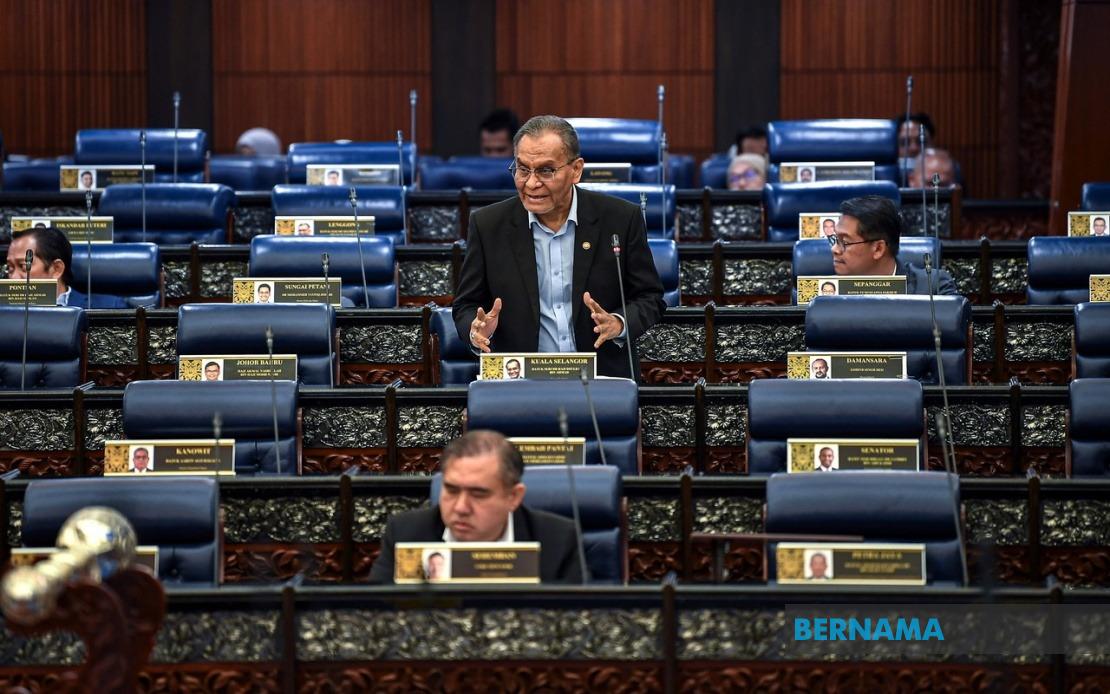
Health Minister Datuk Seri Dr Dzulkefly Ahmad has reaffirmed the government's determination to keep Malaysia's private clinic sector viable through targeted policy interventions and collaborative frameworks. Speaking during parliamentary question time, he outlined a comprehensive strategy designed to arrest the decline of private general practice while recognising the sector's fundamental role within the nation's healthcare architecture. The acknowledgement reflects growing concerns about the vulnerability of independent practitioners who have faced mounting operational pressures in recent years.
The private primary healthcare network currently stands under considerable strain, with approximately 2,034 private medical clinics having shuttered since 2013, representing a significant erosion of capacity in the foundational layer of healthcare delivery. This contraction has occurred against a backdrop of declining intake of house officers in the private sector and rising operational costs that have squeezed profit margins. The closure rate underscores a structural imbalance in how healthcare economics favour institutional settings over small independent practices, a pattern observed across many developed economies but particularly acute in Malaysia's mixed public-private system.
To directly address income pressures, the Ministry of Health has raised the minimum consultation fee for private practitioners from RM10 to RM80, a substantial adjustment intended to improve the financial viability of small practices. While this represents an eightfold increase in the regulated floor price, the measure reflects the reality that consultation fees have not kept pace with inflation and operating costs over the past decade. The fee restructuring acknowledges that artificially depressed pricing creates an untenable situation for practitioners seeking to maintain service quality while meeting staffing and overhead obligations.
Dzulkefly emphasised that outsourcing arrangements will feature prominently in the government's strategy to sustain private clinic operations. These arrangements allow independent practitioners to access shared services, back-office support, and administrative infrastructure without the burden of maintaining these functions in-house. Outsourcing models can encompass billing systems, human resources management, pharmaceutical procurement, and technical support, thereby reducing fixed costs and allowing practitioners to concentrate resources on clinical delivery. This approach has proven effective in other regional healthcare systems where fragmented primary care networks require mechanisms to achieve economies of scale.
The minister's intervention also reflected first-hand experience with clinic closures during the COVID-19 pandemic, when private practitioners faced simultaneous demand collapse and infection control costs without the government support available to public facilities. Many practices, particularly those in lower-income areas or suburban locations serving vulnerable populations, proved unable to absorb these shocks and ceased operations permanently. The pandemic exposed structural vulnerabilities in the private sector's resilience and prompted reconsideration of how government policy could better stabilise this essential but fragile component of healthcare infrastructure.
Within Malaysia's primary healthcare framework, the combined network of 2,916 Ministry of Health clinics and 10,208 private GP clinics constitutes the foundational tier of the system. This dual-sector architecture theoretically creates complementary capacity, with public facilities serving as the safety net and private clinics handling fee-paying populations. However, the disparity in numbers masks an underlying reality: private clinics now concentrate in profitable urban and suburban areas, leaving remote and lower-income communities dependent primarily on public facilities. The sustainability of private practice in peripheral areas remains particularly precarious.
Under the 13th Malaysia Plan framework, the Ministry is formalising structured collaboration between public and private sectors in managing non-communicable diseases, a category of chronic conditions including diabetes, hypertension, and cardiovascular disease that now dominates disease burden. This collaborative model envisages private practitioners providing disease monitoring and medication management for stable patients within the community setting, thereby reducing referrals to government hospitals and outpatient clinics. The approach mirrors systems successfully implemented in the United Kingdom and Taiwan, where primary care gatekeeping and shared management protocols have demonstrably reduced hospital admissions and emergency department utilisation.
The NCD management initiative carries particular significance for Malaysia, where lifestyle diseases increasingly account for healthcare expenditure and bed occupancy. Government hospitals face mounting congestion from chronic disease management that might be more efficiently and conveniently delivered in community settings. By formalising referral pathways, shared clinical guidelines, and reimbursement arrangements, the system can distribute workload more rationally while improving access for patients who might otherwise delay seeking care. This requires integration of information systems and coordination mechanisms currently underdeveloped in Malaysia's fragmented healthcare landscape.
Dzulkefly's response to parliamentary questioning from Dr Halimah Ali effectively articulated an emerging policy consensus that private primary care constitutes an essential rather than supplementary component of Malaysia's healthcare system. The frontline defence metaphor underscores the preventive and early intervention functions that primary care should perform but often does not adequately achieve when practitioners operate under financial stress. Stabilising the private clinic sector thus becomes a public health imperative, not merely a commercial consideration, since clinic closures reduce population access to preventive services and early detection of disease.
The policy direction signals recognition that the long-standing assumption of private practitioners as independent commercial operators operating entirely outside government responsibility requires recalibration. Market mechanisms alone have proven insufficient to maintain an adequate distributed network of accessible primary care facilities. Government intervention through fee regulation, support for shared services, and structured collaboration frameworks represents pragmatic acknowledgement that healthcare systems require deliberate architecture rather than emerging spontaneously from individual commercial decisions.
Implementation challenges remain substantial. Outsourcing providers will need to establish operational presence in diverse locations with varying population densities and practitioner concentrations. Fee increases, while necessary, may face resistance from patient advocacy groups and may not fully address underlying structural disadvantages for practitioners in lower-income areas. Formal collaboration protocols between public and private sectors require alignment of clinical standards, information systems, and referral processes currently operating independently. Success will depend on sustained commitment to resource allocation and regulatory coordination beyond the ministerial term.

