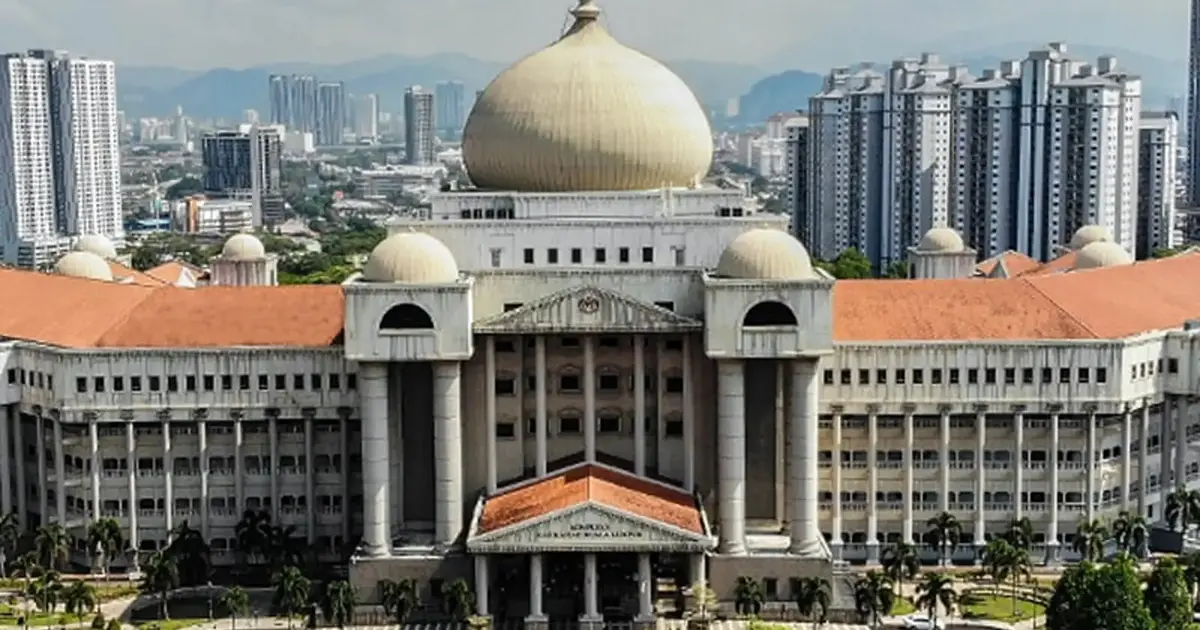
Malaysia's High Court has delivered a significant ruling on executive privilege and judicial procedure by determining that the Prime Minister need not comply with a subpoena ordering his appearance as a witness in a RM30 million litigation matter. The court's decision centres on the legal principle that a person may only be compelled to testify when their evidence is material and directly relevant to the facts in dispute.
The judgment reflects established common law doctrine governing witness examination, which distinguishes between individuals whose testimony bears substantively on the issues before the court and those whose involvement is tangential or non-essential. The High Court applied this distinction rigorously, finding that the Prime Minister's potential testimony would not constitute evidence that could meaningfully influence the outcome of the dispute. This threshold protects witnesses from being unnecessarily summoned and safeguards public officials from routine entanglement in civil proceedings.
For Malaysian legal practitioners and observers of the judiciary, the ruling underscores the High Court's commitment to maintaining proportionality in civil litigation. The decision prevents the broad use of subpoena power as a mechanism to extract testimony from high office-holders absent genuine evidentiary necessity. Such protection is particularly relevant when executive functions and public duties might otherwise be disrupted by frequent courtroom appearances in unrelated disputes.
The RM30 million suit in question has not been extensively detailed in available reports, but cases of this magnitude typically involve substantial commercial transactions, contractual disputes, or claims of significant financial loss. The specific nature of the allegations and identities of the parties have not been prominently featured in coverage, though the case has attracted sufficient public attention to justify media reporting on procedural developments.
From a constitutional perspective, the ruling demonstrates how Malaysian courts balance competing interests. Whilst the judicial system depends fundamentally on the ability to subpoena witnesses and obtain testimony, that power must operate within rational bounds. Exempting material witnesses would undermine justice, but compelling every potential witness regardless of relevance would render the process unworkable and infringe upon the reasonable expectation that citizens and officials may conduct their affairs without arbitrary legal disruption.
The decision carries implications for the broader principle of equal treatment before the law. Although the Prime Minister's official status might seem to warrant special protection, Malaysian courts have consistently held that such protection extends only to the extent that it serves legitimate purposes. The High Court's approach avoids creating a blanket immunity that would place the Prime Minister beyond the reach of judicial process entirely, whilst simultaneously preventing his compulsory appearance where his testimony would contribute nothing probative to the case.
Regional observers of Malaysian constitutional law may note this ruling within the context of how different Commonwealth jurisdictions handle executive involvement in civil litigation. While some systems employ explicit statutes governing the subpoena of public officials, Malaysia's courts have developed comparable protections through judicial interpretation and application of established evidentiary principles. This case-by-case approach offers flexibility but requires consistent application to avoid appearing arbitrary.
The practical effect of the ruling is to dismiss the subpoena outright, relieving the Prime Minister of any obligation to appear in court for examination in this particular matter. Should the party seeking his testimony believe they have misstated his relevance or should circumstances change materially, they would need to present fresh arguments to the court, though the High Court's reasoning suggests a high threshold would need to be cleared.
For Malaysian civil litigants generally, the decision provides important guidance on the proper scope of subpoena practice. Parties cannot simply summon high-profile individuals as a means of adding prestige to their case or hoping that such individuals might possess useful information. Courts will scrutinise whether the witness's evidence directly addresses facts genuinely in dispute and whether such evidence could reasonably affect the judgment.
The judgment also reflects pragmatic judicial administration. Courts in Malaysia, like those worldwide, manage substantial caseloads with finite resources. Unnecessarily summoning public office-holders diverts their attention from governance functions and consumes court time that could be deployed more productively. The High Court's reasoning implicitly acknowledges these systemic considerations alongside the purely legal question of materiality.
Legal analysts have interpreted the decision as consistent with prior Malaysian case law establishing that subpoena power, though broad, remains discretionary and subject to judicial control. Judges retain authority to refuse to issue subpoenas or to strike down subpoenas already issued when they determine that materiality has not been established to the required standard.
Looking forward, the ruling may influence how litigants in future cases frame their applications for subpoenas affecting senior government officials. Rather than seeking their testimony broadly or speculatively, parties will need to articulate precisely how particular officials' evidence addresses disputed factual issues and why alternative sources of proof would be inadequate. This disciplining effect on litigation practice promotes efficiency across the civil justice system.

