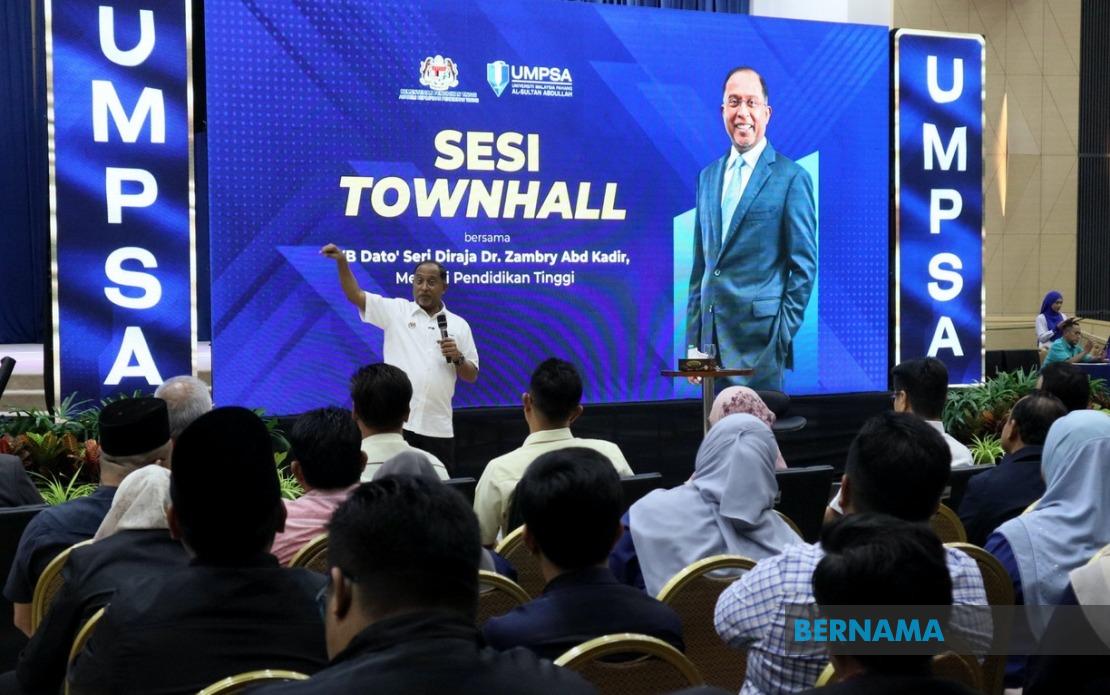
The Ministry of Higher Education has commenced formal procedures to operationalise Prime Minister Datuk Seri Anwar Ibrahim's recent directive concerning the overhaul of student disciplinary frameworks across Malaysian public universities. The initiative, announced during the Malaysia Madani Intellectual Forum Series 13, represents a significant shift in how tertiary institutions will handle cases involving student expression and political participation. Minister Datuk Seri Dr. Zambry Abd Kadir confirmed the ministry's commitment to these reforms whilst addressing attendees at the Universiti Malaysia Pahang Al-Sultan Abdullah convocation ceremony in Pekan.
The reforms carry particular significance given the contentious history of student activism in Malaysia. Previously, students facing disciplinary measures for criticising government policies or the Prime Minister himself are to be officially cleared of such offences, marking a reversal in institutional practice that has long been contentious among civil society organisations and international observers. This decision aligns with broader democratic reforms the government has committed to, particularly the anticipated repeal of the Universities and University Colleges Act 1971, legislation that has historically restricted student freedoms and political expression on campus.
Dr. Zambry articulated that the implementation process involves multiple layers of institutional coordination. The framework takes into account existing legislative provisions governing university conduct regulations and the statutory rights accorded to students, ensuring that reforms operate within established legal boundaries rather than circumventing institutional authority. He indicated that university leadership has been engaged directly in this process, with vice-chancellors meeting alongside the director-general of the Higher Education department to ensure consistent application of revised protocols across the system.
The minister acknowledged that the disciplinary changes encompass both preventive and corrective measures. Cases already documented at departmental level within Student Affairs offices are being reviewed to identify individuals who may have been subject to unjust penalties under previous frameworks. This retrospective examination represents an implicit acknowledgment that certain institutional practices may have contravened principles of academic freedom and student autonomy that the government now prioritises.
A practical challenge confronting implementation concerns the distinction between university-level disciplinary jurisdiction and criminal prosecution. The Prime Minister specified that students absolved of university offences remain subject to criminal liability under Royal Malaysia Police jurisdiction if their conduct breaches the Penal Code or other criminal statutes. This delineation attempts to balance institutional reform with state security considerations, though observers note potential tension between these two frameworks when student activism involves politically sensitive issues.
The question of private higher education institutions presents a further complication. Dr. Zambry noted that private universities operate under different legislative regimes, specifically the Private Higher Educational Institutions Act 1996, which grants them greater autonomy in disciplinary procedures compared to public institutions. Whilst the minister expressed hope that private institutions would voluntarily harmonise their practices with the public system, he acknowledged that mandatory compliance cannot be enforced across the entire private sector. State-owned or state-linked private institutions represent an intermediate category where coordination is anticipated, though implementation mechanisms remain unclear.
The timing of these reforms carries strategic importance within Malaysia's broader constitutional and democratic context. The government has committed to repealing the AUKU 1971, which represents unfinished business from the previous administration's pledges. However, legislative amendment processes typically require parliamentary time and procedural formality that can extend across multiple parliamentary sessions. The Prime Minister consequently authorised immediate executive action to provide relief to aggrieved students whilst the formal legislative repeal proceeds through the necessary channels. This sequenced approach allows tangible relief to reach affected individuals without awaiting the complete overhaul of the statutory framework.
For Malaysian higher education more broadly, these reforms signal a recalibration of institutional relationships between universities and the state. Public universities have traditionally functioned as relatively controlled environments where student political activity faced substantial administrative constraints. The shift towards recognising student expression as normative rather than exceptional reflects international norms regarding academic freedom that many developed democracies maintain. Institutions will require time to adjust institutional cultures where administrative staff, security personnel, and senior management have operated for decades within frameworks emphasising control and compliance rather than pluralism and debate.
Regional implications extend beyond Malaysia's borders. Several Southeast Asian nations maintain comparable restrictions on campus activism, and Malaysia's repositioning may influence discourse in neighbouring countries regarding the appropriateness of such constraints. However, the implementation challenges Malaysia will encounter may also provide cautionary lessons regarding the practical difficulties involved in genuinely institutionalising freedom of expression within hierarchical university systems accustomed to centralised authority.
The effectiveness of these reforms ultimately depends on institutional implementation at individual university level. Vice-chancellors, student affairs officers, and disciplinary committees will require clear guidelines distinguishing between permissible student political activity and conduct warranting genuine disciplinary intervention. The statement promised by Dr. Zambry following the vice-chancellors' meeting will prove decisive in clarifying institutional expectations and establishing consistency across the public university system.
Stakeholders including student organisations, civil society advocates, and academic freedom defenders have invested considerable effort documenting instances where disciplinary action appeared disproportionate or politically motivated. The implementation of these reforms offers an opportunity to rebuild institutional credibility with student communities through demonstrable commitment to reformed practices. However, the success of this transition hinges on sustained commitment from senior educational leadership and adequate resourcing for institutional culture change across the university system.

