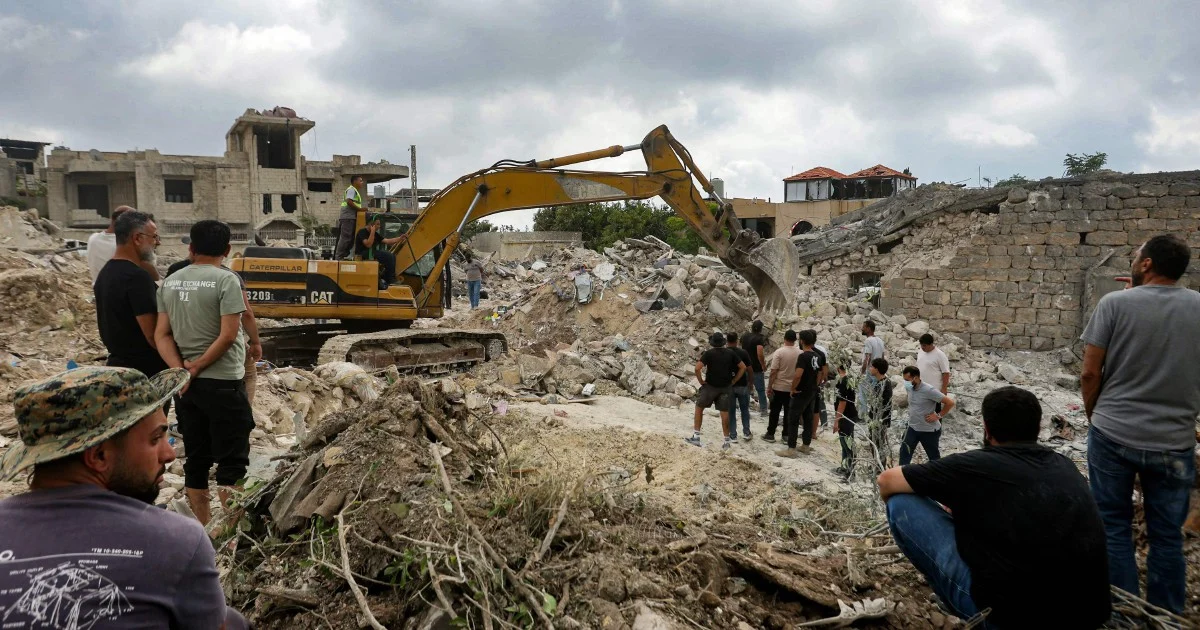
The Lebanese militant group Hizbollah has firmly rejected any proposal for Israel to establish and maintain a security buffer zone within southern Lebanon's territory, with party chief Naim Qassem making the group's position unambiguously clear on Sunday. His rejection comes directly in response to statements from Israeli Prime Minister Benjamin Netanyahu, who has insisted that Israeli military forces must remain stationed across Lebanon's southern regions for an unspecified duration that he describes only as "as long as necessary." This latest exchange underscores the deepening confrontation between the two sides over territorial control and security arrangements in the border region.
The question of Israeli military zones within Lebanese territory represents one of the most contentious issues in Middle Eastern geopolitics, particularly given the region's history of military occupation and cross-border conflict. For Hizbollah, which exercises significant political and military influence across Lebanon, any formalized Israeli presence on Lebanese soil—framed as a temporary security measure or otherwise—constitutes an unacceptable violation of national sovereignty. The group's categorical rejection signals that any international peace settlement or ceasefire agreement will face substantial resistance from a major Lebanese political actor unless it includes a complete Israeli withdrawal.
Netanyahu's declaration that Israeli troops will remain in southern Lebanon for as long as deemed necessary reflects a strategic calculation by Tel Aviv regarding the region's security requirements. Israeli officials have long expressed concerns about militant activities originating from Lebanese territory, particularly Hizbollah's capacity to launch attacks across the border. By maintaining a military presence, Netanyahu's government appears intent on establishing facts on the ground that would require future negotiations to accommodate Israeli interests, even if such arrangements contradict international law regarding occupying forces.
The disagreement also highlights the precarious position of the Lebanese state, which already struggles to exercise effective authority over its southern regions where Hizbollah maintains considerable influence. Any Israeli security zone would effectively remove those territories from Lebanese government control, further fragmenting state authority at a time when Lebanon faces severe economic, political, and social challenges. Lebanese citizens in affected areas would find themselves in a liminal space where neither the legitimate government nor occupying forces bear full responsibility for their welfare and security.
Regional observers note that Netanyahu's insistence on maintaining Israeli forces diverges significantly from statements by other international actors seeking a rapid resolution to hostilities. Various mediators, including international organizations and neighbouring countries, have emphasized the need for expedited Israeli withdrawal and a political settlement that respects Lebanese territorial integrity. The tension between these competing visions for post-conflict arrangements threatens to prolong instability and prevent the civilian reconstruction that southern Lebanon desperately requires.
Qassem's rejection must be understood within the context of Hizbollah's strategic position. The organization has positioned itself as a defender of Lebanese sovereignty and resistance to foreign military intervention, narratives that resonate with significant segments of Lebanon's population. Any perceived concession regarding Israeli military presence would undermine this core identity and potentially fracture the coalition that provides Hizbollah with political legitimacy. Consequently, the group faces powerful incentives to maintain an uncompromising rhetorical stance, even as tactical realities on the battlefield may shift.
The dispute over security zones also connects to broader questions about how Lebanon and Israel might establish durable peace. Historical precedent from Lebanon's civil war and subsequent occupation by Israel demonstrated that military buffer zones do not automatically prevent conflict and often become flashpoints for renewed violence. International observers have repeatedly concluded that sustainable peace requires comprehensive political agreements addressing underlying grievances rather than military separations imposed by one party.
For Malaysia and other Southeast Asian nations, this Mediterranean conflict carries implications beyond mere regional concern. The international principle of territorial sovereignty, which Israel's proposed security zone would violate, represents a foundational norm that developing nations rely upon for protection against more powerful neighbours. Any acceptance of unilateral territorial control exercised by an occupying military force would establish precedent harmful to nations throughout Asia, the Middle East, and Africa.
The coming weeks will likely see continued diplomatic maneuvering as international mediators attempt to narrow the gap between Israeli and Hizbollah positions. Whether Netanyahu will soften his stance regarding the duration and scope of Israeli military presence remains unclear, as does whether Hizbollah might accept some face-saving compromise arrangement. What appears certain is that without movement from both sides toward mutual accommodation, southern Lebanon will remain a contested zone where displaced civilians cannot safely return and reconstruction cannot begin.

