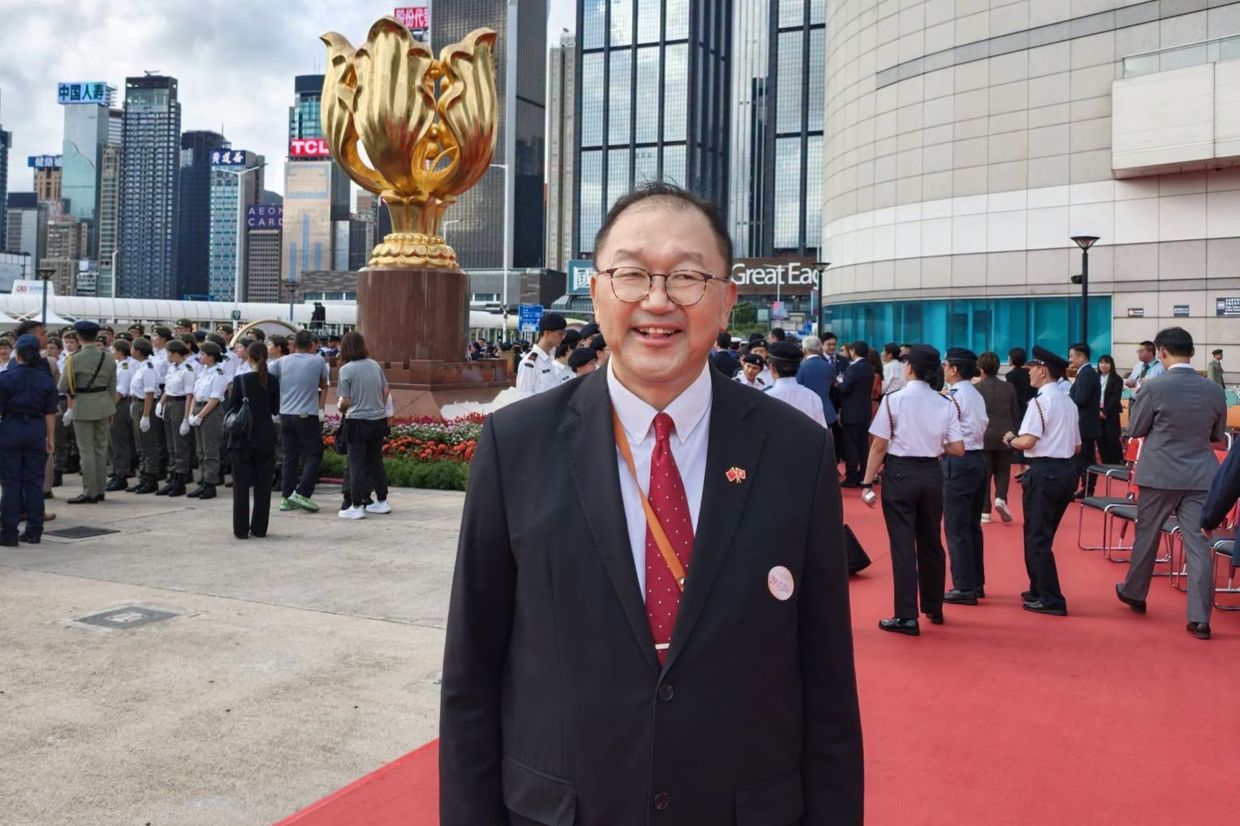
William Wong Kam-fai, a 66-year-old Hong Kong legislator and academic, has stepped down from the Legislative Council following his arrest on suspicion of drink-driving and a hit-and-run incident, marking the first resignation over a scandal from the chamber in more than two decades. The announcement came on Friday, mere hours after Wong was detained on Monday evening when his vehicle struck two parked cars near a staff residence on campus at approximately 10.46pm. His swift departure from the legislature underscores the heightened accountability expected of Hong Kong's lawmakers under the current political framework, and signals a significant shift in how the city's legislative establishment responds to personal misconduct among its members.
In his resignation statement, Wong expressed remorse for the distress his actions had caused to both society and the Legislative Council itself. He emphasised that his decision to relinquish all legislative positions with immediate effect was undertaken after careful deliberation, with the primary motivation being to minimise disruption to the functioning of the chamber. Wong further requested public understanding regarding his inability to elaborate on the circumstances, citing the ongoing police investigation into the traffic incident. Despite his departure from elected office, he pledged to continue contributing to the community and the city through alternative roles, suggesting that his political and professional involvement need not end entirely with his legislative exit.
Legislative Council president Starry Lee Wai-king formally received Wong's resignation letter on Friday and responded with a measured acknowledgment of his decision. In her statement, Lee expressed gratitude for Wong's service to the institution and his contributions to Hong Kong's development, framing his resignation as a respectful choice rather than a disciplinary measure. This measured tone reflects the broader institutional approach to managing the episode without escalating tensions or creating a precedent that might undermine confidence in the legislature itself. The manner in which Wong's departure has been handled suggests a deliberate attempt to treat the matter as a personal decision rather than a forced expulsion, preserving the dignity of both the individual and the institution.
Beyond his legislative duties, Wong held a significant position as a member of the Chinese People's Political Consultative Conference (CPPCC), China's premier political advisory body. This role carried particular weight and symbolic importance, connecting him directly to Beijing's governance structures. Political analysts and observers have noted that Wong's membership in such a high-profile national institution would likely require reassessment in light of the scandal. The question of whether he would also step back from his CPPCC role remains consequential, as retaining a position in China's top political advisory body while facing serious legal charges would appear incongruous and potentially damaging to the institution's reputation.
Lau Siu-kai, a consultant at the Chinese Association of Hong Kong and Macau Studies, characterised Wong's prompt resignation as the strategically sound course of action. According to Lau's analysis, remaining in office could have invited sustained criticism and compromised both Wong's personal standing and the broader legitimacy of the legislature. Lau further suggested that continuing to hold the seat might have created opportunities for critics to challenge the principle of patriots administering Hong Kong, a cornerstone of the current governance paradigm. By departing swiftly, Wong has effectively neutralised a potential rallying point for opposition and protected the institutional integrity of a body that already faces scrutiny from certain quarters. Lau predicted that central authorities would likely accept Wong's resignation from the CPPCC as well, given the gravity of the incident, even though expulsion of national advisory body members remains extraordinarily rare.
Tam Yiu-chung, Hong Kong's former sole representative to the National People's Congress Standing Committee, endorsed the resignation as an appropriate response to serious misconduct. Tam reasoned that legislators operate under heightened behavioural expectations, and that stepping down represents the prudent course when those standards are breached. His perspective added weight to the emerging consensus among political figures that Wong's departure was both justified and timely. Tam also clarified that the loss of Wong's seat would have minimal operational impact on the legislature, since his seat represented the Election Committee constituency rather than a functional constituency responsible for articulating sectoral interests. This distinction suggests that the legislative mechanism can absorb the vacancy without compromising its ability to represent diverse stakeholder groups across Hong Kong's economy and society.
The question of whether the government will call a by-election to fill Wong's vacant seat remains open and will depend on several administrative and political considerations. Tam noted that no legal requirement mandates holding a by-election, and that such decisions hinge on factors including the time remaining in the current legislative term and broader budgetary considerations. Precedent exists for leaving seats vacant: Stephen Wong Yuen-shan, also an Election Committee constituency legislator, departed in late 2022 to assume a position leading the government's think tank, and his seat remained unfilled for approximately three years. Constitutional Affairs Minister Erick Tsang Kwok-wai indicated during a 2024 Legislative Council meeting that financial prudence would weigh heavily in determining whether a by-election proceeds. This pragmatic approach suggests that cost-benefit calculations, rather than regulatory obligations, will ultimately determine whether voters are afforded an opportunity to choose Wong's successor.
Wong's resignation represents a watershed moment in Hong Kong's legislative history, as the last comparable departure occurred in September 2000 when Gary Cheng Kai-nam stepped down shortly after winning his seat. Cheng's case involved concealment of business relationships, unauthorised disclosure of confidential government documents to a commercial associate, and involvement in an extramarital affair. These revelations prompted his resignation, and subsequent investigation led to his conviction on four counts including bribery, misconduct in public office, false accounting and theft, resulting in an 18-month prison sentence imposed in 2001. The 24-year gap between Cheng's departure and Wong's resignation underscores the rarity of sitting legislators abandoning their posts due to personal scandal in Hong Kong.
The University at which Wong held an academic appointment responded swiftly to the incident by suspending him from administrative duties pending the completion of police investigations. A university spokesperson noted the institution's commitment to maintaining rigorous standards of conduct and professional ethics among its staff. The suspension from administrative responsibilities, while preserving his employment status, reflects an interim measure designed to insulate the university from reputational damage while respecting due process. The university appropriately declined to comment further, acknowledging that ongoing police proceedings should take precedence in determining the appropriate institutional response. This measured approach demonstrates how Hong Kong's major institutions are managing the fallout from Wong's misconduct without prematurely foreclosing employment options before legal proceedings conclude.
The incident illuminates the contemporary pressures facing Hong Kong's political establishment and the mechanisms through which accountability is enforced in the post-2020 governance environment. Wong's swift resignation suggests that members of the legislature recognise that public trust in the institution depends upon maintenance of exacting personal conduct standards, particularly among those representing constituencies or holding positions of public trust. The absence of sustained institutional resistance to his departure indicates broad agreement that individual resignation serves the collective interest more effectively than defensive posturing. For Malaysia and other Southeast Asian democracies observing Hong Kong's political evolution, the episode demonstrates how institutional accountability can operate through individual choice and social pressure rather than formal disciplinary mechanisms, though the context of Hong Kong's particular political circumstances—including the 2020 National Security Law and structural reforms to the electoral system—shapes how such accountability functions differently from traditional Westminster-influenced systems across the region.

