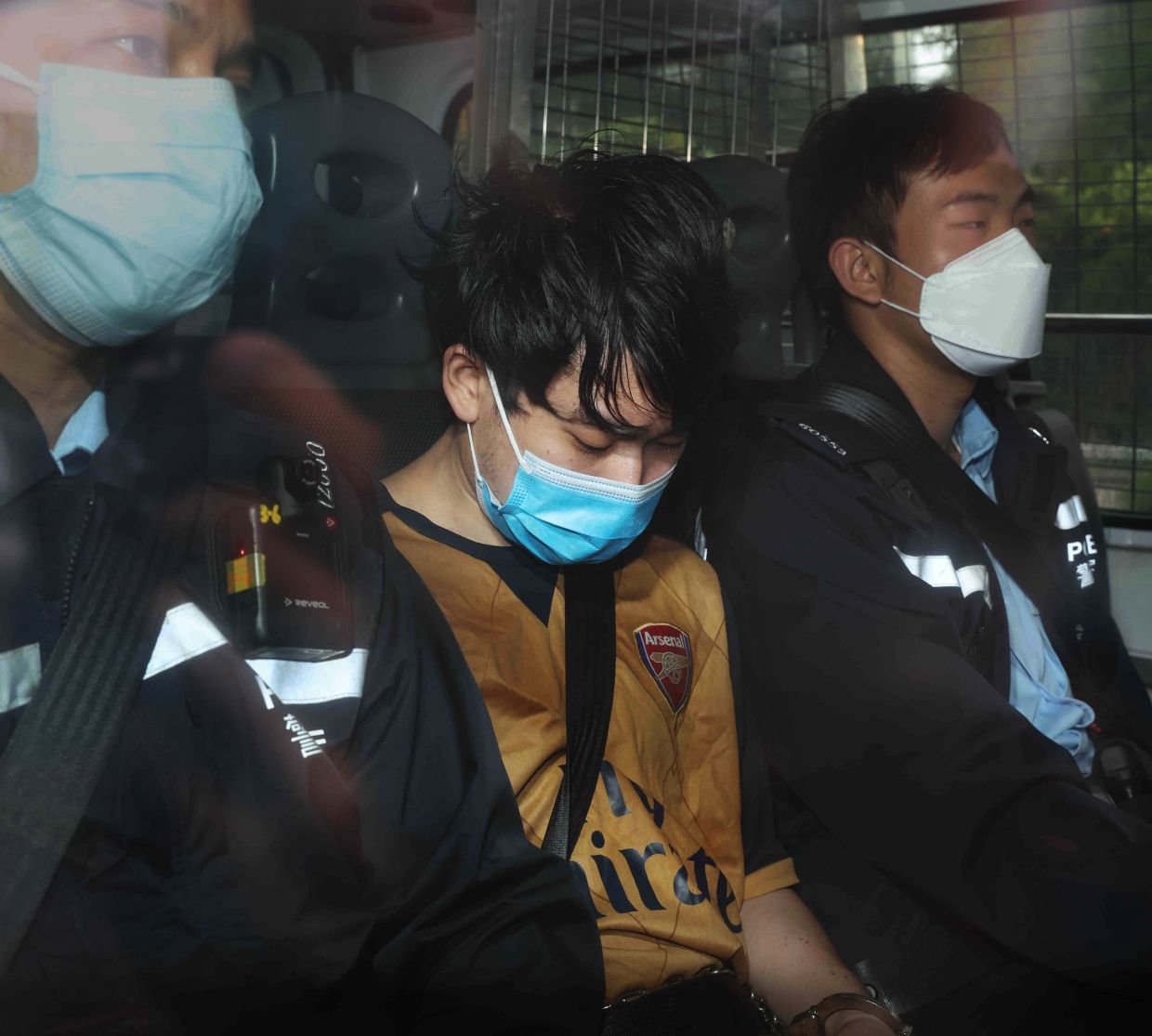
A 29-year-old jobless Hong Kong resident has offered a startling defence in his murder trial, claiming he fatally struck his girlfriend with a rod by mistake whilst attempting to help her lose weight through sleep deprivation. Ng Ka-sing faces charges of murdering Yip Tsz-ching, 30, at their 700 square-foot flat in Galore Garden, Hung Shui Kiu, between April 28 and 29, 2022, in a case that has drawn significant attention for its bizarre circumstances and the troubling implications regarding domestic coercion and control.
The High Court trial heard that Ng repeatedly beat Yip over several hours across two nights, claiming this unconventional approach stemmed from a misguided belief that preventing sleep would contribute to weight loss. According to Ng's account to police, he struck her intermittently between 10pm on April 27 and 1.30am on April 28, then again between 3am and 5.30am on April 28. The intervals between beatings suggest a calculated pattern rather than a spontaneous outburst, raising questions about Ng's state of mind and the nature of his relationship with Yip. The accused maintained he continued the assault because Yip did not explicitly tell him to stop, a claim prosecutors find deeply problematic given the power dynamics and circumstances of domestic violence.
The prosecution's opening statement, delivered by Senior Public Prosecutor Audrey Parwani, emphasised significant inconsistencies in Ng's account and rejected his narrative wholesale. Parwani highlighted that Ng had provided multiple conflicting explanations to police regarding Yip's injuries, which covered an extensive 55 per cent of her body and included severe corrosive burns. This pattern of shifting narratives suggests the defendant has been attempting to construct a plausible defence rather than recounting truthful events. The prosecution strategy indicates prosecutors believe Ng deliberately misled authorities rather than genuinely recalling events with uncertainty, a crucial distinction in establishing mens rea in a murder case.
Yip's death resulted from a combination of injuries and chemical exposure that paint a horrific picture of her final hours. Government pathologist Dr Foo Ka-chung determined that suffocation following head injuries and extensive corrosive burns across her chest, abdomen, and limbs caused her death. The doctor identified multiple bruises, abrasions, and lacerations consistent with blunt force trauma from punching and kicking. According to Ng's account, Yip poured drain cleaner over herself, whilst he claimed he only splashed the liquid on the floor to "stimulate" her feet—an explanation that strains credibility given the severity and distribution of her burns. Yip reportedly told Ng at around 5am on April 28 that she felt severe pain and might not survive. She subsequently fell into a coma and died, with Dr Foo estimating she had been deceased between 12 and 24 hours when joggers discovered her body the following morning.
The discovery of Yip's remains exposed Ng's immediate efforts to dispose of her body, raising further questions about premeditation. Witnesses testified that around 6am on April 29, joggers noticed a leg protruding from a rolled-up quilt loaded onto Ng's wheelboard as he pulled it along Tin Ha Road. Lau Kwok-yan, who reported the discovery to police, observed that Ng "did nothing" whilst awaiting officers, displaying no apparent panic. Street cleaner Wong Ah-sum reported that when he questioned Ng about the body, the defendant plainly told him it was a "corpse" and that he intended to deliver it to a police station. Upon arrest at 6.36am, Ng stated: "This was my girlfriend. I hit her to death with a rod by mistake." The casualness with which he disclosed the killing, combined with his methodical transportation of the body, suggests a level of composure inconsistent with genuine accident or remorse.
Forensic evidence reveals the meticulous manner in which Ng attempted to conceal the body, contradicting his claim of accidental killing. Forensic specialist Lo Man-hung discovered that Yip's body had been tied to a toppled wooden chair using black rubbish bags and covered with a quilt. Her head was wrapped in multiple layers of cling film and adhesive tape, a level of preparation suggesting deliberate concealment rather than panicked improvisation. Such wrapping would require time, planning, and conscious effort—all inconsistent with Ng's narrative of a tragic mistake. The care taken in restraining and wrapping the body indicates Ng acted with clear intent to hide evidence of his actions.
The involvement of a third party adds another troubling dimension to the case. Ng's sworn sister, whose family shared the flat with the couple, allegedly encouraged him to "continue for a bit longer" when he questioned whether he should stop beating Yip. This involvement of a household member in witnessing or potentially encouraging the assault raises questions about the environment within the shared flat and whether others present failed to intervene or sought to protect Yip. The role of this witness could significantly influence how the jury understands the context and nature of Ng's actions, particularly regarding whether the assault occurred with an audience or tacit approval from household members.
Ng's decision to offer a guilty plea to the lesser charge of manslaughter, which prosecutors rejected, indicates the defence recognised the difficulty in maintaining a complete not-guilty stance. Prosecutors' rejection of this plea demonstrates their confidence in securing a murder conviction and their determination to pursue the most serious charges available. In Hong Kong's legal framework, the distinction between murder and manslaughter hinges on establishing mens rea—the guilty mind. The prosecution's rejection of the manslaughter plea signals that they believe they can prove Ng acted with intent to kill or with such reckless disregard for life that murder charges are warranted, rather than accepting a narrative of tragic accident.
For Malaysian observers, this case underscores concerning patterns around domestic violence and coercive control that transcend borders within Southeast Asia. The notion that Ng felt entitled to physically assault his girlfriend under the guise of helping her lose weight reflects distorted beliefs about bodily autonomy and the right to inflict pain on intimate partners. Such rationalizations for domestic violence—couched in terms of "helping" or "improving" a partner—are recognisable patterns across the region, often enabling abusers to justify their actions within family or community contexts. The severity of this case demonstrates where such coercive behaviour can escalate when unchecked.
The trial before Mrs Justice Judianna Barnes and a seven-member jury is expected to span 18 days, with the jury tasked with determining whether Ng's account of accident and miscalculation merits belief or whether the evidence supports a finding of intentional killing. The prosecution's case rests on demonstrating that the sustained beatings, chemical injuries, and subsequent body disposal reflect deliberate action rather than tragedy. The defence will attempt to convince jurors that Ng's bizarre weight-loss theory and claims of accidental death deserve credence, despite the injuries inflicted, Yip's deteriorating condition, and his methodical disposal of her remains. This trial outcome may influence how Hong Kong courts approach cases involving intimate partner homicide, particularly those involving claims of accident or mistake in contexts of clear violence and control.

