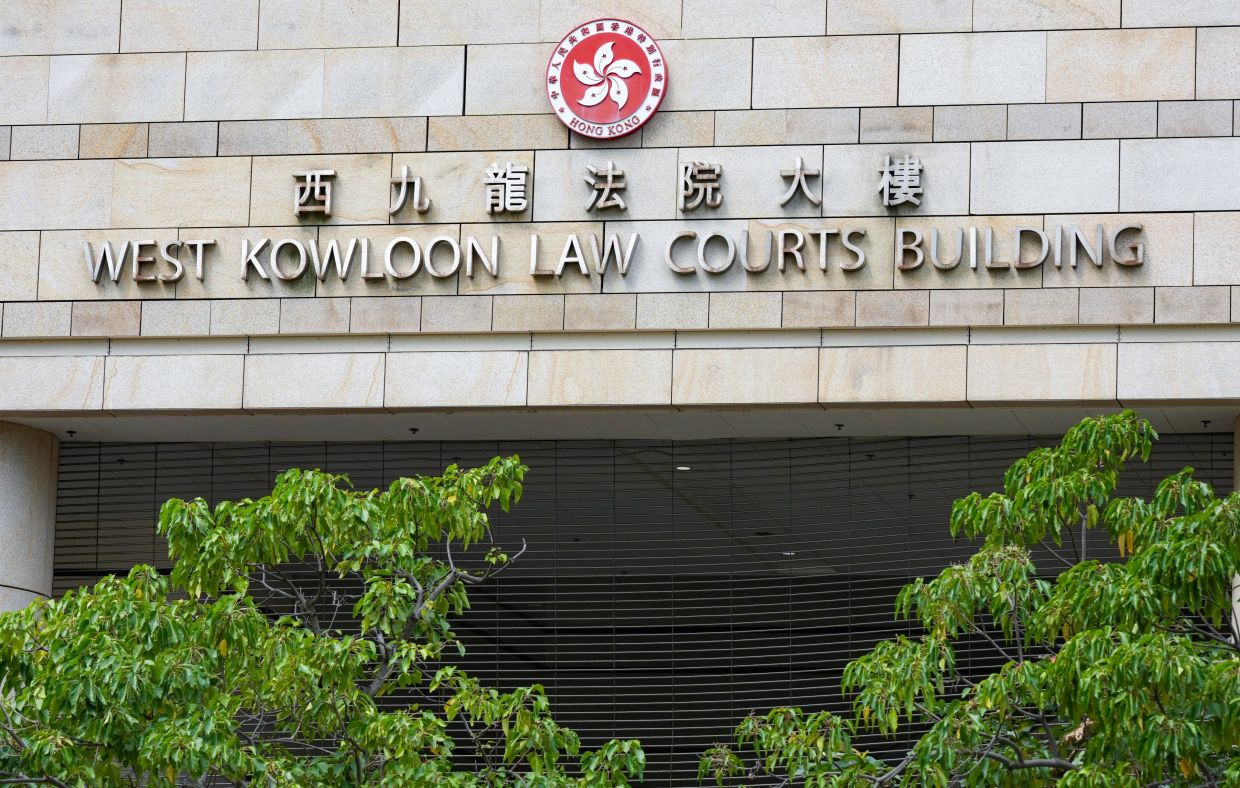
A 65-year-old repeat sex offender in Hong Kong has been sentenced to four months' imprisonment for indecently assaulting a Form Three student aboard a double-decker bus, following public outcry sparked by a video that circulated widely online. West Kowloon Court handed down the verdict to William Wu Yiu-shing on Tuesday, nearly two months after the assault occurred in broad daylight at a busy Mong Kok intersection on June 5.
The incident unfolded at approximately 12.10pm when the bus, operated by the Kowloon Motor Bus Company, stopped at the junction of Mong Kok Road and Sai Yeung Choi Street South. Wu, a former household hardware salesman, sat directly behind the 17-year-old victim on the upper deck of the vehicle. Despite the public setting and presence of other passengers, he reached forward and touched the girl's chest and armpit, behaviour captured in a 37-second video recorded by a pedestrian outside the bus. The recording showed Wu dressed in a white tank top, continuing his actions even as people on the street attempted to alert him verbally.
What distinguishes this case is the role played by digital media in ensuring accountability. The bystander's decision to film the assault and share it on social media transformed what might have remained an unreported or isolated incident into a matter of public concern. The video's circulation prompted swift police action and contributed to broader discussions about safety on public transport, a particular concern across Hong Kong and Southeast Asian cities where millions of commuters rely on buses daily. For Malaysian readers, the case highlights similar vulnerabilities in crowded public spaces where vulnerable passengers, particularly students, face harassment with little recourse.
The victim's account to police revealed the deeply distressing nature of such encounters. The 17-year-old reported feeling her armpit touched for several seconds and witnessing Wu's attempt to grab her. Significantly, she remained too frightened to respond or seek immediate help, instead leaving the bus and rushing home after the assault. This psychological impact—the sense of violation and helplessness experienced by victims of public groping—often goes unacknowledged in initial reporting but carries serious consequences for the survivor's sense of safety and wellbeing in public spaces.
Wu's criminal history substantially influenced judicial considerations. The defendant carried three prior convictions for indecent assault, establishing a troubling pattern of behaviour spanning years. His guilty plea, entered last month, acknowledged the wrongdoing without requiring the victim to testify during a potentially traumatic trial. However, the relatively modest sentence of four months has drawn scrutiny regarding whether it adequately reflects both the severity of the offence and the defendant's established propensity for similar crimes. Indecent assault carries a maximum penalty of ten years' imprisonment when tried on indictment, though magistrates' courts are statutorily capped at imposing two years.
The arrest itself demonstrated coordinated enforcement efforts. Police apprehended Wu at the Hong Kong-Zhuhai-Macau Bridge border checkpoint on the same day as the assault, when he was returning from Macau. His immediate admission to officers that he had committed the offence to satisfy sexual desires provided clarity about motivation and intent. This candid acknowledgment, while providing some evidentiary advantage to prosecutors, did not substantially alter the sentencing outcome, raising questions about whether judicial responses adequately deter repeat offenders or protect the community from further harm.
Wu's legal representation emphasised mitigating factors during sentencing proceedings on Tuesday. A duty lawyer noted that the defendant had frankly acknowledged his wrongdoing and demonstrated awareness of the pattern characterising his previous offences. Crucially, the defence indicated Wu's willingness to undergo psychological treatment as part of rehabilitation efforts. Such treatment, if genuinely pursued, might address underlying compulsions driving his behaviour. Nevertheless, the fact that someone with three prior convictions for identical offences remained at liberty to commit this assault raises systemic questions about monitoring, rehabilitation effectiveness, and post-release oversight mechanisms.
Regarding his release trajectory, Wu has remained in custody since his prosecution commenced on June 8. Under current incarceration conditions and remission policies, he is expected to become eligible for early release in approximately one month, meaning his total time served will fall significantly short of the four-month sentence imposed. This accelerated release timeline, common in many jurisdictions, reflects administrative efficiency but also underscores the considerable gap between sentences handed down by courts and time actually served by offenders. For communities concerned about repeat offenders' activities, such reductions can feel inadequate to the gravity of violations and victim trauma.
The broader implications of this case extend beyond Hong Kong's borders. Southeast Asian cities including Kuala Lumpur, Bangkok, and Singapore have reported comparable incidents of public harassment on mass transit systems. The Hong Kong prosecution demonstrates both the potential for technology—smartphone videos—to document offences and ensure accountability, and the challenges courts face in balancing punishment, deterrence, and rehabilitation when dealing with entrenched offenders. For Malaysian authorities and public transport operators, the case offers instructive lessons about passenger safety protocols, bystander intervention training, and the importance of swift law enforcement response to public assault allegations.

