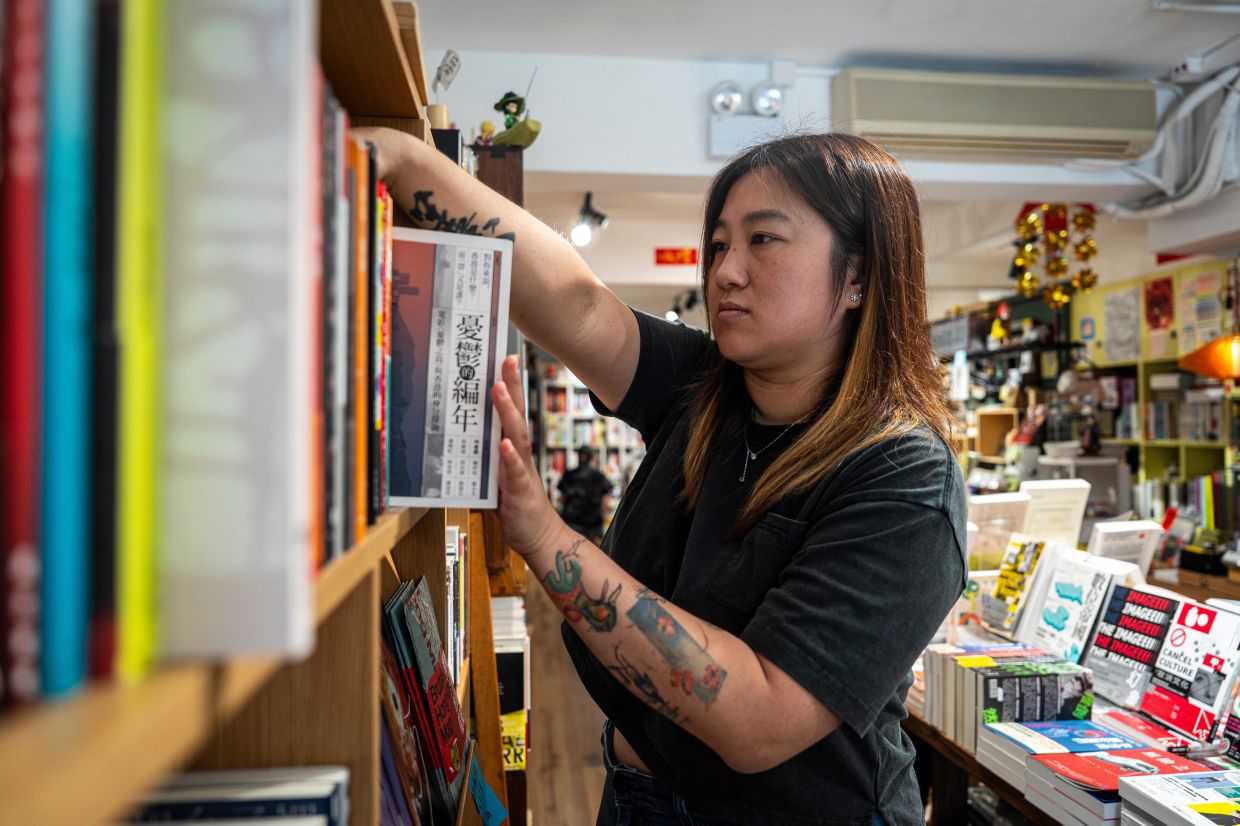
Hong Kong police have taken two people into custody on allegations of peddling seditious literature and accepting financial support from overseas political entities, marking another enforcement action under the territory's sweeping national security legislation. The arrests, conducted on Wednesday 24 June, represent a continuing pattern of pressure on independent publishers and booksellers in the former British colony. While government authorities declined to publicly name those detained, multiple Hong Kong news organisations reported that Leticia Wong, the proprietor of Hunter Bookstore and a former pro-democracy district councillor, was among those arrested.
Wong has remained a conspicuous voice for civil liberties even as numerous Hong Kong activists have been imprisoned following the 2019 pro-democracy demonstrations. Her continued public advocacy and the operation of a bookstore selling titles that challenge the government narrative have made her a visible target for enforcement authorities in recent years. The identification of Wong as a suspect, should it be confirmed, would underscore what observers characterise as an intensifying campaign to restrict political expression in Asia's most prominent financial centre. The news agency Associated Press has not independently confirmed the identities of the detained individuals, and Wong herself could not be reached for comment.
The timing of these arrests carries symbolic weight, arriving just a week before Hong Kong marks the 29th anniversary of its handover from British to Chinese sovereignty in 1997. That milestone serves as a recurring flashpoint for discussions about whether Beijing has honoured its commitment to preserve the territory's distinct legal system and civil liberties. International critics increasingly argue that such pledges have become hollow as mainland influence over Hong Kong's governance has deepened and official restrictions on expression have tightened substantially over the past five years.
According to government statements released Thursday, the two individuals operate a shop in the Sham Shui Po district, where Wong's Hunter Bookstore conducts business. They face allegations under the 2024 national security law for suspected sedition, along with separate charges related to handling proceeds from indictable offences. These dual legal frameworks have become the standard toolkit for prosecutions targeting independent publishers and booksellers deemed to have crossed political redlines established by the government.
Investigations by police revealed that the pair allegedly displayed and sold publications containing seditious material within their premises, specifically items charged with inciting animosity toward Hong Kong's government, judicial system, and law enforcement agencies. The authorities further contend that the detainees received monetary transfers originating from overseas political organisations, though the government statement provided no specific details about which publications or external entities were involved in these transactions. This vagueness reflects a broader pattern whereby enforcement actions proceed with minimal public disclosure of the evidence or reasoning underpinning official suspicions.
Hunter Bookstore has previously drawn official scrutiny through multiple channels beyond direct police action. A pro-Beijing newspaper last year published an article criticising an independent book fair held at Wong's premises for displaying what it termed "soft resistance" characteristics, particularly flagging the bookstore's intention to distribute a biography of Jimmy Lai, the imprisoned pro-democracy media entrepreneur. Such media campaigns often precede or accompany enforcement actions, functioning as preliminary pressure tactics that alert shop owners and event organisers to political sensitivities around certain titles or activities.
Wong's own account of official interference paints a picture of relentless administrative pressure beyond formal arrests. In an interview conducted last year, she disclosed that government authorities had initiated 92 separate enforcement measures against her establishment between July 2022 and June 2025, encompassing shop inspections, visible police presence outside her premises, and written warnings regarding alleged violations. Additionally, an anonymous letter circulated to an organisation that had scheduled an event at her shop prompted them to cancel the booking, demonstrating how intimidation operates through indirect channels alongside direct state action.
This latest operation follows a similar enforcement action in March when police arrested the owner and staff of another independent bookstore on suspicion of selling seditious publications, including the biography of Lai. Those individuals were eventually freed on bail pending further investigation, illustrating how the legal system can be deployed to disrupt commercial operations and create uncertainty among booksellers about inventory decisions. The cumulative effect of such enforcement patterns extends beyond those directly prosecuted, chilling the broader market for publications that address sensitive political topics.
For readers and observers across Southeast Asia, these developments in Hong Kong carry particular resonance. The territory has historically functioned as a regional hub for publishing and intellectual exchange, with bookstores and independent publishers serving as important nodes in networks that circulate ideas throughout the region. The systematic application of sedition and national security laws to restrict what can be published and sold raises questions about the future of open expression across Asia's most cosmopolitan centres. The Hong Kong government maintains that both security legislation frameworks are essential safeguards for stability and insists that freedom of speech remains robustly protected within the city's constitutional architecture, a position that stands increasingly at odds with the lived experience of booksellers, publishers, and activists navigating an environment of escalating official constraint.

