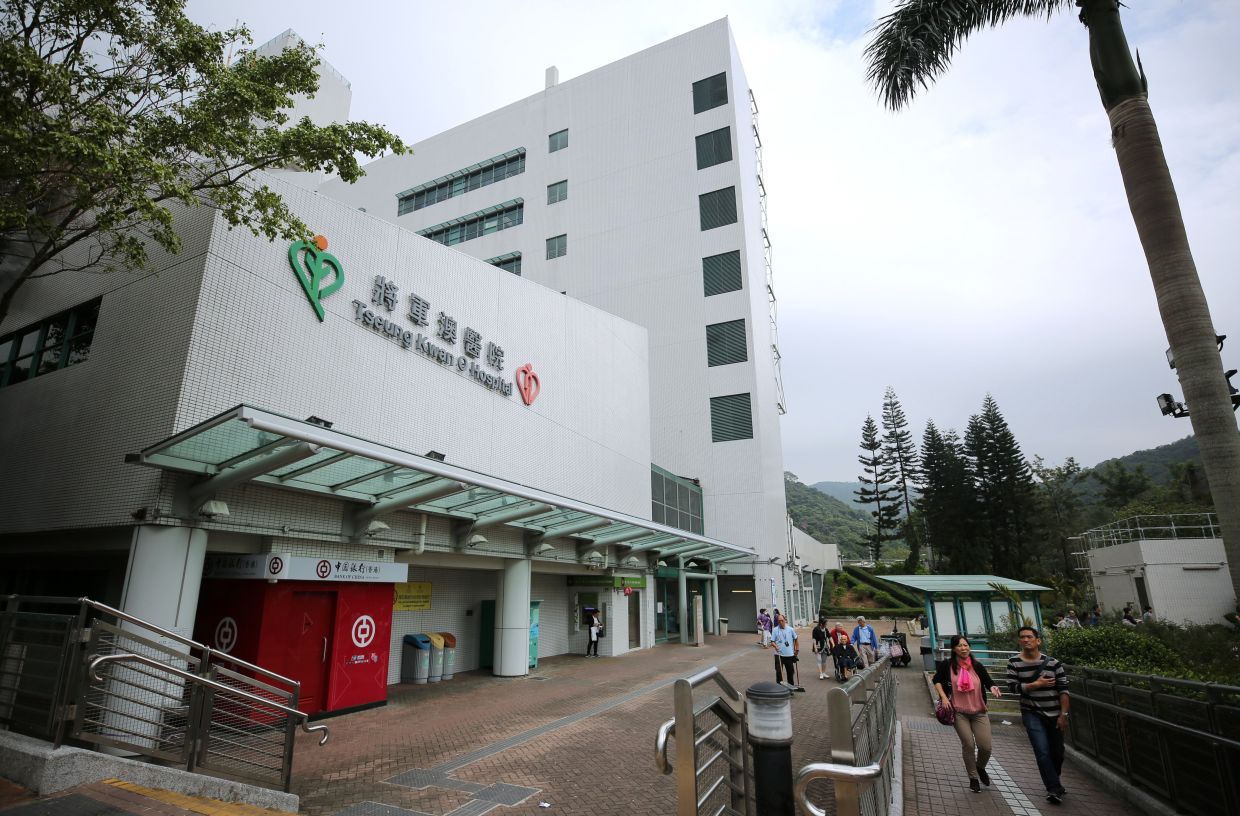
An 85-year-old woman's death following a surgical blunder at a Hong Kong public hospital has exposed serious lapses in clinical protocols and decision-making, with investigators concluding that the operating surgeon fell victim to cognitive bias when identifying internal organs during the procedure. Tseung Kwan O Hospital released its findings on Thursday, nearly a year after the February 7 incident that claimed the patient's life, triggering fresh calls for accountability and remedial action across Hong Kong's healthcare system.
The patient, who had been admitted with obstructive sigmoid colon cancer, required a transverse colostomy—a procedure designed to bypass her intestinal blockage by creating a surgical opening, or stoma, in the abdominal wall. The operation proceeded under what should have been straightforward circumstances, with the woman's vital signs remaining stable throughout. However, in the weeks that followed, medical staff noticed an unusually high volume of output from the newly created stoma, an early warning sign that something had gone fundamentally wrong.
The true nature of the error became apparent only when the patient's condition deteriorated sharply in early March. After developing dangerously low blood pressure and an elevated heart rate, she was transferred back to Tseung Kwan O Hospital from Haven of Hope Hospital, where she had been receiving post-operative care. A computed tomography scan revealed the devastating mistake: the surgical opening had been created in the stomach rather than in the transverse colon, rendering the entire procedure not merely ineffective but actively harmful. The patient died on March 3, with her family having consented to a do-not-attempt-resuscitation order as her condition became irreversible.
The hospital's investigation identified what it termed "confirmation bias" as the root cause of the surgeon's misidentification of abdominal structures. This cognitive phenomenon, well documented in medical literature, occurs when professionals unconsciously seek out or interpret information in ways that confirm their pre-existing beliefs or expectations, while ignoring contradictory evidence. In this case, the surgeon appears to have convinced himself he was operating on the correct anatomical location without performing additional verification procedures that might have revealed the error before it was too late.
Beyond the individual surgeon's lapse, the inquiry uncovered a cascade of systemic failures that compounded the initial mistake and delayed its discovery. The medical team failed to adequately monitor the abnormally high stomal output, a critical sign that should have triggered immediate reassessment of the procedure's success. The investigation also identified insufficient experience among certain healthcare staff members directly involved in the operation and its aftermath, suggesting potential gaps in training or supervision within the surgical department.
Communication breakdowns between the surgical team and the rehabilitation unit that subsequently cared for the patient proved particularly consequential. These silos in information sharing meant that concerns about the patient's post-operative presentation were not escalated promptly to surgeons who might have recognised the problem. The delay in reassessment and intervention—potentially a matter of days or weeks—allowed the patient's condition to deteriorate beyond the point of recovery. From a patient safety perspective, this represents a textbook case of how institutional dysfunction can transform a correctable error into a fatal one.
Former Hong Kong lawmaker Michael Tien Puk-sun, who has taken a keen interest in healthcare governance issues, voiced sharp criticism of both the individual surgeon and the apparent institutional tolerance for repeated errors. He indicated that the doctor in question had a documented history of previous mistakes, raising uncomfortable questions about why such a surgeon remained in clinical practice without significant restrictions or retraining. Tien called for serious consequences, including demotion or dismissal, and expressed frustration at the hospital's continued reliance on vague pledges of improvement following each incident.
Tien's remarks highlight a broader tension within Hong Kong's healthcare system regarding accountability and patient protection. While individual doctors naturally make mistakes, a pattern of errors, combined with systemic failures to catch or prevent those errors, suggests deeper governance problems that institutional statements alone cannot remedy. The case has potentially damaged confidence in Hong Kong's position as a regional medical hub, an image that depends crucially on consistent, high-quality care and transparent handling of adverse incidents.
In response to the investigation, Tseung Kwan O Hospital announced a series of remedial measures, including a comprehensive review of clinical governance within its surgery department and the implementation of a cluster-based governance model designed to improve oversight and coordination. The hospital has committed to ensuring that surgical teams remain involved in patient care even after transfers to other facilities, a direct response to the communication breakdown that delayed discovery of this case's fatal error. The institution also plans to require stoma and wound care specialists to conduct formal assessments of post-operative patients, with mandatory documentation and timely reporting protocols to prevent similar oversights.
The hospital stated that it would proceed with disciplinary action against the doctors involved under standard human resources procedures and indicated a possible referral to the Medical Council, Hong Kong's professional regulator. This step potentially opens the door to more severe sanctions, including restrictions on the surgeon's registration or practice rights, depending on the council's findings. Such referrals carry significant weight within the medical profession and can trigger investigations that extend beyond the hospital's own jurisdiction.
For Malaysian and Southeast Asian healthcare administrators and policymakers, the Hong Kong case offers sobering lessons about the vulnerability of even well-regarded medical systems to preventable errors and the critical importance of building safety cultures that go beyond reactive investigations. The incident underscores how confirmation bias and poor interdepartmental communication can prove fatal when they occur in surgical settings, where verification procedures should be non-negotiable. It also demonstrates that accountability mechanisms must be paired with structural reforms to address systemic weaknesses, not merely punitive measures against individual practitioners whose errors may have been enabled by broader institutional failings.

