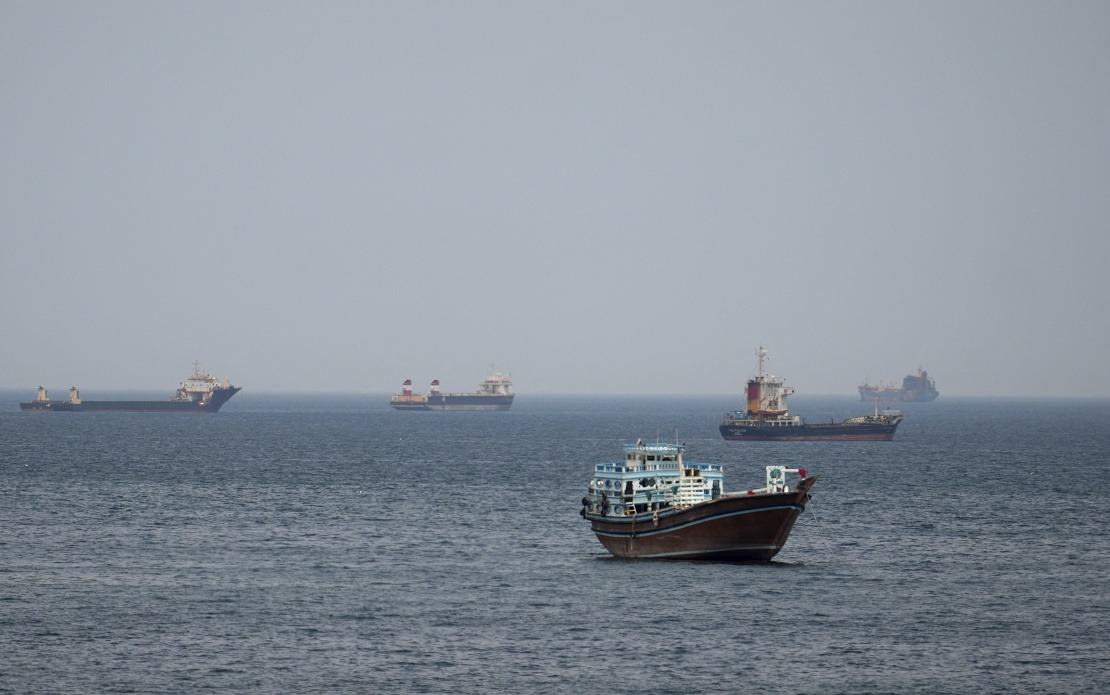
Oil tankers have resumed passage through the Strait of Hormuz as a ceasefire between the United States and Iran came into force on Thursday, marking a significant shift in Middle Eastern geopolitics after months of conflict. The accord, brokered without full resolution of underlying disputes, has triggered immediate economic relief in global energy markets and raised cautious expectations for stabilisation across the region—though considerable uncertainty remains about whether the peace will endure beyond the next two months.
The resumption of traffic through the strategically critical waterway has already driven oil prices to their lowest point since the conflict began on February 28. The Strait of Hormuz handles approximately one-fifth of global oil supply, making its stability a matter of profound concern for energy-dependent economies worldwide, including Malaysia. Analysts anticipate that petroleum exports through the passage could normalise substantially in coming months, provided no major disruptions occur during the negotiation period ahead. For regional economies that have absorbed elevated fuel costs throughout the conflict, this development offers the prospect of relief at the pump and improved energy security.
The agreement establishes a 60-day window for diplomats to reach comprehensive terms on Iran's nuclear programme, the issue that Trump cited as his justification for launching the conflict nearly four months ago. The arrangement also creates a US$300 billion reconstruction fund for Iran and structures additional financial incentives designed to bring Tehran to the negotiating table. US Vice President JD Vance will lead the American delegation and has indicated that Washington intends to pursue strict limits on Iran's long-range missile capabilities, one of Trump's original stated objectives in the conflict.
Yet the bargaining position from which Trump now negotiates differs markedly from his initial posture. When he launched military operations in late February, Trump demanded Iran's complete and unconditional surrender, coupled with the destruction of its nuclear weapons programme, the elimination of its capacity to strike neighbouring states, the cessation of militant group support across the region, and the removal of Iran's hardline leadership. That the agreement proceeds without achievement of any of these stated objectives reflects the grinding reality of prolonged conflict and domestic political pressure to end an unpopular war before the American electorate.
Iran's Supreme Leader Ayatollah Moitaba Khamenei has characterised Trump's willingness to sign the ceasefire as evidence of American desperation, signalling that forthcoming nuclear discussions will present substantial difficulties. "If the American side wants to be too demanding, we will not accept it," Khamenei said in a written statement, setting a confrontational tone for the negotiations ahead. Iran's hardline posture suggests that Tehran views itself as having emerged from the conflict strengthened, having weathered American military operations while securing informal control over the Strait of Hormuz and obtaining valuable relief from financial sanctions. The Islamic Republic has notified the international community that it will continue issuing permits and directing vessel traffic through the waterway during the 60-day interim period, though it has agreed to levy no fees during this interval.
Within the American political establishment, significant doubts have surfaced regarding whether Trump conceded too much ground. Republican allies of the President in Congress have questioned the magnitude of his concessions relative to the original military objectives, viewing the ceasefire as a capitulation that will disappoint voters who supported military action to contain Iran's regional influence. American officials maintain that subsequent negotiations could yet produce a robust agreement governing Iran's nuclear activities, though critics contend that Iran now sits in a substantially improved strategic position following its demonstration of capacity to resist American military pressure.
A persistent complication to the ceasefire's prospects lies in Lebanon, where Israeli military forces continue intensive operations against Hezbollah despite the agreement's explicit call for termination of the broader conflict. More than one million Lebanese civilians have been displaced by the fighting, and Israeli aircraft launched fresh airstrikes early Thursday as the ceasefire began taking effect elsewhere. Israel did not participate in the negotiations that produced the agreement and has publicly rejected constraints on its military operations. The Israeli government released a new map depicting an expanded occupation zone in Lebanon, signalling its determination to expand territorial control rather than withdraw, directly contradicting the ceasefire's provisions for Lebanese sovereignty and territorial integrity.
Trump has grown publicly frustrated with Israeli military actions in Lebanon, characterising them as strategically counterproductive and diplomatically damaging. In unusually blunt criticism of a traditional ally, Trump remarked at the White House that Israel risks alienating its most powerful international supporter through aggressive conduct that undermines broader diplomatic settlements. "If I was in the cabinet of the Israeli government, I might not be attacking the only powerful ally that I have anywhere left in the entire world," Trump said, reflecting a deepening rift between Washington and Jerusalem over the scope and duration of military operations in Lebanon.
For Southeast Asian nations with substantial energy consumption and heavy reliance on maritime commerce through the Indian Ocean, the restoration of stability in the Strait of Hormuz carries profound implications. Disruptions to oil supplies through the waterway have rippled throughout the region's economies, affecting manufacturing competitiveness, transportation costs, and inflation pressures. Malaysia, as an energy-exporting nation with significant petrochemical and downstream petroleum industries, has simultaneously benefited from elevated crude prices while suffering elevated input costs in industrial sectors dependent on imported energy. The normalisation signalled by this ceasefire offers potential gains across these dimensions, though continued uncertainty about the durability of the agreement means that regional planners must maintain contingency arrangements for further disruptions.
The next 60 days will prove decisive in determining whether the ceasefire evolves into durable peace or deteriorates into renewed conflict. Success will require both American and Iranian negotiators to bridge fundamental disagreements about nuclear weapons capabilities, sanctions relief, and regional security arrangements. The role of Israel and ongoing violence in Lebanon represent a wild card that could destabilise the entire framework if the conflict there expands or if Trump proves unable to constrain Israeli military operations as he has publicly committed to doing. Regional observers will be closely monitoring whether the diplomatic process produces meaningful progress or whether entrenched positions ultimately prove irreconcilable.

