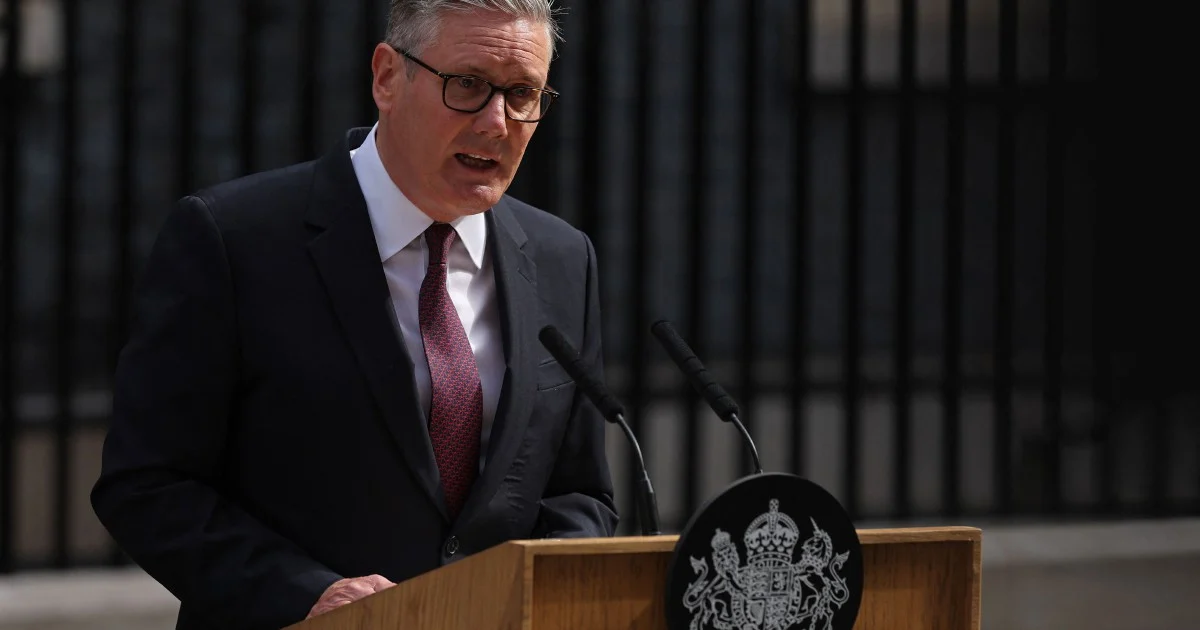
Prime Minister Keir Starmer announced on Monday that he would step down from his position, committing to remain in office only until the Labour Party installs a successor sometime before parliament returns in September. The announcement represents a dramatic shift in British politics and continues a troubling trend: Starmer's departure will mark the seventh change in national leadership within the past ten years, underscoring the instability that has gripped Westminster over the past decade and a half.
The Labour Party will now move swiftly to conduct an internal election to determine Starmer's replacement. Under the party's constitutional rules, a leadership contest opens immediately after the incumbent leader announces their intention to resign. The process is deliberately structured to move at a measured pace while ensuring broad participation from the party membership, which now numbers over 400,000 individuals across the United Kingdom. This membership-driven approach distinguishes Labour from some other Westminster traditions and ensures that grassroots activists have a direct voice in selecting the party's future direction.
For a candidate to qualify as a contender for the Labour leadership, they must first secure nominations from fellow Members of Parliament and European Parliament representatives. The threshold is intentionally set to winnow the field while preventing the exclusion of serious candidates. Historically, this nomination stage has required backing from a minimum proportion of Labour legislators, though the exact percentage varies depending on party rules revised before each contest. This mechanism ensures that any potential leader commands meaningful support from the parliamentary wing of the party, preventing fringe or purely factional candidates from advancing to the membership ballot.
Once the nomination phase concludes and the candidate slate is finalized, Labour members and affiliated supporters gain the opportunity to vote for their preferred leader. The voting period typically spans several weeks, allowing ample time for campaigning and debate among the contenders. Members cast ballots electronically, with the process conducted under strict security measures to prevent fraud and ensure integrity. The winning candidate is determined by a simple majority of votes cast, though Labour has experimented with ranked-choice voting systems in recent years to ensure the winner has broad support across different party factions.
The timing of this succession is particularly significant for British politics and carries implications extending across the Atlantic and throughout Europe. Starmer's departure means that no Prime Minister will have remained in office for a full parliamentary term since David Cameron left in 2016—a span that has seen David Cameron, Theresa May, Boris Johnson, Liz Truss, Rishi Sunak, and now Starmer all occupy the top job. This churn reflects deeper fractures within British governance, stemming from the Brexit upheaval, economic difficulties, internal party divisions, and shifting voter allegiances that have destabilized conventional Westminster politics.
For Malaysia and other Commonwealth nations, the lesson is particularly instructive. Britain's constitutional arrangements, which many former colonies inherited and adapted, are proving remarkably brittle when subjected to intense political strain. The reliance on party loyalty and internal parliamentary dynamics to maintain prime ministerial tenure has proven insufficient during periods of polarization and crisis. Malaysia's own experience with prime ministerial succession—which has seen the country cycle through several leaders in recent years as well—reflects similar pressures facing Westminster-derived systems when faced with modern political volatility and factional competition.
The September deadline for selecting a new Labour leader means the process will unfold during the parliamentary recess, when MPs are typically campaigning in their constituencies. This timing allows candidates to engage directly with local party members and test their popularity among the grassroots base that will ultimately decide the contest. Candidates will need to articulate distinct visions for Labour's future direction, whether emphasizing social democratic reform, market-oriented policies, or alternative approaches to governance. The outcome of this contest will substantially shape Labour's positioning as it heads toward a potential general election, currently not scheduled until January 2025 at the latest.
The selection process also reflects Labour's commitment to democratic accountability and intra-party inclusion, principles that the party has emphasized following earlier leadership contests. Unlike some political systems where party elders or small committees determine succession, Labour's structure ensures that the broader membership base has decisive influence. This approach carries both advantages and disadvantages: it generates enthusiasm and buy-in from grassroots activists but can also produce leaders who struggle to command parliamentary consensus if their victory margins are narrow or factional support is fragmented.
As the Labour Party moves through this succession process, international observers will be watching closely. The new leader will inherit a fractured political landscape, significant economic challenges, and the need to rebuild public trust in institutions that has eroded substantially over the past decade. The stakes extend beyond Labour itself; whichever successor emerges will have the opportunity—depending on the timing of the next general election and prevailing political conditions—to shape Britain's domestic agenda and international relationships for years to come. For regional observers in Southeast Asia, this latest British leadership transition serves as a cautionary tale about the vulnerability of Westminster systems to extended periods of instability.

