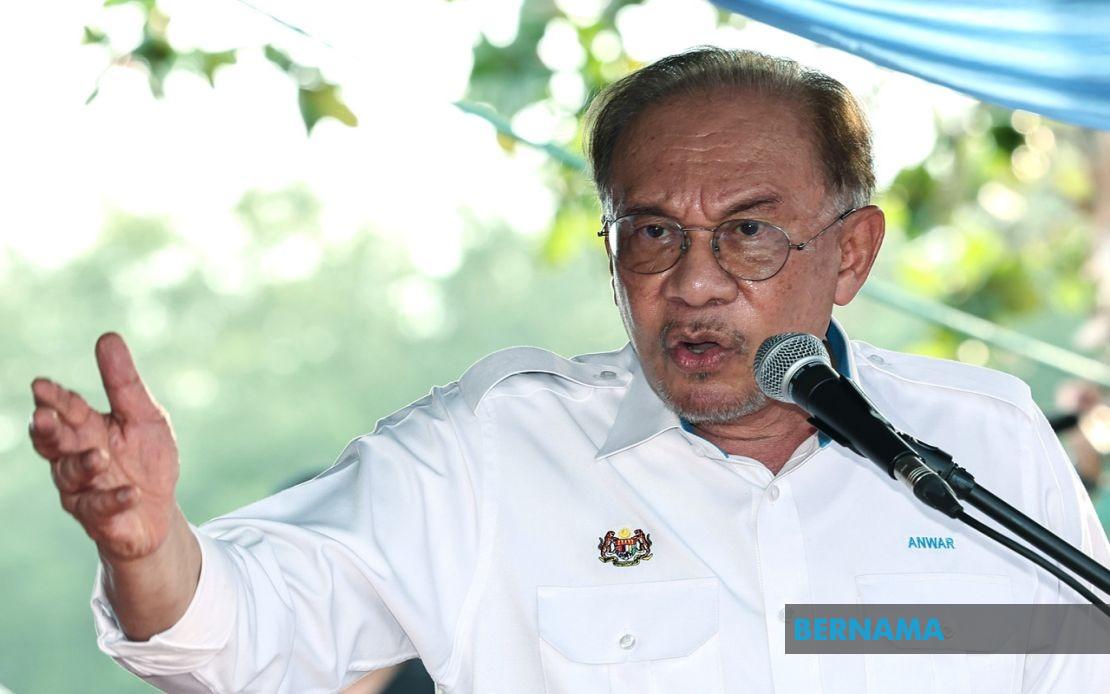
Prime Minister Datuk Seri Anwar Ibrahim has called for a fundamental shift in how Malaysia approaches national development, arguing that economic gains and modernisation initiatives must translate into tangible benefits for ordinary citizens across all income levels. Speaking at a community engagement event in Muar on June 15, Anwar underscored the disconnect that can emerge when major national projects and technological advances fail to improve living standards for those in rural and lower-income communities.
The Prime Minister's remarks highlight a persistent tension within Malaysia's development strategy. While the nation has invested heavily in high-tech infrastructure and digital transformation initiatives, these advances have not always filtered down to traditional economic sectors or the communities that depend on them. Anwar argued that development cannot be deemed successful if it remains concentrated among urban centres and privileged segments of society, leaving behind the farming communities, fishing villages, and smallholder enterprises that employ hundreds of thousands of Malaysians.
Addressing participants at the Hi-Tea event with local farmers, fishermen, and residents at Pantai Leka Food Court, Anwar articulated a vision of governance that prioritises accessibility and equity. He noted that artificial intelligence, digital transformation, and other cutting-edge technologies undoubtedly matter for Malaysia's long-term competitiveness. However, these initiatives should complement rather than overshadow investments in the welfare and income stability of rural populations. The government's responsibility, he suggested, extends beyond crafting impressive policy blueprints to ensuring that each policy tangibly improves how ordinary people live and work.
The Prime Minister's emphasis on ground-level engagement reflects a broader philosophy within the MADANI Government framework. By explicitly calling on Cabinet ministers and political leaders to venture into rural areas and listen directly to community concerns, Anwar was signalling that inclusive growth requires active, sustained engagement with constituencies often neglected in national discourse. This approach contrasts with top-down policymaking that relies primarily on data and bureaucratic assessments rather than lived experience and community insight.
An important dimension of Anwar's message concerns the equity of opportunity within Malaysia's modernisation agenda. Large-scale projects and technological investments tend to generate employment and economic activity concentrated in specific sectors and geographic areas. By contrast, smallholder farmers, rice cultivators, and independent fishermen operate within more dispersed networks and often lack easy access to the institutional support and infrastructure that urban-based enterprises enjoy. Without deliberate policy intervention, these traditional economic sectors risk becoming economically marginalised even as the nation as a whole advances technologically and financially.
The Prime Minister also referenced the government's social safety net programmes and targeted assistance mechanisms, suggesting these are tools through which inclusive growth can be operationalised. However, his comments implicitly acknowledged that such programmes require continuous monitoring and improvement to ensure they reach intended beneficiaries effectively. Bureaucratic inefficiencies or poorly designed schemes can result in assistance failing to reach those most in need, thereby undermining their purpose. Anwar's insistence that relevant agencies ensure effective channelling of support indicates awareness that good intentions alone are insufficient without rigorous implementation oversight.
For Malaysian readers and businesses, Anwar's statements carry implications for how the government may prioritise resource allocation and policy emphasis going forward. Sectors serving rural and agricultural communities—agricultural extension services, rural credit facilities, marketing infrastructure for smallholder produce, and fisheries management—may receive renewed attention and investment. Additionally, the statement suggests the government views inclusive growth as a moral and political imperative, not merely an economic consideration, potentially influencing spending decisions across various government agencies.
The context within which Anwar made these remarks is significant for Southeast Asian observers as well. Malaysia competes with neighbouring countries for investment, talent, and economic dynamism. Simultaneously, the nation confronts internal pressures to ensure that rapid modernisation does not exacerbate inequality or leave behind communities dependent on traditional sectors. Anwar's framing suggests Malaysia is attempting to chart a course that achieves technological advancement without sacrificing social cohesion or leaving traditional economic sectors behind. This balancing act remains challenging and will likely dominate national development discourse throughout the MADANI Government's tenure.
The Prime Minister's call for political leaders to be responsive to grassroots grievances also implies that accountability extends beyond formal institutional channels. Direct engagement with affected communities creates expectations that concerns raised will be addressed and that leaders will follow through on commitments. This places a responsibility on Cabinet members and local officials to not only listen during such engagements but to translate feedback into concrete policy adjustments and resource reallocation where necessary.
Ultimately, Anwar's message reflects recognition that sustainable economic growth depends on broad-based participation and benefit distribution. Nations where development remains concentrated among elite segments or geographic clusters face risks of political instability, persistent poverty despite overall economic growth, and inefficient resource utilisation. By advocating for inclusive approaches that genuinely improve prospects for farmers, fishermen, and rural smallholders, the Prime Minister is articulating a vision wherein Malaysia's modernisation trajectory strengthens rather than undermines social stability and shared prosperity. Whether this vision translates into sustained policy action and measurable improvements in rural livelihoods remains to be seen, but the rhetorical commitment signals a government cognisant of the necessity for inclusive growth mechanisms.