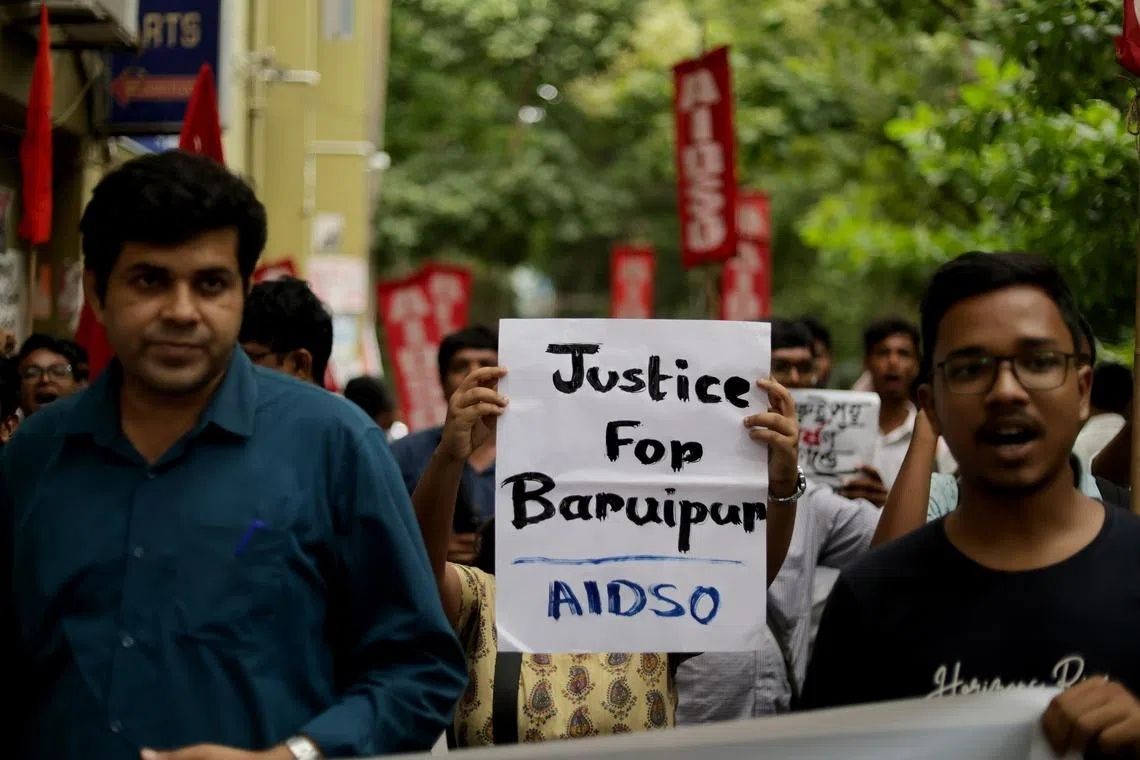
Indian law enforcement authorities arrested 35 people for violence and vandalism related to angry public demonstrations this week following the rape and murder of an 11-year-old girl in West Bengal's Baruipur city, located roughly 30 kilometres from Kolkata. The discovery of the child's body in a pond on July 5, a day after she vanished, triggered widespread unrest that has placed the spotlight once again on the persistent safety concerns affecting women and girls across India, despite legislative reforms enacted over the past decade.
The outbreak of public anger manifested in severe disruptions across the region, with protesters establishing roadblocks and setting vehicles ablaze as outrage over the heinous crime swept through communities. Senior state police official Arvind Kumar Anand indicated that investigations remain ongoing, with law enforcement utilising digital evidence from multiple widely-circulated videos to identify additional individuals who participated in the violent demonstrations. The authorities have confirmed that at least one innocent bystander lost his life when he was killed by members of the enraged crowd, underscoring how emotional responses to such crimes can sometimes result in tragic miscarriages of justice.
Developments in the case took a dramatic turn when police fatally shot one of the four arrested suspects during the early morning hours of July 8. Prabhas Mondal, who had been taken to the crime scene as part of the police investigation, was killed when he allegedly attempted to flee, according to official statements. The killing has raised questions about procedural safeguards, though some sections of Indian society view such encounters as delivering swift accountability for perpetrators of sexual violence.
The suspect's mother declined to claim her son's body, expressing that she could not bring herself to take him home given the gravity of his alleged crimes. In a television appearance, she acknowledged the seriousness of what her son had done, stating that the punishment he received corresponded to the nature of his actions. Her public statement reflects the profound shame and moral reckoning that families connected to such cases often experience within Indian society.
Complications arose regarding the credibility of the investigations when relatives of another arrested suspect contended that he had been detained as a result of mistaken identity rather than genuine culpability. The family maintained that their relative was innocent and had become ensnared in the case through erroneous police procedures. However, the families of the remaining two suspects have not made public statements regarding their relatives' involvement or innocence.
The incident has become a political focal point, with Suvendu Adhikari, who assumed the position of West Bengal Chief Minister following the Bharatiya Janata Party's electoral victory in state elections held in May, pledging uncompromising action. Adhikari declared that the new state administration would demonstrate zero tolerance for sexual violence and crimes against women, as well as for vigilante killings that claim innocent lives. Through a statement posted on the social media platform X on July 9, he assured the public that his government would pursue perpetrators through the complete apparatus of the legal system and guarantee that justice would be properly administered.
This tragedy resurrects longstanding anxieties regarding the vulnerability of women and children in India, notwithstanding significant legislative changes implemented over more than a decade. The landmark 2012 Delhi gang rape case, which involved the brutal rape and murder of a 22-year-old woman, catalysed massive national protests demanding legislative reform. That case resulted in the execution of four convicted perpetrators and prompted the government to introduce more stringent criminal laws addressing sexual violence. Yet the persistence of such horrific crimes suggests that legal measures alone have proven insufficient to create systemic change.
The occurrence in West Bengal carries particular weight given the international attention the state attracted in 2024 following the rape and murder of a junior doctor employed at Kolkata's RG Kar Medical College and Hospital. That case sparked large-scale demonstrations across the country centred on women's safety in professional workplaces and public spaces. The recurring pattern of sexual violence in the state has become emblematic of wider governance and safety challenges confronting India as a whole.
For Malaysian and Southeast Asian observers, the case underscores the challenge that many developing democracies face in balancing the rule of law with public demand for swift justice in cases involving particularly heinous crimes. The shooting of Mondal raises questions about whether police encounters constitute legitimate law enforcement responses or represent extra-judicial punishment that circumvents proper judicial processes. The regional significance extends beyond crime statistics; it reflects broader tensions between institutional reform, societal expectations, and the fundamental requirement to protect vulnerable populations while maintaining procedural integrity within functioning democratic systems.

