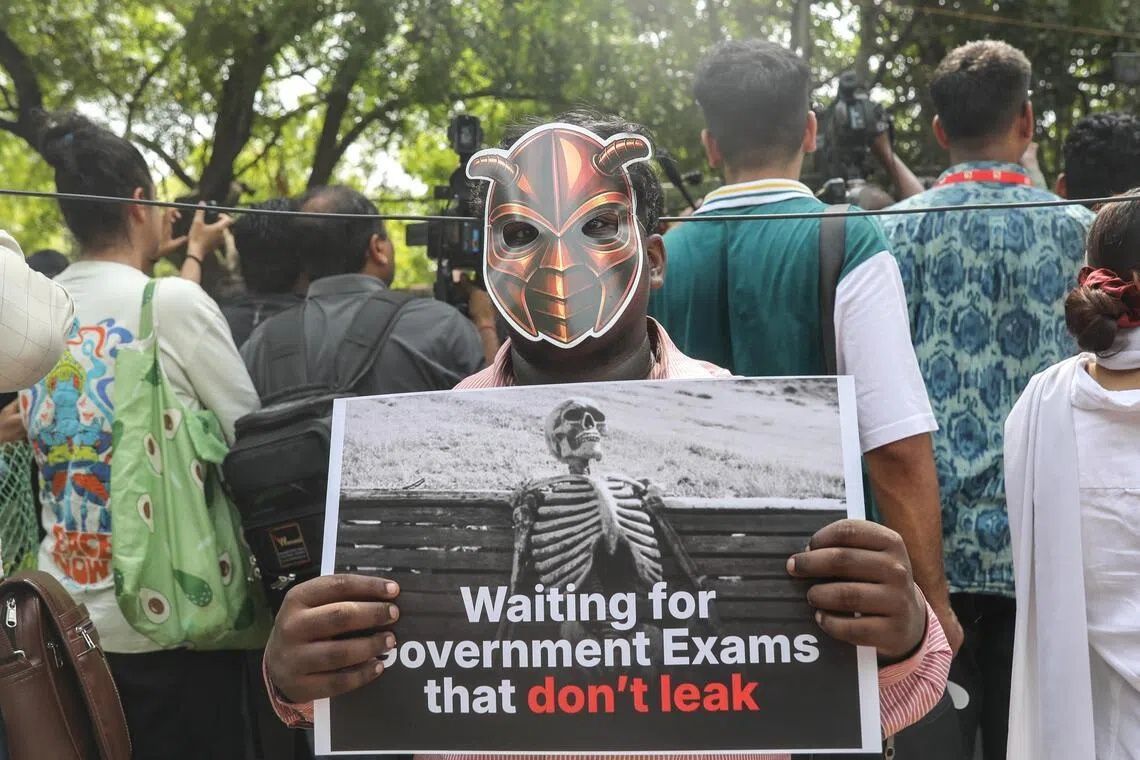
India's 2.2 million medical school aspirants faced a critical retake examination on Sunday under unprecedented security arrangements, following the cancellation of the previous test in May after confidential question papers were leaked—a scandal that has shaken public confidence in the country's examination system and sparked calls for government accountability at the highest levels.
The National Eligibility cum Entrance Test represents the sole gateway for medical college admission across India, making it one of the world's most fiercely contested examinations. With only just over 100,000 undergraduate seats available annually, the competition attracts millions of candidates each year, creating enormous pressure on students and their families. This intensity has spawned a sprawling coaching industry worth billions of rupees, while simultaneously creating lucrative opportunities for criminal networks to exploit vulnerabilities in test administration.
The May examination's collapse triggered unprecedented backlash. Students and parents expressed fury as authorities scrapped the entire test following confirmed evidence of paper leaks, and Indian media outlets documented multiple reports of student suicides in the aftermath—a grim reflection of the psychological toll such high-stakes examinations exact on India's youth. The incident exposed systemic weaknesses in how the National Testing Agency manages one of the nation's most critical educational assessments, raising fundamental questions about institutional competence and safeguarding.
Compounding the crisis, a separate marking controversy engulfed high school examinations taken by nearly two million students, where numerous families alleged their children received incorrect grades or had their results assigned to wrong candidates. The cascading series of examination failures sparked widespread youth protests demanding the resignation of Education Minister Dharmendra Pradhan, with demonstrators arguing that repeated institutional failures warranted leadership change. The discontent grew so pronounced that it fuelled the unexpected rise of a satirical online movement called the "Cockroach People's Party," which garnered millions of followers within weeks and became a vehicle for expressing broader frustration with government performance.
Investigations revealed the breach's sophistication. The Central Bureau of Investigation arrested the alleged ringleader, identified as a chemistry lecturer, suggesting involvement of insiders with direct access to examination administration. This detail proved particularly damaging, as it demonstrated that security vulnerabilities stemmed not merely from external criminal activity but from compromised individuals embedded within educational institutions themselves. Authorities determined that organised cheating networks had used messaging platforms, notably Telegram, to distribute leaked questions to paying candidates seeking unfair advantage.
In response, the National Testing Agency announced implementation of a "multi-layered security framework" designed to eliminate opportunities for future breaches. The retake examination deployed over 200,000 officials including police personnel to monitor testing centers nationwide, representing one of India's most heavily securitised civilian examinations. The framework incorporated biometric authentication to verify candidate identity, AI-enabled camera surveillance to monitor test halls in real-time, and GPS tracking of question paper distribution to prevent materials from straying outside official channels.
The authorities also took the controversial step of restricting Telegram access during examination week, attempting to eliminate the primary communication channel that cheating networks had exploited. However, Pavel Durov, Telegram's head, publicly disputed the efficacy of such bans, arguing that restricting particular applications merely diverts illicit activity to alternative platforms. He contended the genuine problem lay with insider perpetrators who leak materials initially, suggesting that addressing the root cause required institutional reforms rather than technological restrictions.
The retest commenced at 2pm local time on Sunday, with authorities implementing protocols substantially different from May's failed administration. The enhanced measures reflected lessons learned through investigation and represented an attempt to restore institutional credibility with candidates and their families. Success in conducting this examination fairly would prove essential to rebuilding public trust in the National Testing Agency's ability to administer examinations impartially.
The scandal illuminates broader systemic challenges facing India's competitive examination infrastructure. As the world's largest education system managing millions of high-stakes tests annually, India faces mounting pressure to prevent fraud while maintaining examination integrity. The incident's severity—encompassing criminal conspiracy, institutional corruption, media exposure, and public protest—suggests that conventional security approaches prove insufficient against determined criminal networks with insider assistance. Educational authorities must address fundamental governance issues, implement stronger institutional oversight mechanisms, and establish robust insider threat detection to prevent recurrence.
For Malaysian observers and Southeast Asian education systems more broadly, India's examination crisis offers cautionary lessons about the vulnerabilities inherent in large-scale, high-stakes testing regimes. As regional nations expand competitive entrance examinations for professional and academic pathways, the Indian experience demonstrates the necessity of investing in institutional integrity checks, transparent audit mechanisms, and sophisticated fraud detection systems from inception. The social consequences—student distress, public anger, and loss of confidence in educational gatekeepers—extend far beyond individual examination failures, potentially undermining faith in educational meritocracy itself and raising uncomfortable questions about whether systems designed to identify talent actually serve that purpose equitably.

