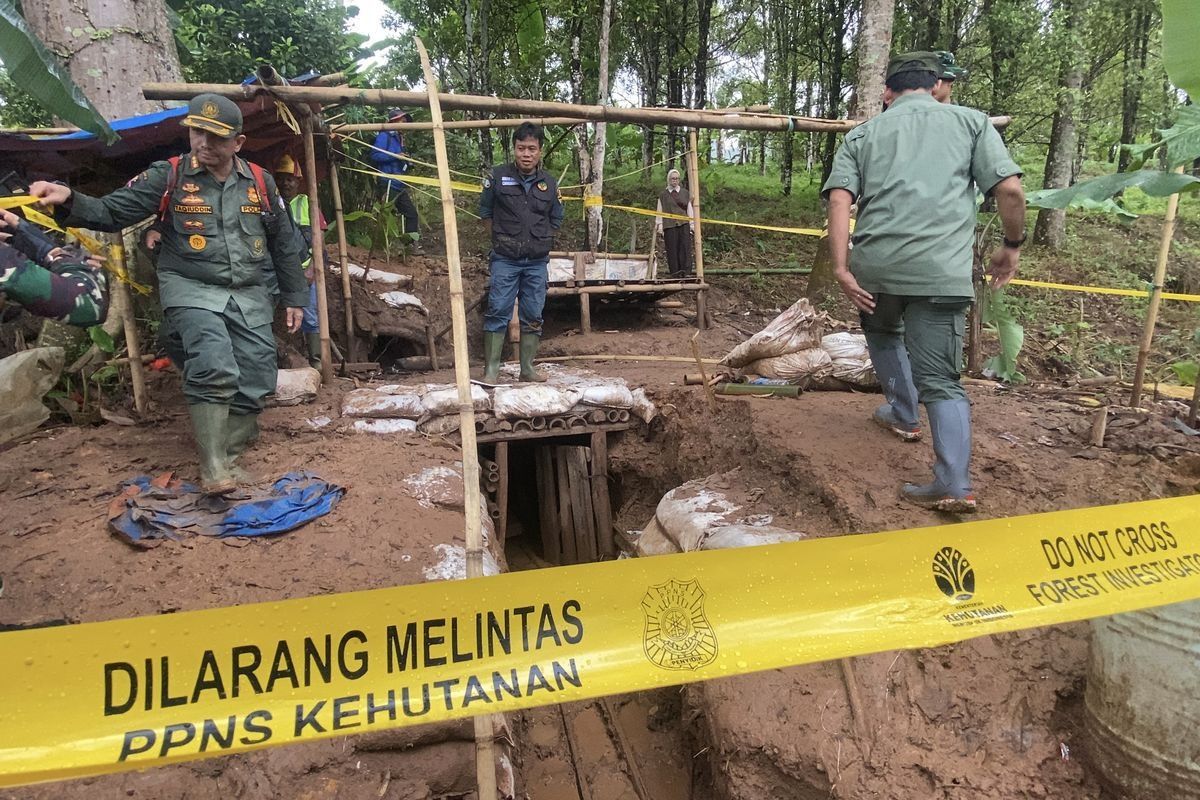
Indonesia's energy ministry has filed criminal charges against 24 foreign nationals suspected of operating an illegal gold mining network across the Maluku region, marking another significant enforcement action against foreign-led extraction schemes that have plagued the archipelago's resource-rich eastern territories. The move underscores persistent challenges authorities face in combating organised illicit mining that exploits Indonesia's mineral wealth while circumventing regulatory frameworks and environmental safeguards.
Energy ministry official Jeffri Huwae revealed that the suspects orchestrated construction of extensive infrastructure supporting the clandestine operation, including access roads and ore processing installations in the Gunung Botak area. The detailed allegations suggest an operation of considerable scale requiring substantial coordination and financial investment. Such infrastructure development typically indicates syndicates with significant resources and established supply chains capable of moving extracted materials beyond detection. The ministry's decision to prosecute individuals for infrastructure development demonstrates a broadened enforcement approach targeting the entire ecosystem enabling illegal extraction rather than solely addressing mining activities themselves.
The legal jeopardy facing the accused is substantial. Convictions under Indonesian mining regulations carry maximum prison sentences of five years, providing prosecutors with meaningful leverage should the cases proceed to trial. The severity of potential penalties reflects legislative determination to deter foreign participation in illegal extraction. However, enforcement effectiveness depends critically on successful prosecution and conviction, outcomes that remain uncertain given the transnational nature of the conspiracy and evidence-gathering complexities.
Authorities have currently detained twelve of the twenty-four suspects, while the remaining twelve have evaded capture and maintain positions outside Indonesian jurisdiction. This split reflects a common enforcement problem in transnational mining crimes, where operation coordinators and financial beneficiaries frequently remain beyond reach while lower-level operatives bear apprehension risk. The geographical distribution of suspects across multiple countries complicates extradition proceedings and international cooperation mechanisms. The presence of fugitives abroad significantly reduces prosecutorial leverage and may permit organised elements to reconstitute operations elsewhere in the region.
State news agency Antara previously identified the detainees as 24 Chinese nationals working under sponsorship of local company PT Harmoni Alam Manise, suggesting the operation functioned within a framework of local partnerships. Such arrangements typically involve domestic entities providing ostensible legitimacy and operational cover while foreign nationals supply capital, technical expertise, and equipment. The involvement of Indonesian companies as willing or coerced partners reveals how illegal mining operations become embedded within legitimate business structures, complicating regulatory detection and enforcement.
Two Indonesian nationals have also been named as criminal suspects alongside the foreign defendants. Their inclusion acknowledges the domestic dimension of illegal mining conspiracies and suggests collaborative relationships between foreign operators and local facilitators. Indonesian accomplices frequently provide essential services including land access, government liaison, labour recruitment, and logistics. Prosecution of local conspirators remains critical to disrupting the entire supply chain, though politically sensitive dynamics may complicate pursuing charges against connected individuals or businesses.
This enforcement action represents part of a broader pattern of illegal mining operations involving foreign nationals across Indonesia's eastern frontier regions. The Maluku operation follows similar cases elsewhere in the country's expansive maritime domain. Previous incidents demonstrate the persistent attraction of Indonesia's mineral resources for organised criminal syndicates willing to exploit jurisdictional vulnerabilities and enforcement capacity constraints. The recurring nature of such incidents suggests that prosecution and convictions alone have failed to establish sufficient deterrent effect.
Last year, authorities in Papua, Indonesia's easternmost province, arrested four Chinese nationals implicated in illegal mining operations across the Senggi district. That case illustrated similar operational patterns including foreign participation, local infrastructure development, and transnational escape routes. The geographical clustering of incidents across Maluku and Papua reflects rational targeting by criminal syndicates seeking remote locations with sparse government presence and limited monitoring capacity. Both regions offer geographical advantages including proximity to international shipping routes and established black-market precious metals networks.
The energy ministry's decision to announce charges publicly rather than prosecuting quietly suggests a deliberate messaging strategy. Indonesia faces international criticism regarding governance of its natural resource extraction sectors and environmental stewardship. Publicising major enforcement actions against foreign mining operators addresses such concerns while demonstrating regulatory commitment. However, effectiveness ultimately depends on securing convictions and preventing operational reconstitution rather than generating headlines.
Regional implications warrant consideration for neighbouring countries facing similar pressures. Transnational illegal mining networks frequently operate across multiple jurisdictions, and syndicates may shift operations to neighbouring territories if Indonesian enforcement intensifies. Malaysia, with its own history of illegal tin mining and gold panning operations, recognises enforcement challenges transcending national boundaries. Effective regional response requires coordinated intelligence sharing, harmonised legal frameworks, and collaborative enforcement mechanisms beyond unilateral prosecution efforts. The Maluku case illustrates how global criminal networks exploit jurisdictional gaps and regulatory disparities across Southeast Asia to access mineral resources.
The ministry notably withheld information regarding suspect nationalities beyond Antara's reporting and declined revealing estimated gold quantities, suggesting ongoing investigation or diplomatic sensitivities. Such reticence sometimes reflects negotiations with foreign governments or concerns regarding operational intelligence disclosure. Complete transparency regarding investigation scope, suspect backgrounds, and commercial dimensions would assist public understanding of illegal mining's transnational architecture. Information asymmetries complicate informed policy discussion regarding whether enforcement responses adequately address underlying demand drivers and financial incentive structures sustaining international mining conspiracies.

