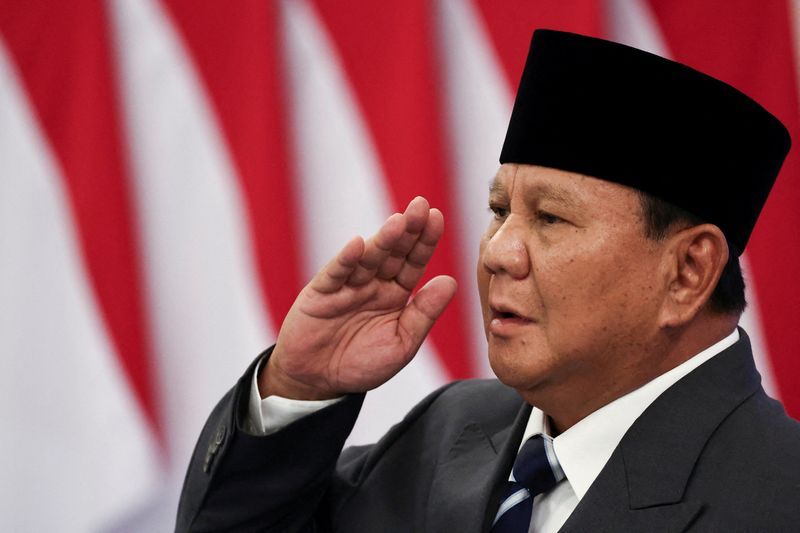
Indonesia is poised to become the latest Southeast Asian nation to formally embed artificial intelligence across its government operations, with a presidential regulation set to reshape how key public programmes function. The initiative targets integration of AI technologies into the country's flagship $15 billion free meals scheme alongside health screening and tuberculosis testing programmes, documents reviewed by Reuters reveal. President Prabowo Subianto is expected to sign off on the regulation imminently, following contributions from technology giants including Meta Platforms, IBM and Microsoft to the draft framework.
The strategic roadmap charts a phased implementation from 2026 through 2029, directing government ministries and regional authorities to adopt AI systems with explicit focus on the presidential priority programmes. Jakarta's vision extends beyond immediate operational efficiency, with policymakers projecting that widespread AI deployment could elevate Indonesia's gross domestic product by 12 percent—equivalent to approximately $366 billion—by the close of the decade. This ambitious economic projection reflects global recognition that nations leveraging AI effectively can unlock substantial productivity gains across sectors.
Indonesia's timing reflects broader regional competition for technological supremacy. Singapore and Malaysia have already established themselves as development hubs, attracting billions in investment from international technology corporations building critical cloud and AI infrastructure to service escalating regional demand. Indonesia, despite being Southeast Asia's largest economy by population and gross domestic product, has lagged significantly in AI advancement compared to these neighbours. The new regulation represents an attempt to narrow that gap by creating institutional frameworks and incentives that appeal to foreign investors and domestic innovators alike.
Within the free meals programme, AI deployment will serve multiple functions addressing documented operational vulnerabilities that have plagued the initiative. The technology will optimise regional menu design, establish kitchen hygiene monitoring systems, forecast nutritional demand patterns and identify financial irregularities within the supply chain. Integration of health datasets will enable early detection of potential public health emergencies, a critical safeguard following last year's food poisoning outbreak affecting tens of thousands of schoolchildren. These technical interventions directly respond to transparency concerns and safety lapses that resulted in the dismissal and arrest of the programme's previous leadership.
The application of AI to public health extends beyond food safety into broader medical screening infrastructure. The regulation envisions AI systems analysing health examination data collected through Indonesia's free health screening initiatives and tuberculosis detection programmes. Such deployment could theoretically improve diagnostic accuracy while reducing manual processing burdens on already stretched public health facilities across the archipelago.
However, scepticism persists regarding Indonesia's practical capacity to execute this technological transformation. Derwin Suhartono, artificial intelligence professor at Bina Nusantara University in Jakarta, contends that Indonesia lacks the foundational infrastructure necessary for meaningful AI development, pointing to critical shortages in semiconductor manufacturing capabilities and insufficient domestic expertise. His assessment suggests the nation may remain confined to consuming foreign-developed AI products rather than building indigenous technological competence. He further critiques the current regulatory approach as aspirational rather than grounded in implementable strategy, describing execution-level planning as predominantly rhetorical.
The infrastructure deficiency Suhartono identifies represents a genuine structural challenge. AI advancement requires specialised hardware, particularly semiconductor chips, alongside substantial human capital investment in workforce upskilling. Indonesia's educational system has not yet produced AI talent at scale sufficient to populate government initiatives, technology firms and research institutions simultaneously. This talent gap creates dependency on foreign expertise, limiting long-term autonomy in technological development.
Recognising these constraints, the regulation incorporates mechanisms intended to address supply-side limitations. Proposals include establishing a "sovereign AI fund" administered primarily through Danantara Indonesia, the nation's newly established wealth fund, coupled with fiscal incentives designed to attract AI researchers and compensate for domestic talent shortages. These financial mechanisms acknowledge that market forces alone will not generate sufficient domestic AI capacity within the proposed timeframe.
The regulatory framework simultaneously addresses governance risks accompanying AI deployment across government systems. Complementary regulations require government bodies to report AI-related risks encompassing biometric data misuse, intellectual property violations and deepfake generation. Such risk reporting mechanisms reflect global experience demonstrating that powerful AI systems without proper oversight can undermine democratic institutions, individual privacy and economic stability.
Microsoft's 2024 commitment to invest $1.7 billion in Indonesian cloud services and AI expansion signals foreign technology sector confidence in the market's potential, despite current limitations. This investment demonstrates that multinational corporations view Indonesia's size, growing digital adoption and government commitment as sufficient to justify substantial capital deployment. Yet such foreign investment, while valuable for infrastructure development, perpetuates the concern that Indonesia remains dependent on external technology providers rather than building self-sufficient capabilities.
The regulation builds upon groundwork established through a white paper issued previously, indicating that AI integration reflects deliberate policy evolution rather than sudden strategic pivot. The phased 2026-2029 implementation timeline provides breathing room for workforce development and infrastructure maturation, though sceptics question whether the timeframe suffices given documented execution challenges affecting the free meals programme itself.
For Malaysia and other Southeast Asian neighbours, Indonesia's approach offers both opportunity and cautionary lessons. The region's largest economy formalising AI integration signals market maturation and potential for technology transfer arrangements. Simultaneously, Indonesia's acknowledged infrastructure and talent gaps underscore that AI adoption requires sustained commitment beyond regulatory frameworks—encompassing education system overhaul, research institution strengthening and patient capital deployment.
The success of Indonesia's AI integration will ultimately depend less on regulatory design than on institutional capacity to translate policy into functioning systems serving millions of citizens. The free meals programme's troubled history suggests implementation challenges extend beyond technology. If artificial intelligence can meaningfully improve accountability, efficiency and safety across Indonesia's public programmes, the model could reshape governance across the region. If execution stumbles despite sophisticated AI systems, the initiative risks becoming another example of technological solutions deployed without corresponding institutional reform.

