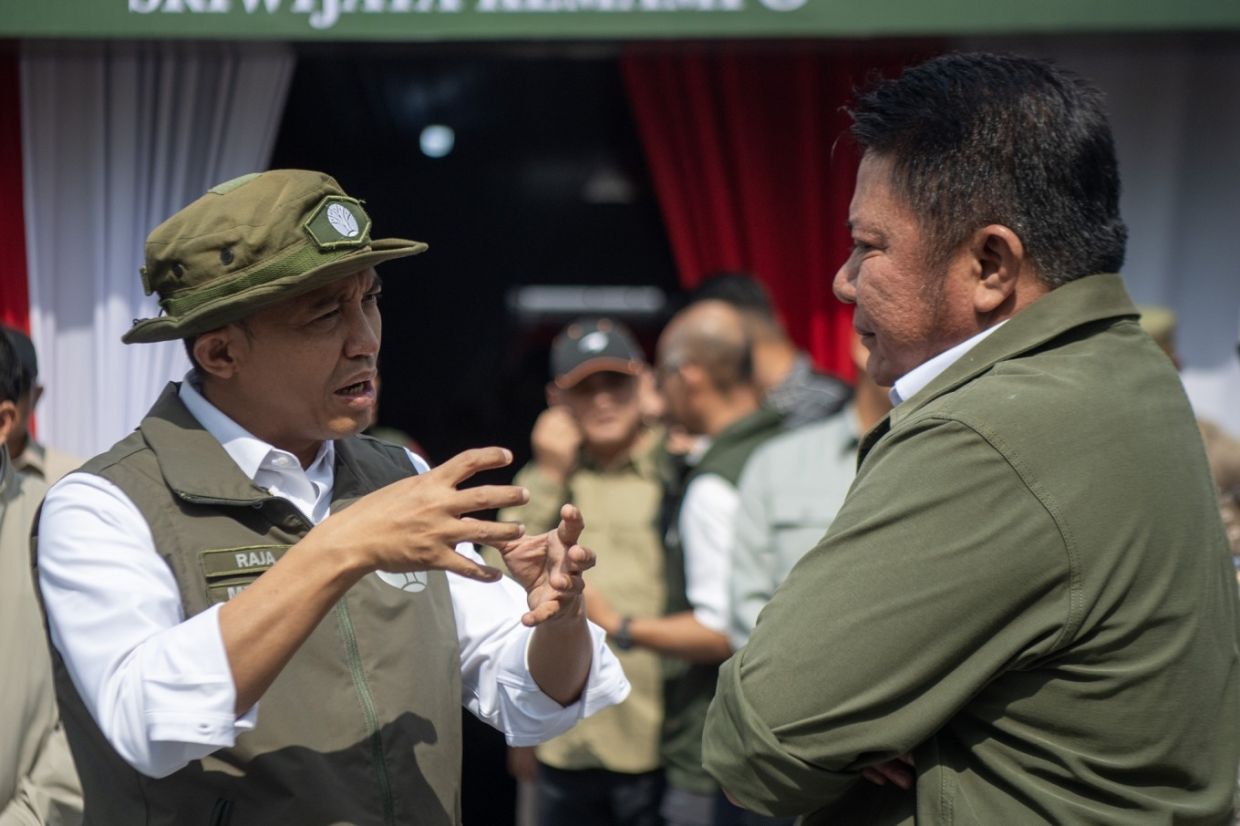
Indonesia's Corruption Eradication Commission (KPK) has resumed a high-profile investigation into Forestry Minister Raja Juli Antoni, amid mounting evidence suggesting the minister may not have completely returned kickbacks allegedly offered by Suhardiman Amby, regent of Kuantan Singingi in Riau province. The development marks an escalation in one of the country's most significant corruption cases involving resource management and hints at the complex web of illicit transactions that continue to plague Indonesia's bureaucracy at both national and regional levels.
The investigation centres on discrepancies between the amount of money Raja Juli reported receiving and the total sum allegedly given to him during a June 2 meeting between forestry ministry officials and representatives from the Kuantan Singingi administration. According to KPK spokesperson Budi Prasetyo, graft investigators are examining whether the minister's declaration to authorities matches what Suhardiman actually handed over. The regent allegedly presented Raja Juli with an envelope containing S$14,000 in Singaporean currency during that encounter, though questions now surround whether this represents the full extent of the transaction.
The alleged kickback scheme appears intimately connected to a land reclassification proposal that carries substantial economic and environmental implications. Kuantan Singingi's administration had requested the Forestry Ministry to reclassify more than 1,800 hectares of limited production forest (HPT) for alternative uses, a decision that would fundamentally alter the region's forest management status and open possibilities for different commercial activities. For Malaysian readers familiar with similar resource management controversies in Peninsular Malaysia and Sabah, this case illustrates how forest conversion decisions remain politically sensitive across the region and often attract corrupt interest.
Raja Juli initially reported the bribery attempt on July 3, claiming he had rejected Suhardiman's offer and returned the envelope on June 12 at Kuantan Singingi Police headquarters. However, the KPK's renewed scrutiny suggests investigators harbour serious doubts about this account. Under Indonesian law, improper gifts received in connection with public office must be reported to the KPK within 30 days of acceptance, and failure to do so constitutes a criminal violation. Officials convicted of accepting illicit gifts face potential sentences of up to 20 years imprisonment plus fines of up to Rp 1 billion, making the stakes extraordinarily high for the minister.
The scope of the alleged corruption extends beyond Raja Juli personally. Other ministry officials also reportedly received kickbacks totalling S$12,500 from various Kuantan Singingi representatives, suggesting a coordinated scheme rather than isolated incidents. This pattern indicates the proposal attracted interest at multiple administrative levels, a hallmark of systematic corruption where multiple gatekeepers demand payment before decisions proceed. The involvement of numerous officials amplifies the reputational damage to the ministry and raises questions about internal oversight mechanisms that failed to prevent or detect such transactions.
Budi disclosed that Raja Juli and Suhardiman held at least three separate meetings across April, May and June, though investigators have not yet established whether these encounters were formally related or served distinct purposes. The frequency of contact between the minister and regent suggests either persistent lobbying efforts or ongoing negotiations regarding the forest reclassification proposal. For policymakers across Southeast Asia concerned with combating corruption in natural resource sectors, this pattern exemplifies how repeated informal meetings can facilitate corrupt arrangements while maintaining superficial plausibility.
Suhardiman himself faces serious criminal charges unrelated to the forestry matter. The Gerindra Party politician, an ally of President Prabowo Subianto, was arrested in late June and named a suspect for allegedly accepting kickbacks from regency secretary Zulkarnain in exchange for facilitating the latter's appointment. The KPK subsequently broadened its investigation to encompass the alleged payments to the Forestry Ministry, essentially treating the Kuantan Singingi administration as a nexus of corrupt practices rather than limiting focus to individual transactions. This expansion reflects the interconnected nature of corruption networks where multiple schemes often intertwine operationally and temporally.
Raja Juli's dual role as Forestry Minister and secretary-general of the Indonesian Solidarity Party (PSI) has intensified public and parliamentary scrutiny. Members of the House of Representatives Commission IV, which oversees forestry policy, requested his appearance for clarification but the minister declined to attend a scheduled July 14 meeting, citing an umrah pilgrimage commitment at the time. Commission IV deputy chair Alex Indra Lukman from the Indonesian Democratic Party of Struggle disputed the importance of the trip, implicitly suggesting the minister should have prioritised parliamentary accountability. The absence fuelled suspicions and reinforced perception among lawmakers that Raja Juli sought to avoid difficult questions about his conduct.
From a forest governance perspective, the Forestry Ministry has maintained that it has not approved any of Kuantan Singingi's proposals to date, with recent submissions either rejected outright or remaining under verification. This position suggests the alleged bribe may have been presented as an advance payment or goodwill gesture intended to influence future decisions rather than direct compensation for services already rendered. Nonetheless, the very fact that corrupt overtures were made raises serious questions about the ministry's reputation and whether future legitimate proposals from the regency will face unwarranted scepticism or bureaucratic delays.
The ministry's official statement emphasised commitment to cooperating fully with the KPK and respecting the investigation's integrity, attempting to reassert institutional credibility following the allegations. Such declarations carry limited persuasive weight when senior officials face corruption suspicions, however. For Malaysia, which operates under its own anti-corruption frameworks through bodies like the Malaysian Anti-Corruption Commission, Indonesia's approach to investigating ministerial-level officials offers both cautionary lessons and modest encouragement regarding the potential for institutional integrity mechanisms to function despite high-level political involvement.
The underlying issue of forest reclassification authority deserves scrutiny. Indonesian law vests the Forestry Ministry with substantial discretionary power to modify forest classifications, permitting conversions of limited production forests for settlement or industrial development. This concentrated authority, while administratively efficient, creates vulnerability to corrupt influence precisely because the decision-making power resides in a single institutional location. Malaysia's experience with forestry management under state authority in Sabah and Sarawak reflects similar structural challenges, though enforcement mechanisms and transparency vary considerably across jurisdictions.
Beyond the immediate allegations, this case illuminates how corruption in natural resource governance can undermine environmental protection, distort land-use planning and erode public trust in regulatory institutions. The S$14,000 at stake represents a relatively modest sum, suggesting the real value may lie in facilitating access to decision-makers or signalling commitment to a larger arrangement. As Southeast Asia grapples with accelerating deforestation and environmental degradation, cases like this demonstrate how corruption actively subverts conservation efforts and converts environmental policy into a mechanism for private gain rather than public benefit.

