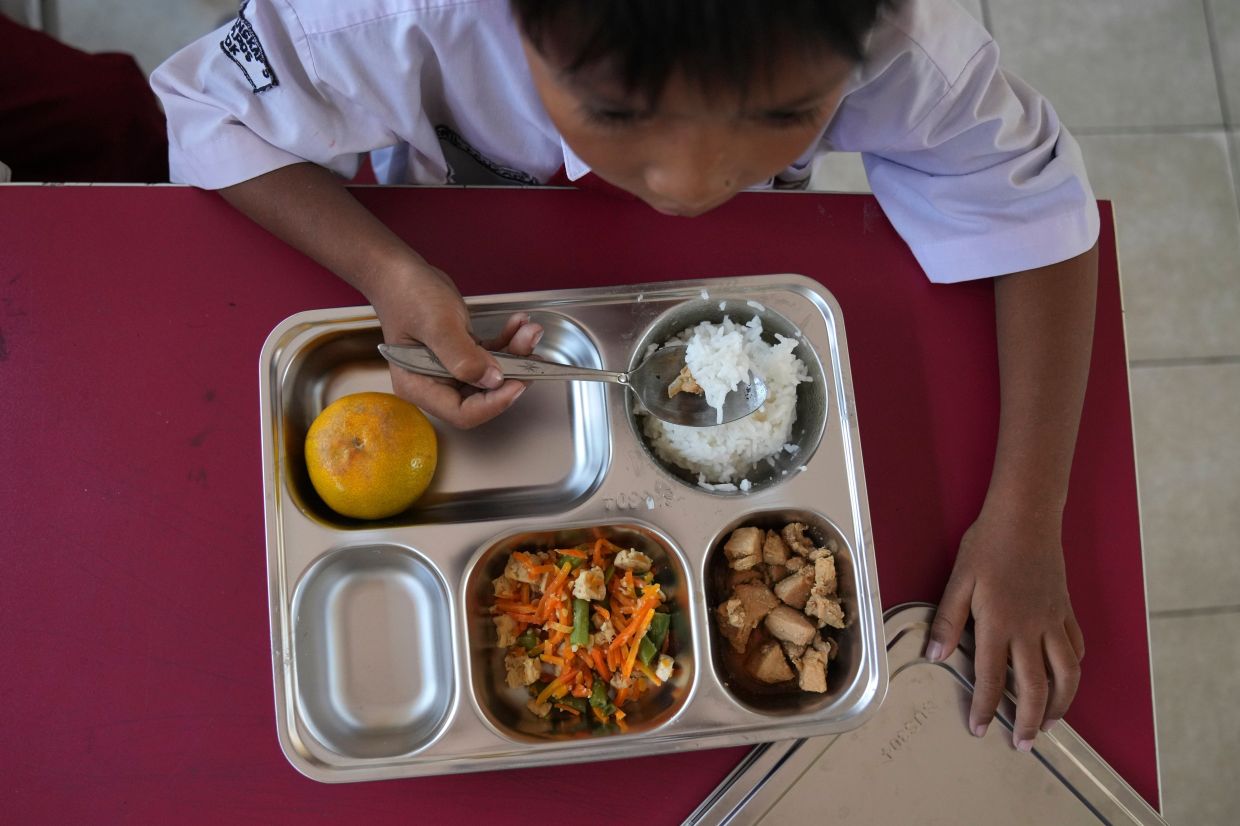
Indonesia's principal anti-corruption watchdog has escalated pressure on the government to halt President Prabowo Subianto's free meals programme, one of his most visible campaign promises, arguing that recent arrests reveal only the tip of a far deeper corruption problem. Indonesia Corruption Watch, a prominent civil-society organisation focused on clean governance and social justice, contends that authorities must not only suspend the initiative but also completely disband the National Nutrition Agency, or BGN, the body overseeing the scheme that currently delivers meals to over 60 million Indonesians nationwide.
The intervention by Wana Alamsyah, head of the law and investigation division at ICW, comes as the Attorney-General's office gathers evidence against multiple officials connected to the programme. Dadan Hindayana, the now-dismissed head of BGN, was detained this month following his removal from office, and four others—including two former deputies—have also been apprehended in connection with the inquiry. However, ICW argues that these high-profile arrests represent merely the visible portion of a systemic corruption network that has flourished within an agency established less than two years ago yet handed responsibility for managing a project budgeted at approximately 268 trillion rupiah, or roughly US$15 billion, this financial year alone.
Wana's position reflects mounting concerns within Indonesia's civil-society sector that the free meals scheme, despite its noble intentions to combat malnutrition and poverty, was rolled out with inadequate planning and insufficient oversight mechanisms. He contends that law-enforcement authorities must broaden their investigation far beyond the senior officials already under arrest, targeting instead the wider ecosystem of beneficiaries from the programme's governance lapses. This would include vendors supplying meals, members of procurement committees responsible for awarding contracts, and other parties positioned to profit from weak institutional controls. The failure to conduct such a comprehensive inquiry risks allowing systemic corruption to persist even if individual officials face punishment.
The timing of the investigation raises uncomfortable questions about official priorities. Wana noted that criticisms of the free meals initiative have circulated on social media and in academic analyses for months, yet authorities took no action until now. Reports of food poisoning incidents, complaints about meal quality, and accusations that ultra-processed rather than nutritious food was being distributed had all surfaced publicly. Academic institutions and independent think tanks had previously flagged concerns about the programme's procurement practices, uneven geographic distribution, and potential for patronage networks centred on politically-connected individuals to capture resources. Wana suggested that the government's sudden enforcement action may reflect not a commitment to rooting out corruption but rather fiscal desperation, with authorities needing to sacrifice visible offenders to justify scaling back or restructuring the programme without triggering backlash from communities and local operators already invested in the meal kitchens.
ICW's own research, conducted across 38 provinces and reviewing 102 foundations operating meal kitchens, documented troubling patterns of political influence embedded within the infrastructure of the free meals scheme. The watchdog found that kitchen operations remained intertwined with networks of politicians, government officials, military personnel, law-enforcement figures, and private-sector actors whose interests extended well beyond nutritional outcomes. A separate investigation by the Jakarta-based Centre of Economic and Law Studies revealed that nearly four-fifths of respondents identified potential conflicts of interest in the direct appointment of meal vendors, while earlier analyses warned of risks including uneven food distribution across regions, variable meal quality, and inefficient budget utilisation.
Meanwhile, the newly appointed head of BGN, Nanik S. Deyang, has announced corrective measures designed to restore confidence in the programme without dismantling it entirely. She has declared a moratorium on establishing new meal kitchens and indicated the agency will refocus its efforts on remote and underserved regions rather than attempting to serve the initial target of 82.9 million recipients across all schools nationwide. By leveraging existing institutional infrastructure such as school canteens and tightening vendor-screening protocols, Deyang argues the programme can simultaneously reduce spending below its budgeted 268 trillion rupiah while improving nutritional quality. This approach reflects President Prabowo's own public position, articulated during an address to programme partners following Dadan's arrest, in which he insisted there would be zero tolerance for theft of public funds and vowed that no officials would escape accountability regardless of rank.
Yet broader economic anxieties surrounding the free meals initiative complicate the government's ability to defend its continuation. Investor concerns about Indonesia's fiscal position have intensified as the programme's scale and cost compete for budgetary space alongside rising fuel-subsidy expenditures driven by regional geopolitical instability. Some economists and research institutions question whether the initiative can deliver on promises of improved employment, health, and economic growth, particularly given evidence that implementation has been geographically unfocused and administratively chaotic. These doubts have fuelled public protests, with students demonstrating against the programme's cost and calling for its termination entirely. In mid-June, police clashed with demonstrators in Jakarta, and subsequent protests across multiple major cities prompted authorities to deploy more than 6,000 police and military personnel in the capital, underscoring the political volatility surrounding the scheme.
The controversy surrounding the free meals programme also reflects deeper structural vulnerabilities within Indonesia's governance systems. That an agency created less than two years ago could accumulate sufficient resources and discretionary authority to deliver meals to 60 million people while establishing minimal institutional safeguards against corruption suggests deficiencies in pre-implementation assessment and ongoing monitoring. The fact that such problems required external pressure and formal complaints to generate official response—rather than being addressed through internal review mechanisms or proactive government supervision—indicates that accountability structures remain underdeveloped. For Malaysian observers, the Indonesian experience offers cautionary lessons about implementing large-scale social programmes without adequate governance infrastructure and independent oversight.
The ultimate trajectory of the free meals initiative remains uncertain. Should the Attorney-General's investigation broaden to encompass the wider patronage networks and procurement irregularities identified by ICW and other researchers, the political costs to the government could prove substantial. Conversely, if authorities limit enforcement action to visible scapegoats while allowing systemic dysfunction to persist, corruption allegations will likely resurface, further eroding public confidence in Prabowo's administration. Nanik S. Deyang's restructuring effort represents a middle path—maintaining the programme's existence while reducing its scope and tightening governance. Whether this compromise satisfies both anti-corruption advocates demanding fundamental reform and communities dependent on the meals scheme remains unclear, but the stakes extend well beyond nutrition policy to encompass questions about the government's commitment to accountability and institutional integrity.