President Prabowo Subianto's centrepiece nutrition initiative is becoming a flashpoint for broader political tensions in Indonesia, with competing waves of protests exposing deep divisions over the government's spending priorities and policy implementation. The free meal programme, launched in January last year as a cornerstone effort to combat malnutrition and child stunting, has become emblematic of larger questions about fiscal responsibility, corruption prevention, and the state's role in social welfare during a period of significant economic adjustment.
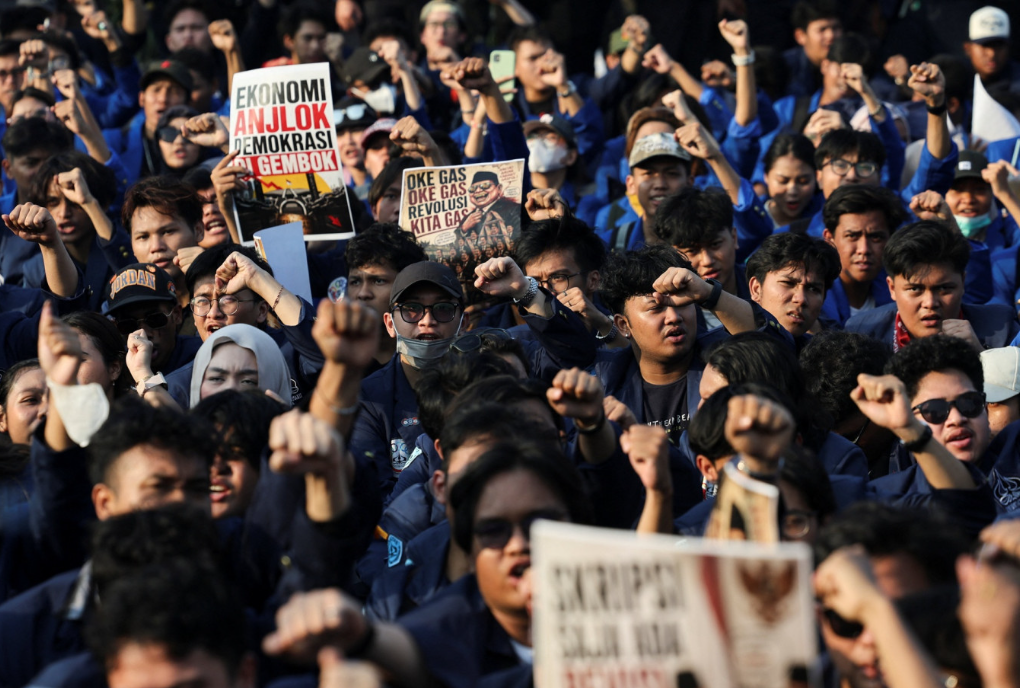
Students across multiple regions are leading the charge against the initiative, using campus networks to mobilise protests that extend far beyond nutritional concerns. In Bali, hundreds of university students gathered outside the regional legislative council demanding a comprehensive audit of the programme and broader economic reform, linking the meal scheme to wider anxieties about inflation, unemployment, and democratic governance. The Bali demonstration reflected a sophisticated critique: young Indonesians questioning whether such massive expenditure remains defensible when the government is implementing austerity measures elsewhere and when governance failures—including recent food poisoning incidents—have undermined public confidence in implementation capacity.
The movement found its most forceful expression in Jakarta's student mobilisations, where thousands affiliated with the Indonesian Islamic Student Movement gathered at the House of Representatives to demand wholesale leadership changes at the National Nutrition Agency following the arrest of three senior officials on corruption charges. These demonstrations drew participants from multiple universities including Trisakti, Mercu Buana, and Esa Unggul, suggesting the protests transcend individual campuses and reflect genuine youth frustration with government performance. The students' framing positioned the initiative not as inherently misguided but as a sound policy undermined by administrative failures and elite malfeasance—a distinction that matters for understanding the depth of institutional distrust now prevalent among educated Indonesians.
Riau Islands and Bandar Lampung saw similar youth-led mobilisations questioning implementation effectiveness and programme targeting, with organisers framing student activism as essential social oversight. Muryadi Agus Priawan, coordinating protests in Batam, articulated this perspective clearly: students view themselves as guardians of the public interest, holding policymakers accountable for decisions that should serve genuine developmental goals rather than become vehicles for misappropriation or wasteful expenditure. This framing suggests that anti-corruption sentiment and fiscal conservatism, not rejection of social spending per se, drive much student activism around the programme.
Yet the narrative becomes considerably more complex when examining the counter-mobilisations now emerging across Indonesia. Kitchen workers dependent on daily wages from meal programme implementation staged their own rallies, arguing that efficiency measures—reducing distribution from six to five days weekly and suspending operations during school holidays—would devastate household incomes for approximately 1,500 workers in Batam alone. These workers articulated a straightforward economic argument: the programme generates genuine employment in communities with limited alternative income sources, and reducing operations would push vulnerable families deeper into precarity without addressing the underlying governance failures that student protesters highlight.
Local agricultural communities have similarly organised to defend programme continuation, recognising that the initiative's massive scale creates significant commodity demand that influences rural prices and incomes. In Bandar Lampung, residents rallied in support of the scheme, noting that government procurement of corn, rice, cassava, and seasonal vegetables has measurably improved agricultural sector returns. This dimension reveals an important political economy reality: the programme's fiscal magnitude, while concerning to fiscal hawks and reformers, translates into concrete market stimulus for rural producers whose political voice has historically been marginalised. The programme thus functions simultaneously as a nutrition intervention, an anti-corruption testing ground, a budget item under scrutiny, and a rural economic support mechanism—making its continuation or modification genuinely consequential for different constituencies.
Government responses have attempted to navigate these competing pressures through targeted adjustments rather than fundamental programme suspension. Officials including Government Communications Agency head Muhammad Qodari have defended the initiative while acknowledging implementation failures, positioning improvements rather than termination as the appropriate response. The budget has been reduced from at least Rp 335 trillion to Rp 228.4 trillion—a significant cut that nonetheless preserves the programme's fundamental structure. The government has introduced measures including suspending distribution during the late June to mid-July school holiday and halting operations in 76 schools located in relatively affluent areas, suggesting a strategy of improved targeting and operational efficiency.
For Malaysian observers, Indonesia's experience with the free meal programme offers instructive lessons about the complexities of scaling social spending during periods of fiscal consolidation. The programme's massive allocation—representing approximately 15 billion US dollars annually—reflects the political commitment required to address nutritional deficiencies affecting 83 million Indonesians. Yet its implementation has exposed the institutional capacity constraints that large developing economies face when attempting rapid policy deployment without adequate anti-corruption safeguards or quality assurance mechanisms. The recent arrests of National Nutrition Agency officials demonstrate how programme visibility and scale can attract predatory behaviour from officials seeking to extract rents, undermining both public confidence and genuine beneficiaries' welfare.
The competing demonstrations also reveal how social spending intersects with employment concerns and rural development in ways that conventional fiscal analysis often misses. While critics legitimately question whether such expenditure represents sound macroeconomic policy during periods of budget consolidation, workers and farmers dependent on programme implementation face genuine livelihoods consequences from efficiency measures. This tension—between necessary fiscal discipline and protection for vulnerable communities—will likely characterise Indonesian policymaking across multiple domains in coming months as the government attempts to stabilise public finances while maintaining social cohesion.
The programme's trajectory will depend substantially on whether the government can simultaneously address corruption concerns that have driven student activism while preserving the employment and agricultural stimulus effects that rural communities and workers depend upon. This requires moving beyond simplistic defences of the status quo and equally simplistic calls for complete suspension, instead building institutional reforms that protect programme integrity while recognising its genuine economic impacts beyond direct nutrition provision. The intensity and geographic spread of competing mobilisations suggests that Indonesians—whether students, workers, or farmers—recognise the stakes involved in how this programme evolves, making it genuinely consequential for both social welfare and political stability in Southeast Asia's largest economy.

