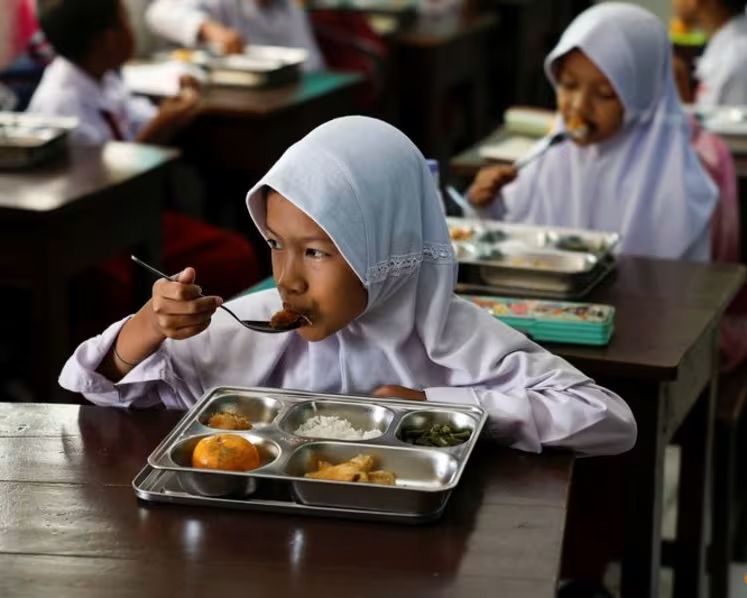
The Indonesian government's ambitious free meals initiative has entered turbulent waters once again with the resignation of National Nutrition Agency chief Nanik Sudaryati Deyang, who cited severe health complications as the reason for stepping down. Her departure on Wednesday represents the second significant leadership upheaval at the agency in little over a month, underscoring the mounting pressures facing what President Prabowo Subianto has positioned as his flagship campaign commitment and one of Southeast Asia's most expansive nutrition programmes.
Nanik, who assumed the leadership role only four months ago in June, indicated through social media posts that her decision stems from a serious cardiovascular condition that has been exacerbated by workplace stress. According to her account, medical advice from overseas specialists has indicated significant arterial blockage requiring immediate treatment abroad. While citing personal health motivations, her resignation cannot be separated from the cascading crises that have plagued the agency since the programme's launch in January 2025, suggesting the institutional strain has proven unsustainable even at the highest levels of management.
The replacement of Nanik follows the abrupt dismissal of her predecessor last month, an event that was accompanied by the predecessor's arrest on corruption charges linked to the multibillion-dollar initiative. This rapid turnover at the helm reflects deepening governance challenges within the agency and raises questions about the institutional capacity to manage a programme of such scale and complexity. The back-to-back leadership changes signal instability at a critical juncture when the initiative most requires steady stewardship through its operational challenges.
Since its inception in January, the free meals programme has encountered a consistent stream of operational difficulties that have attracted unwanted scrutiny. Beyond logistical bottlenecks in delivery infrastructure, the initiative has grappled with quality control issues and, most alarmingly, multiple documented instances of mass food poisoning among beneficiaries. These incidents have generated public concern about food safety standards and the adequacy of oversight mechanisms, challenging the government's assurances regarding programme quality and undermining public confidence in the initiative's capacity to serve its intended beneficiary base safely.
Nanik indicated that President Prabowo has agreed to establish a supervisory board to oversee the agency's operations, with her expected to assume a leadership position on this new body. This structural reorganisation suggests an acknowledgment within the presidency that current governance arrangements are insufficient, prompting the creation of additional oversight layers. Whether such an arrangement will address the underlying management deficiencies remains to be seen, particularly given the compressed timeline for institutional reform amid ongoing operational pressures.
The initiative's financial architecture has become increasingly unstable, with the most recent budget adjustment cutting allocations from 268 trillion rupiah to 229 trillion rupiah, representing a 14.5 per cent reduction announced just a day before Nanik's resignation. This second successive cut brings the working budget to approximately 69 per cent of the original 335 trillion rupiah allocation, a shortfall exceeding 100 trillion rupiah. The agency has signalled that further reductions remain possible pending additional budgetary reviews, introducing considerable uncertainty into planning and operational commitments.
These budget compressions have direct implications for programme scope and beneficiary reach. Originally designed to extend free meal provisions to 83 million Indonesians spanning children and pregnant women, the agency has previously reported delivering services to 62.5 million individuals. With the expanding funding gap, questions intensify about whether the contracted programme will maintain adequate nutritional standards or whether further scaling back may be required, potentially affecting vulnerable demographic groups that constitute the core justification for the initiative.
For Malaysia and other Southeast Asian economies monitoring Indonesia's policy experiments, this programme's trajectory offers instructive lessons regarding the fiscal and institutional demands of large-scale social provision. While nutritional interventions targeting children and pregnant women represent sound public health policy, Indonesia's experience demonstrates the considerable governance capacity required to execute programmes at this magnitude reliably. The combination of logistical challenges, financial constraints, and corruption concerns illustrates how ambitious social initiatives can become vulnerable to implementation failures if supporting institutional infrastructure and oversight mechanisms are inadequate.
Nanik's public assertion that the programme represents a nutrition intervention measure rather than a political undertaking reflects the defensive posture the government has adopted regarding the initiative. Critics and observers have questioned whether the programme's scale and ambition reflect genuine nutritional necessity or electoral calculation, a tension that has complicated its reception and generated partisan controversy. The government's emphasis on the technical, non-political nature of the intervention suggests awareness of these perceptions and concern about their political implications.
The absence of clarity regarding Nanik's successor introduces additional uncertainty into the agency's immediate trajectory. While she indicated that her replacement would be someone junior within the existing agency structure, the formal appointment process and timeline remain undetermined. This interregnum period, occurring amid ongoing budget pressures and a criminal investigation, risks further operational disruption and may compound implementation challenges across the beneficiary network.
Indonesia's free meals programme continues to represent a significant fiscal commitment and policy priority for the Prabowo administration despite the mounting difficulties surrounding its execution. The resignation of a second senior leader in rapid succession, combined with sustained financial constraints and ongoing investigations, indicates that fundamental challenges persist regarding the initiative's management and sustainability. Whether the proposed supervisory board and continued institutional adjustments can stabilise the programme or whether more comprehensive reform may be necessary remains an open question with substantial implications for Indonesia's broader social spending agenda and its capacity to deliver on foundational policy commitments.

