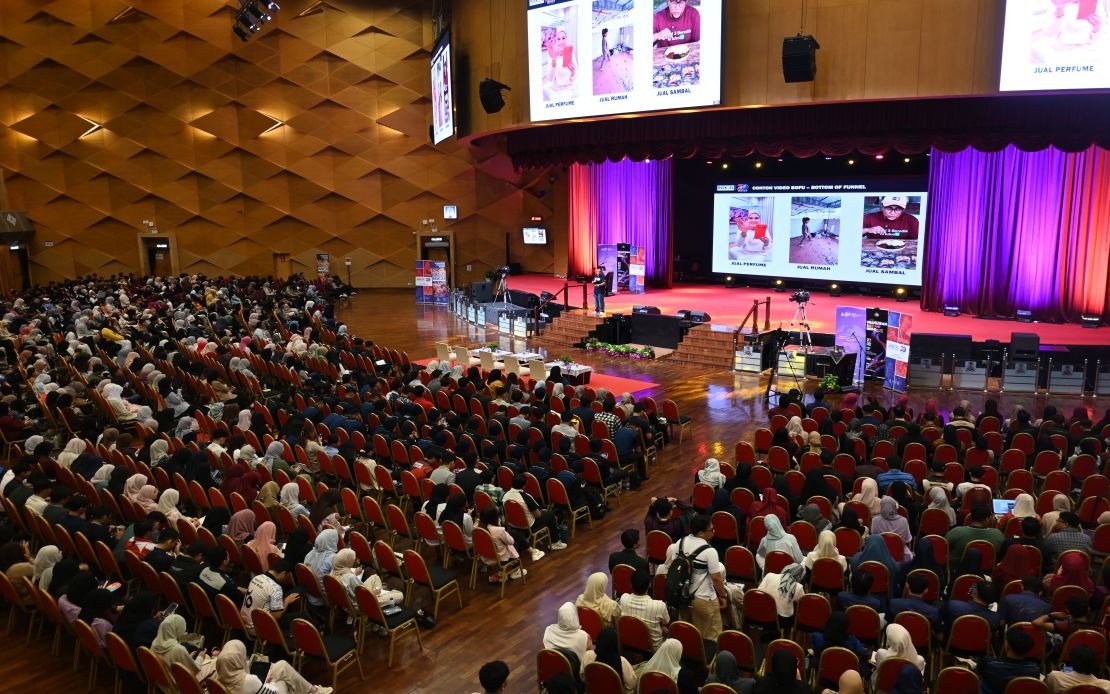
Nearly 7,000 university students and entrepreneurs gathered at UiTM Shah Alam this month for the Usahawan MADANI Mega (SUM MEGA) 2026 seminar, a landmark event that has set a new national record for the largest student participation in an entrepreneurship seminar according to the Malaysia Book of Records. The hybrid format—combining in-person attendance with online participation—reflects how Malaysia's younger generation is increasingly engaged with entrepreneurial development, signalling a broader cultural shift toward self-employment and business creation as viable career paths.
The seminar, coordinated by the National Entrepreneurship Institute (INSKEN) alongside the Malaysian Academy of SME and Entrepreneurship Development (MASMED) and Universiti Teknologi MARA (UiTM), brought together students from across the country for a comprehensive programme centred on knowledge exchange, skill-building workshops, and business networking. The scale of the event underscores a growing institutional commitment to nurturing entrepreneurial talent at the university level, where future business leaders and innovators are being shaped during their formative years.
Datuk Mohamad Alamin, deputy minister for Entrepreneur and Cooperatives Development, attended the event and highlighted how the record-breaking turnout demonstrates the appetite among young Malaysians to explore entrepreneurship as a serious economic pursuit. He framed this growing interest within the context of Malaysia's development priorities, arguing that entrepreneurship is no longer simply a career option but has become essential to the nation's economic competitiveness. As regional economies intensify their focus on innovation and job creation, countries including Malaysia are recognising that their survival depends on cultivating homegrown entrepreneurs who can compete on the global stage.
Through the Ministry of Entrepreneur and Cooperatives Development (KUSKOP), the MADANI government has committed substantial resources to building what officials describe as an inclusive, sustainable, and high-impact entrepreneurial ecosystem. This framework encompasses multiple pillars including capacity building through training programmes, improved access to financing for start-ups and growing businesses, better connections to markets and supply chains, support for digital transformation, and broader business development assistance. By addressing these structural barriers, the ministry aims to reduce the friction that often prevents talented individuals from translating business ideas into functioning enterprises.
Datuk Mustaffa Kamil Ayub, chairman of the INSKEN Board of Trustees and member of UiTM's board, characterised the exceptional response to SUM MEGA 2026 as evidence of a maturing entrepreneurial culture among Malaysians, particularly those in the student demographic. His observation suggests that the conversation around entrepreneurship has evolved—it is no longer confined to business schools or economic policy discussions but has permeated mainstream consciousness among young people. Ayub emphasised that entrepreneurship must be understood as more than a career path; it represents a mindset and cultural movement capable of driving economic transformation at the national level.
The seminar exposed participants to a practical framework for business development known as the MOFA approach, which dissects entrepreneurship into four core operational dimensions: marketing, operations, finance, and business administration. This structured methodology helps aspiring business owners understand how different functional areas interconnect and how deficiencies in any one area can undermine overall enterprise resilience and competitiveness. By breaking down entrepreneurship into teachable, manageable components, such frameworks make the transition from theoretical knowledge to practical application more achievable for participants without prior business experience.
For Malaysia and the broader Southeast Asian region, the significance of such initiatives extends beyond immediate participant counts. The emphasis on student entrepreneurship reflects a deliberate policy choice to position universities not merely as credential-granting institutions but as incubators of economic dynamism. As Malaysia seeks to transition toward higher-value manufacturing and services-based industries, the capacity to generate entrepreneurs who can create new businesses, develop innovative products and services, and generate employment becomes increasingly critical. Other Southeast Asian nations, including Indonesia, the Philippines, and Vietnam, are pursuing similar strategies, creating a regional competition for entrepreneurial talent and market opportunities.
INSKEN continues to operate multiple development programmes beyond SUM MEGA, including the INSKEN Masterclass, BANGKIT, and PROTÉGÉ initiatives. These complementary schemes suggest a multi-layered approach to entrepreneurial development, recognising that different cohorts of entrepreneurs have different needs at different stages of their journey. Early-stage aspiring entrepreneurs may benefit from foundational knowledge-sharing, while more advanced business owners might require access to mentorship from established industry figures or specialised technical support in areas such as digital commerce or supply chain optimisation.
The seminar also functioned as a platform for strengthening collaboration among multiple stakeholders in Malaysia's entrepreneurial ecosystem. By bringing together government agencies, university leadership, industry representatives, financial institutions, entrepreneur development organisations, and business community members, SUM MEGA 2026 created spaces for these actors to identify synergies, discuss barriers, and coordinate their efforts toward common goals. Such multi-stakeholder coordination is essential because no single organisation can address all obstacles to entrepreneurial success—banks can provide capital, but universities supply talent and knowledge; industry players can offer market insights, but government policy creates the enabling environment.
The National Entrepreneurship Policy 2030, which serves as the overarching strategic framework for these initiatives, articulates Malaysia's long-term vision for an entrepreneurial economy. Events like SUM MEGA 2026 are tangible manifestations of this policy vision, translating broad strategic aspirations into concrete programmes and engagement opportunities. As Malaysia competes for foreign investment and talent within an increasingly globalised economy, demonstrating success in building a thriving culture of entrepreneurship—evidenced by growing student interest, record seminar attendance, and expanding support infrastructure—sends important signals to international observers about the country's economic trajectory and future potential.

