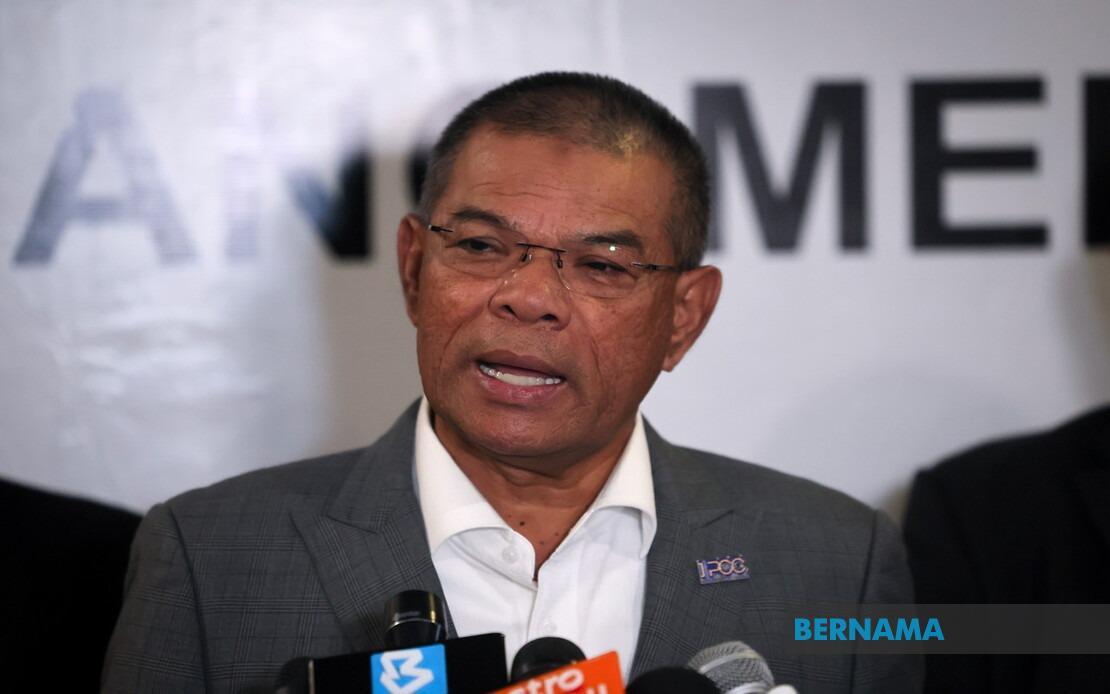
Malaysia's Independent Police Conduct Commission has managed over 1,600 public complaints since commencing operations in 2023, signalling growing reliance on the newly established oversight body. Home Minister Datuk Seri Saifuddin Nasution Ismail revealed that the IPCC received 1,635 complaints through July 24, 2026, with 844 cases—representing 76 per cent of the caseload—successfully concluded. The performance metrics suggest that despite being a relatively nascent institution, the IPCC is gaining traction as a legitimate channel for citizens to report police misconduct and seek accountability.
The complaint volume increased notably in 2026, with 372 submissions lodged by mid-July alone. This uptick likely reflects expanding public awareness of the IPCC's existence and mandate, though it also underscores persistent concerns about police conduct across the nation. Saifuddin Nasution acknowledged that the most frequent grievance involves complainants failing to receive updates or acknowledgment following their initial police reports. This particular complaint category highlights a systemic communication gap within police operations, where feedback mechanisms appear inadequate for addressing public concerns systematically.
Understanding the IPCC's operational framework is essential for evaluating its effectiveness. The commission functions as a triage centre rather than a comprehensive investigative agency, receiving complaints and categorising them for appropriate action. When allegations contain corruption elements, the IPCC transfers cases to the Malaysian Anti-Corruption Commission, ensuring specialised investigation by institutions with specific mandates. This collaborative approach distributes workload efficiently across Malaysia's accountability ecosystem, though it also means the IPCC's direct investigative capacity remains circumscribed.
Among the 791 unresolved complaints, many stem from dissatisfaction with police investigation outcomes or prolonged delays in receiving formal responses to initial complaints. These unresolved cases represent potential flashpoints for public frustration with the oversight system itself. When complainants feel that neither the police nor the IPCC provides satisfactory resolution, confidence in institutional accountability mechanisms erodes. The persistence of such cases suggests that systemic improvements in police responsiveness and investigation quality remain necessary preconditions for genuine accountability.
The IPCC has initiated 22 investigation papers since its establishment, with five launched during the current year. Of these, 11 investigations have concluded while 11 remain ongoing. The relatively modest investigation volume, compared to total complaints received, reflects the filtering process inherent in any oversight system. Not all complaints warrant formal investigation; some resolve through clarification or mediation, while others lack sufficient evidence or fall outside the IPCC's jurisdiction. Nevertheless, 22 active investigations demonstrate that the IPCC possesses real investigative authority and is deploying it.
Saifuddin Nasution characterised the complaint numbers as relatively modest yet meaningful. This assessment frames the IPCC as successfully establishing itself as a legitimate feedback channel within a short operational window. Three years represents an early stage for institutional development, and building public awareness requires sustained effort. The Home Minister's perspective suggests patience with gradual uptake, though critics might argue that modest complaint volumes could also indicate limited public knowledge or lingering distrust of independent oversight bodies.
The government has initiated a complementary awareness campaign, involving handover of IPCC complaint posters for display at Royal Malaysia Police information corners nationwide. This infrastructure development aims to democratise access to complaint mechanisms by embedding information within spaces where citizens already interact with police services. By positioning IPCC information alongside standard police notices, the campaign normalises the concept of police oversight and legitimises complaint channels. For Malaysian readers, this means the IPCC should become increasingly visible as a tangible option rather than an abstract institution.
Parallel developments within law enforcement underscore the government's stated commitment to police accountability. The recent arrest of 12 police personnel suspected of extorting RM2 million from a Vanuatu national demonstrates consequences for institutional misconduct. This high-profile case involved officers of various ranks, indicating that accountability reaches across hierarchical levels. While the IPCC did not necessarily investigate this particular matter, such arrests reinforce the message that police misconduct faces prosecution, lending credibility to oversight mechanisms more broadly.
For Southeast Asian perspectives, Malaysia's establishment of the IPCC reflects broader regional trends toward independent oversight bodies. Countries throughout the region grapple with balancing police operational autonomy against public accountability demands. Malaysia's approach—creating a separate commission with referral authority to specialised agencies like MACC—offers a model for institutional design. However, the success of such models depends ultimately on political will, resource allocation, and public engagement, areas where regional performance varies considerably.
The IPCC's three-year performance suggests the institution is functioning as designed but raises questions about whether current structures adequately address systemic issues. With 791 unresolved cases, communication gaps with police complainants, and delays in investigation processes, opportunities exist for procedural refinement. Malaysian citizens and stakeholders should monitor whether the IPCC evolves to streamline resolution timelines and enhance feedback mechanisms. The institution's trajectory will significantly influence public confidence in police accountability during the coming years.
Looking forward, the IPCC faces simultaneous pressures to expand public awareness while maintaining investigation quality. Saturation advertising campaigns might increase complaint volume beyond current capacity, requiring resource scaling. Conversely, maintaining modest complaint numbers risks perception that the IPCC remains an underutilised institution. This balancing act will define the IPCC's evolution as Malaysia's police oversight landscape matures. The Home Ministry's emphasis on stakeholder collaboration suggests recognition that oversight effectiveness transcends the IPCC's individual performance, requiring coordinated action across government, police, civil society, and the public.

