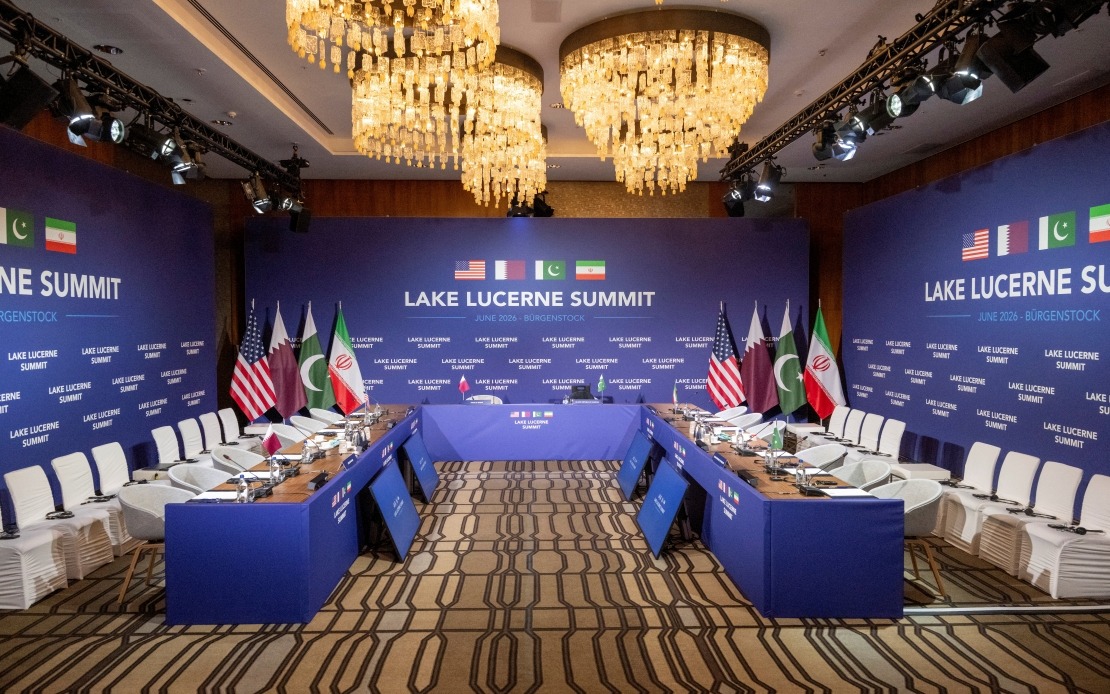
Diplomatic efforts between Iran and the United States have advanced significantly with the formation of specialised technical working groups tasked with hammering out the details of a final peace settlement. Qatari Foreign Ministry spokesperson Majed Al-Ansari announced on Sunday that the parties had established these technical-level negotiating bodies, signalling a structured approach to resolving decades of bilateral tensions that have reverberated across the Middle East and beyond. The timeline for these negotiations is ambitious: all parties aim to produce a comprehensive and sustainable agreement within 60 days, underscoring the urgency with which both nations and their mediators view the peace process.
The talks themselves commenced at Burgenstock, a Swiss alpine resort, bringing together representatives from Iran, the United States, Pakistan, and Qatar. The choice of neutral Switzerland as the venue reflects the sensitivity of these negotiations and the need for an environment removed from the geopolitical tensions of the Middle East itself. Pakistan and Qatar's roles as mediators highlight the regional significance of these discussions, with both nations holding considerable diplomatic weight and influence with Tehran. Their participation suggests that any agreement reached will have backing from key regional powers, potentially lending greater stability and legitimacy to the final outcome.
According to Al-Ansari, the technical groups will focus on the full scope of a memorandum of understanding between the parties, examining every dimension of what a normalised relationship between Washington and Tehran might entail. This comprehensive approach indicates that negotiators are not simply addressing nuclear concerns or sanctions relief in isolation, but rather seeking a broader framework that could reshape Iran-US relations. Such an ambitious remit suggests discussions could touch on issues ranging from regional security architecture to economic cooperation, each requiring detailed technical expertise and careful calibration.
Beyond the core negotiating groups, the establishment of monitoring mechanisms represents an equally important development. These oversight bodies will supervise implementation of the memorandum of understanding and track progress toward the final agreement. The creation of parallel monitoring structures reflects lessons learned from previous international accords, where implementation challenges often undermined the spirit of agreements reached at the negotiating table. By building in accountability mechanisms from the outset, the parties are attempting to ensure that commitments made in principle translate into concrete actions on the ground.
The announcement from Doha carries significant implications for global stability. A successful Iran-US peace deal would fundamentally alter the strategic calculus of the Middle East, affecting not only bilateral relations but also the region's entire security architecture. For Southeast Asian nations, particularly Malaysia, which maintains economic and cultural ties to multiple parties in Middle Eastern disputes, the implications could be substantial. Reduced tensions between Washington and Tehran could ease energy market volatility, potentially stabilising global oil prices that directly impact regional economies.
The language used by Al-Ansari—emphasising commitment to good-faith negotiation and sustainable agreements—suggests both parties recognise the fragility of the process and the risks of failure. Previous attempts at Iranian-American rapprochement have foundered on implementation issues, domestic political opposition, and shifting regional circumstances. The deliberate framing of these discussions as technical, rather than political, may also reflect an attempt to depoliticise the process and reduce the influence of hardliners on either side who might seek to derail negotiations.
For Malaysia and other ASEAN nations, the success of these talks matters considerably. The Middle East remains a crucial market for regional exports and a source of vital energy supplies. Moreover, any destabilisation in Iran-US relations has historically prompted increased military presence in the Strait of Hormuz and surrounding waters, through which much of Asia's energy transits. A comprehensive peace agreement could reduce such tensions and provide greater predictability for regional trade and security.
The 60-day timeline represents an exceptionally compressed schedule for negotiations of this magnitude and complexity. Typically, international agreements of comparable scope require months or years of detailed discussions. This aggressive timeframe suggests either that significant groundwork has already been completed behind the scenes, or that external pressures—whether economic, political, or security-related—are compelling both sides to accelerate the process. The mediating role of Pakistan and Qatar becomes even more crucial within this tight schedule, as both nations must help bridge gaps and facilitate compromise quickly.
Looking ahead, observers across Southeast Asia will be watching closely for signs of substantive progress emerging from Burgenstock. The establishment of technical groups and monitoring mechanisms represents a structural commitment to the process, but the real test lies in whether negotiators can resolve the deep-seated differences that have characterised Iranian-American relations since 1979. Any breakthrough would have ripple effects throughout the region, potentially opening new opportunities for investment, trade, and diplomatic engagement that Malaysian policymakers will need to evaluate carefully.

