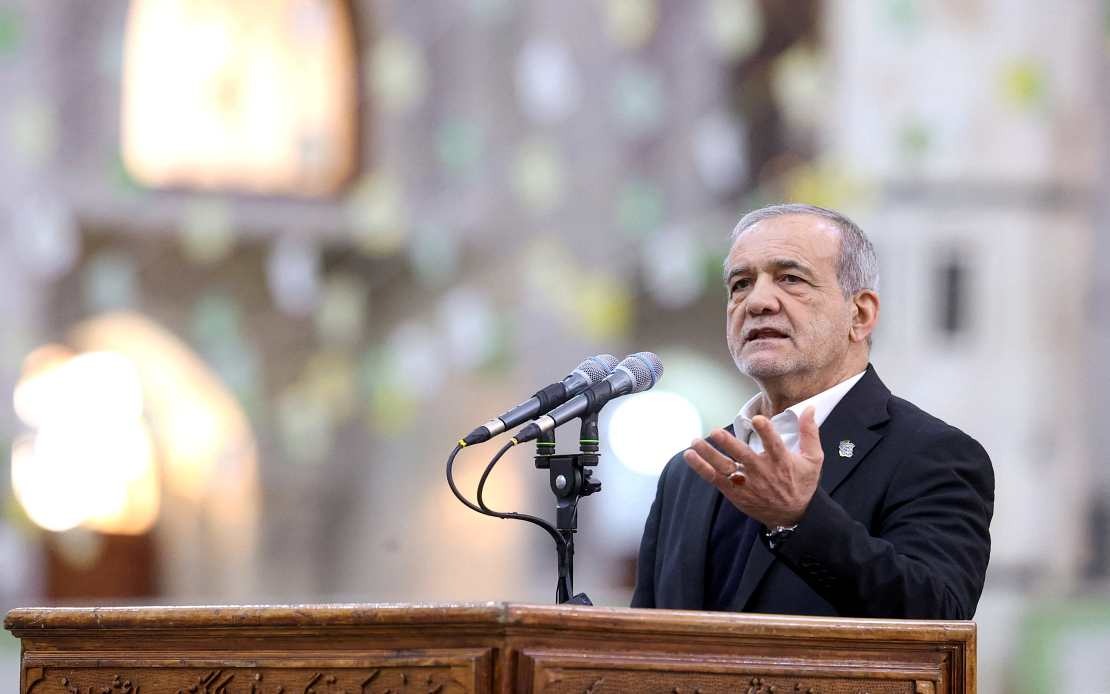
Iranian President Masoud Pezeshkian declared on Sunday that Tehran will regain access to US$6 billion in assets currently held in Qatar as part of an initial agreement struck with the United States. The announcement marked a significant development in ongoing diplomatic efforts to ease tensions between the two long-standing adversaries, with both nations signalling willingness to engage in substantive negotiations aimed at resolving regional disputes and reopening critical maritime corridors.
The Iranian leader, speaking through state broadcaster IRIB, emphasised that the release of the frozen funds would commence immediately upon the formalisation of bilateral discussions. This financial component of the preliminary accord represents one of the most concrete benefits Tehran has secured thus far in the negotiation process, offering relief to an Iranian economy constrained by international sanctions and asset freezes imposed over the past several years.
Pezeshkian used the opportunity to reassert Iran's non-negotiable position on nuclear matters, stating with characteristic firmness that "we will never give up our right to enrich uranium, and the other side will be forced to accept it." This declaration suggests that while both capitals have found sufficient common ground to begin formal talks, fundamental disagreements persist over Iran's nuclear programme—a longstanding flashpoint in their relationship and a concern shared by multiple regional and international actors including Israel and Gulf Cooperation Council members.
Delegations from both nations arrived in Switzerland early this week for technical-level negotiations conducted under the framework of a memorandum of understanding signed on Wednesday. This agreement, negotiated with the assistance of third parties, aims to address the escalating Middle East conflict and restore navigational freedom through the Strait of Hormuz, one of the world's most strategically vital waterways responsible for transporting roughly one-third of global seaborne oil trade. For Malaysia and other Southeast Asian economies heavily dependent on energy imports, any disruption to Hormuz traffic carries direct implications for fuel costs and supply security.
The talks are being held in Burgenstock, Switzerland, under the mediation of Pakistani officials. The American delegation will be led by Vice President JD Vance, representing the highest level of direct US engagement in these discussions. On the Iranian side, Parliament Speaker Mohammad Bagher Qalibaf and Foreign Minister Abbas Araghchi will head the negotiating team, signalling that Tehran is sending senior figures with significant decision-making authority.
The very act of both countries dispatching high-ranking officials to the negotiating table indicates a shift from the confrontational posture that has dominated US-Iran relations for decades. The decision to include Pakistan as a mediator reflects ongoing efforts by regional powers to de-escalate tensions and create space for diplomatic resolution, rather than allowing the situation to deteriorate further into military confrontation.
The preliminary nature of the agreement deserves emphasis. The US$6 billion fund release and the commencement of technical talks represent opening moves in what will likely be a prolonged and complex negotiation process. Substantial obstacles remain, from Iran's nuclear enrichment activities to American concerns about Iranian proxy forces operating across the Middle East, proxy militias that have targeted commercial shipping and US military assets in the region.
For Malaysia and the broader Southeast Asian region, the successful resolution of US-Iran tensions carries substantial weight. Rising geopolitical friction in the Middle East inevitably flows through global energy markets, affecting prices at Malaysian pumps and impacting the operational costs for Malaysian shipping companies using the Strait of Hormuz. Additionally, regional stability in the Middle East influences the flow of foreign direct investment and trade patterns that Malaysian exporters depend upon.
The timing of these negotiations also reflects shifting international dynamics. The announcement of talks and the financial concessions being made suggest that both Washington and Tehran may have concluded that continued escalation serves neither nation's strategic interests. Economic pressure on Iran, combined with American war fatigue and domestic political considerations, appears to have created a narrow window of opportunity for diplomatic engagement.
However, scepticism about the durability of any agreement remains warranted. Previous attempts at US-Iran rapprochement have collapsed, most notably with the 2015 nuclear deal (JCPOA), which the Trump administration withdrew from in 2018. The fact that both sides continue to signal red lines—Iran refusing to abandon uranium enrichment, the US presumably unwilling to accept an unrestricted nuclear programme—suggests that any final accord will require significant compromises from both parties.
The technical negotiations unfolding in Switzerland will likely focus on sequencing: which concessions will be made in which order, what verification mechanisms will be employed, and how quickly either side can demonstrate good faith implementation. These procedural questions often prove as challenging as the substantive issues themselves, given the deep mutual distrust accumulated over four decades of hostile relations.
For regional observers, particularly those in Southeast Asia with stakes in Middle Eastern stability and maritime security, the coming weeks will be crucial in determining whether this diplomatic initiative can gain sufficient momentum to produce a lasting settlement. Success would unlock economic benefits across global markets, while failure could trigger renewed escalation that would ripple outward, affecting energy prices, shipping insurance costs, and broader economic growth across the Asia-Pacific region.

