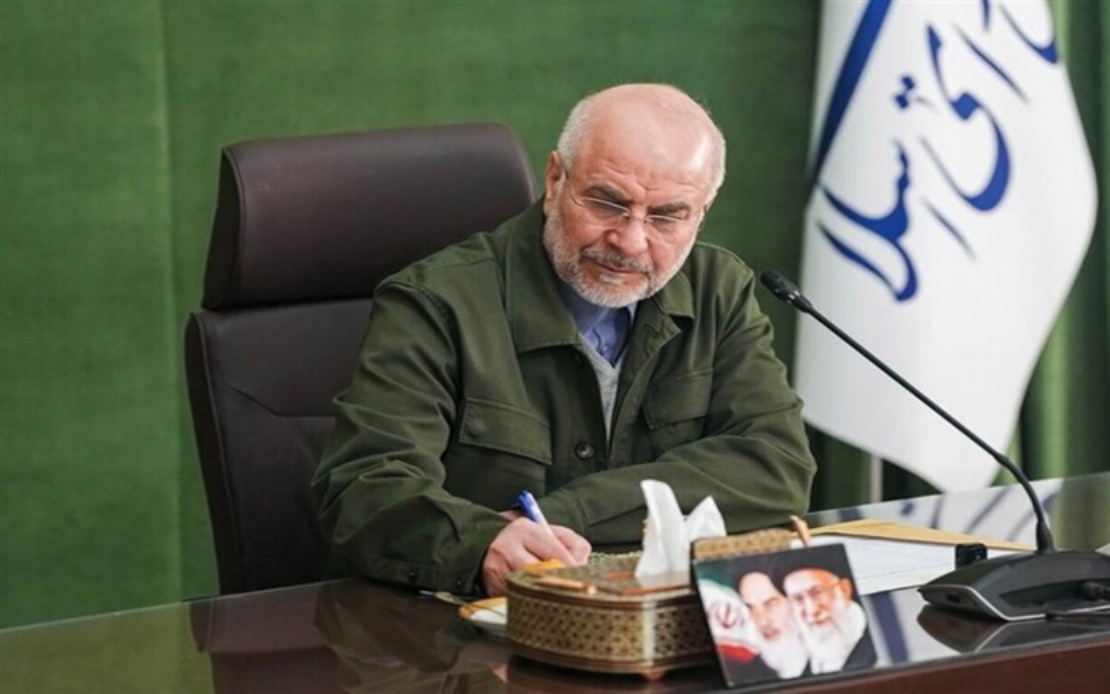
Iran's Parliament Speaker Mohammad Bagher Ghalibaf has firmly rejected United States assertions that the country's recently unfrozen assets will be directed toward purchasing American agricultural products, signalling the persistence of fundamental disagreements between Tehran and Washington over how released funds should be deployed. Speaking through social media on Thursday, Ghalibaf, who simultaneously serves as Iran's chief negotiator, countered the American narrative with pointed language, stating that the only harvest Iran was reaping from the released capital was the legacy of mistrust cultivated over decades—a characterisation that underscores the depth of historical friction between the two nations.
The contentious dispute over asset usage emerged following a series of high-profile claims made by senior American officials. US Vice President JD Vance suggested on Monday that the unfrozen Iranian resources could be allocated to purchasing soybeans, corn and wheat from the United States. President Donald Trump subsequently doubled down on this position on Tuesday, asserting that the funds would be held in an American-controlled escrow account with restrictions limiting expenditure exclusively to US food and medical supplies, particularly grain products and pharmaceuticals.
Ghalibaf's public rebuke reflects a broader Iranian institutional consensus opposing external constraints on how the released capital is deployed. On Tuesday, Iranian Foreign Ministry spokesperson Esmaeil Baghaei emphasised that Tehran would exercise complete discretion in utilising the unfrozen assets, guided entirely by national economic interests and without accepting any limitations imposed by external parties. Baghaei further clarified that procurement decisions would be determined solely by commercial considerations—specifically competitive pricing and product quality—rather than political pressure or bilateral obligations.
The Iranian Central Bank Governor Abdolnaser Hemmati took a marginally softer diplomatic stance while maintaining the same substantive position. Hemmati acknowledged that Iran carries no contractual obligation to purchase American agricultural commodities, though he stopped short of ruling out such transactions if US suppliers could offer goods at rates competitive with alternative international sources. This formulation allows for theoretical future purchases while explicitly rejecting the notion that any binding commitment exists.
The disagreement over fund allocation must be understood within the context of the wider economic environment. For Malaysia and other Southeast Asian economies, the implications of Iran-US tensions directly affect regional trade flows, shipping security, and energy market stability. If negotiations deteriorate, the potential reimposition of US sanctions could create ripple effects across supply chains dependent on Iranian energy resources or serving as intermediaries in global commerce.
The underlying conflict reflects deeper mutual suspicions about the objectives of sanctions relief negotiations. The American insistence on controlling how unfrozen assets are spent appears designed to ensure that released capital does not strengthen Iran's capacity to fund activities Washington considers destabilising. Iran, conversely, views such constraints as infringements on sovereignty and evidence of bad faith engagement, viewing unfrozen assets as legitimately earned resources being returned rather than discretionary aid conditional on American approval.
These disagreements are occurring despite the existence of a peace memorandum of understanding signed on June 18, which ostensibly commits both parties to pursuing comprehensive negotiations on Iran's nuclear programme and the broader question of sanctions removal. The MoU established a sixty-day window for negotiators to work toward a final settlement. A round of talks took place in Switzerland over the weekend and into Monday, yet the subsequent public exchanges suggest that fundamental positions remain entrenched rather than converging.
The timing of this dispute carries significance for Southeast Asia's strategic interests. As a region heavily dependent on stable energy markets and uninterrupted maritime commerce, any escalation in Iran-US tensions threatens the normal functioning of global supply chains. Malaysia's position as a significant trader and energy consumer means that prolonged sanctions regimes or military tensions in the Persian Gulf would carry measurable economic costs, potentially redirecting trade flows and creating inflationary pressures on energy and commodity prices.
Iran's rejection of American spending conditions also signals that negotiators in Tehran are prepared to resist pressure from Washington, suggesting that any final nuclear agreement will require significant compromise from both sides rather than representing a capitulation by the Islamic Republic. This hardline positioning may be partly theatrical—intended for domestic audiences and regional allies—but it also indicates that Iran views the current negotiations from a position of sufficient strength to reject unilateral American dictates.
The agricultural component of this dispute may appear secondary to the nuclear dimensions, yet it carries symbolic weight. Allowing the United States to dictate how funds are spent would establish a precedent for external control over Iranian economic decisions, a principle that negotiators in Tehran evidently view as fundamentally unacceptable. By drawing a line on this issue, Iranian officials are signalling that while they may accept compromises on nuclear matters, they will not surrender economic sovereignty as the price of sanctions relief.
For Malaysian observers monitoring these developments, the trajectory of Iran-US negotiations will likely determine broader regional stability over the coming months. A successful agreement that respects Iranian sovereignty over fund deployment while addressing legitimate American security concerns could stabilise energy markets and shipping lanes critical to Southeast Asian prosperity. Conversely, continued acrimony and mutual recrimination could lead to negotiation collapse, potentially triggering renewed sanctions and heightened regional tensions that would reverberate across Southeast Asia's interconnected economies.

