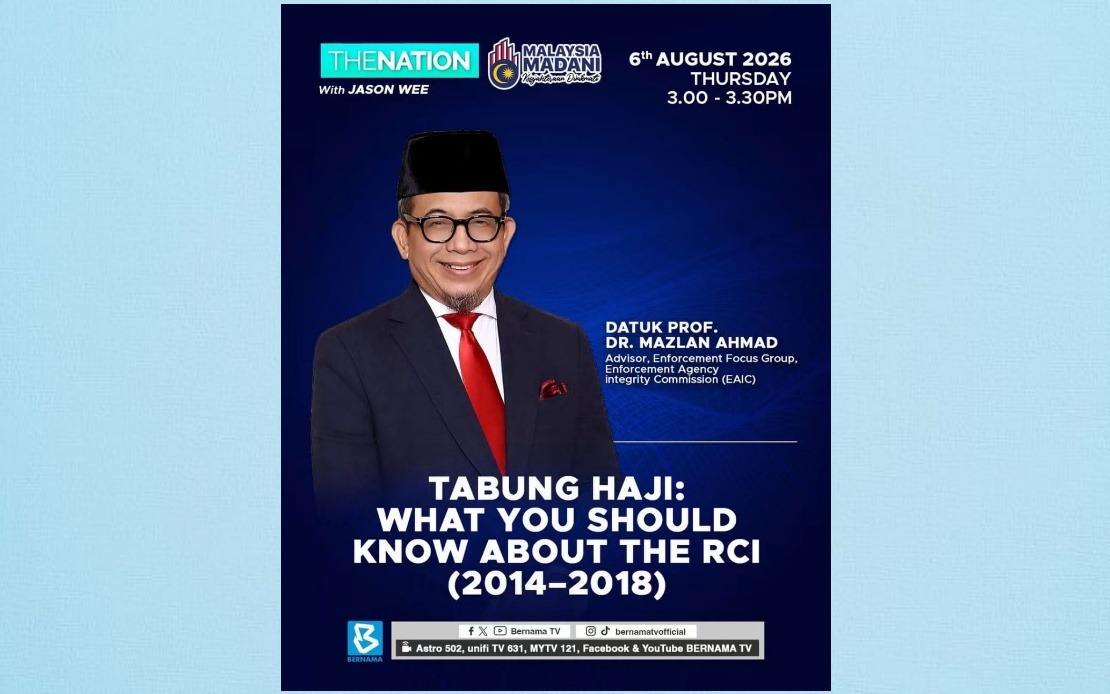
The Inland Revenue Board should launch a comprehensive investigation into alleged tax evasion involving Tabung Haji and its subsidiaries, according to a senior governance expert, as scrutiny of the pilgrim fund intensifies following revelations from a Royal Commission of Inquiry. Prof Datuk Dr Mazlan Ahmad, advisor to the Enforcement Focus Group at the Enforcement Agency Integrity Commission, emphasised that any probe must be underpinned by rigorous forensic accounting capable of mapping the complete flow of funds throughout the period under examination.
Mazlan's call comes as Parliament prepares to debate the RCI report on August 11, which documented governance failures and management irregularities at Tabung Haji spanning 2014 to 2020. The RCI's findings, released on July 29, have triggered renewed demands for law enforcement intervention beyond the commission's scope. For Malaysian taxpayers and contributors to Tabung Haji, the distinction matters considerably: while the RCI focused on institutional management and fiduciary breaches, a tax investigation would determine whether funds were deliberately hidden from revenue authorities, potentially representing criminal conduct rather than mere administrative failure.
The forensic accounting dimension that Mazlan advocates proves crucial to understanding the scale and nature of any wrongdoing. Such investigations go beyond conventional audits by reconstructing financial transactions to identify patterns, discrepancies, and the ultimate destination of funds. In the Tabung Haji context, this means establishing whether money moved through subsidiary entities or external parties in ways designed to obscure taxable income or avoid statutory obligations. The advisor stressed that tracing these suspicious transactions would enable enforcement authorities to pinpoint responsible parties and establish whether specific criminal offences were committed, a significantly higher evidentiary bar than governance violations.
Critically, Mazlan argued that investigations must extend far beyond the board room and executive suites. He cautioned against focusing exclusively on senior management or directors, instead advocating for examination of the entire institutional ecosystem surrounding Tabung Haji's operations and financial dealings. This systemic approach reflects an understanding that corruption and financial irregularities rarely operate as isolated incidents. Rather, they typically emerge from broader organisational cultures, weak internal controls, and chains of approval that permit improper conduct to flourish. The experience of financial scandals across Southeast Asia and globally demonstrates that narrowly targeting senior figures while ignoring the structural enablers often allows problematic practices to persist under new management.
Governance failures represent the foundation on which Mazlan's concerns rest. He highlighted the RCI's conclusions that Tabung Haji suffered fundamental deficiencies in board-level oversight, checks, and balances. As a chartered accountant and council member of the Malaysian Institute of Accountants, Mazlan spoke with professional authority about the fiduciary responsibilities that directors bear. Board members possess a legal and ethical obligation to provide robust supervision of management activities, ensuring that the organisation operates within regulatory frameworks and safeguards stakeholder interests. When boards fail in this duty—whether through negligence, complicity, or inadequate expertise—they create conditions permitting mismanagement and potentially criminal conduct.
The distinction between governance lapses and tax evasion carries substantial implications for accountability and remedies. Governance investigations typically result in recommendations for structural reform, leadership changes, and enhanced oversight mechanisms. Tax evasion inquiries, by contrast, can lead to criminal prosecution, asset recovery, and punitive sanctions. For Tabung Haji contributors—predominantly Malaysian Muslims saving for pilgrimage—the question of whether funds were deliberately concealed from tax authorities represents a more serious breach than administrative inefficiency. It suggests that not only were assets mismanaged, but that culpable individuals may have conspired to evade legal obligations, diverting resources that should have flowed to the national treasury.
Mazlan characterised the situation as demonstrating systemic risk rather than isolated individual misconduct. This framing proves significant because it acknowledges that understanding what occurred at Tabung Haji requires examining institutional design, approval hierarchies, and information flows rather than simply identifying a few rogue actors. The RCI investigation, having completed its review of facts and circumstances, provides the foundation for deeper criminal or tax investigations. However, Mazlan cautioned that enforcement agencies must now move beyond accepting surface-level conclusions, instead translating the RCI's findings into specific allegations that can withstand prosecutorial and judicial scrutiny. This transition from inquiry to enforcement demands different expertise and investigative approaches.
For regional observers, the Tabung Haji situation reflects broader governance challenges afflicting large institutional entities across Southeast Asia. Religious and community-based financial institutions often operate in regulatory grey zones, with boards comprising individuals selected for religious credentials rather than financial expertise or independence. The combination of public trust, substantial assets, and governance weaknesses creates conditions conducive to financial irregularities. Malaysia's willingness to establish a RCI and now pursue substantive investigations suggests institutional capacity to address such failures, distinguishing it from jurisdictions where similar scandals remain uninvestigated or unprosecuted.
The RCI report's findings should catalyse rather than conclude enforcement action, Mazlan insisted. Too often, comprehensive inquiries produce voluminous reports that gather dust on government shelves while alleged perpetrators face no consequences. The advisor's emphasis on translating RCI conclusions into specific criminal or regulatory allegations represents a critical juncture. It requires enforcement agencies to possess both the resources and political will to pursue investigations that may implicate prominent business figures or well-connected individuals. The August 11 parliamentary debate will test whether legislators possess sufficient appetite to demand genuine accountability or whether Tabung Haji's governance crisis will ultimately result in cosmetic reforms and minimal consequences for those responsible.
As this situation develops, several enforcement and investigative bodies will assume central roles. Beyond the IRB, the Malaysian Anti-Corruption Commission may pursue investigations into any corrupt practices, while the police's commercial crime division could examine fraudulent conduct. The coordination among these agencies will determine investigation effectiveness and whether cases proceed to prosecution. For Malaysian citizens and international observers, the Tabung Haji investigation will illuminate whether Southeast Asia's largest economies possess institutional capacity and political determination to hold large organisations and their leadership accountable for serious financial breaches, or whether such scandals remain subject to limited consequences despite substantial public trust and resources involved.

