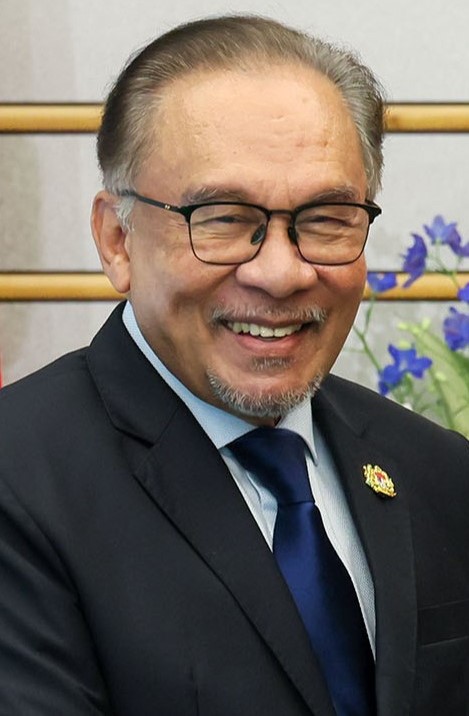
A pivotal moment in his youth—a two-week detention under the Internal Security Act—reshaped the entire trajectory of Dr Shukri Abdullah's life, ultimately leading him to become one of Malaysia's most respected motivational figures and this year's Kedah Tokoh Maal Hijrah. At 76, the scholar reflected on how that 1974 experience, stemming from his activism during the Baling Demonstrations as a student leader at Universiti Sains Malaysia, became the crucible through which he forged a commitment to education and purposeful living that would define the next five decades.
The immediate aftermath of his release presented what could have been a crushing setback. His university scholarship was revoked, leaving him without the financial support that had enabled his studies. Yet rather than viewing this as an end point, Dr Shukri channelled the experience into a profound recalibration of his priorities and aspirations. He recognised that the only pathway forward lay in demonstrating through sustained effort and discipline that change was possible—that individuals possessed the agency to reshape their circumstances through determination and self-awareness. This philosophy, forged in adversity, would later become the cornerstone of his life's work in mentoring others.
What emerged from this turning point was nothing short of a remarkable academic transformation. Dr Shukri committed himself entirely to his studies, abandoning distractions and approaching his education with singular purpose. His efforts culminated in an achievement that vindicated his turnaround: he graduated as USM's overall best student and was granted the honour of delivering the valedictory address as the institution's top graduate. This recognition carried particular significance given his trajectory. He had not been an exceptional student during his secondary school years, and his initial university application had been rejected due to average grades.
The journey to USM was itself unconventional. After his disappointing school results, Dr Shukri worked as a journalist for Utusan Melayu in 1980 for a year, gaining practical experience in the media industry. This professional interlude proved formative rather than a detour. It exposed him to the workings of the newsroom and broader society while he reconsidered his academic ambitions. When he reapplied to USM, the institution recognised something that had shifted in his maturity and motivation, granting him admission. His determination to prove himself burned even brighter given the second chance he had been afforded.
Educational achievement at the undergraduate level was merely the beginning. Dr Shukri pursued postgraduate studies in the United Kingdom, where he completed a PhD at the University of Essex in an impressively compressed timeframe of two years and two months. This advanced qualification opened doors to academic employment, and upon his return to Malaysia, he took up a position as a lecturer at USM, contributing to the institution that had become transformative in his life. Yet academia, despite its prestige, was not to be his ultimate calling.
The trajectory from university lecturer to full-time motivational speaker and mentor reflects a conscious choice to prioritise direct impact on human development. For more than three decades, Dr Shukri has devoted himself to guiding students and parents through structured motivational programmes, sharing the hard-won insights from his own experience. This extended engagement with young people and families has become his principal contribution to Malaysian society—a more intensive form of influence than academic teaching alone could provide. His message remains consistent: excellence is not innate talent but rather the product of discipline, self-awareness, and an unwavering determination to improve.
His personal circumstances underline his investment in family and intergenerational wisdom. As the father of 10 children and grandfather of 22, Dr Shukri embodies the values he advocates. He emphasises repeatedly to young people the critical importance of establishing clear life goals, arguing that without such direction, individuals drift toward unproductive activities that squander potential. This guidance resonates particularly in the Malaysian context, where youth engagement and purpose remain ongoing social concerns. His advocacy for parental involvement in shaping children's direction from an early age addresses a foundational challenge in education and character development.
The recognition of his contributions came full circle on June 17 this year when Dr Shukri received Kedah's Tokoh Maal Hijrah award at the state-level Maal Hijrah celebration in Alor Setar. The Raja Muda of Kedah, Tengku Sarafudin Badlishah Sultan Sallehuddin, presented him with a certificate of appreciation and RM15,000 in cash—a formal acknowledgment of his three decades of service to the community. For Dr Shukri, such recognition vindicated the conviction that emerged from his detention: that individuals transformed by adversity into vehicles of service multiply their influence exponentially across generations.
His philosophy extends beyond individual achievement to encompass societal responsibility. He articulates a vision in which personal excellence becomes the foundation for contributing meaningfully to the broader community. The transition from a detained student activist in 1974 to an honoured figure in 2024 represents not a rejection of his youthful idealism but rather its maturation—channelled now through education, mentorship, and the slow work of building stronger families and more purposeful young citizens. In the context of contemporary Malaysia, where questions of values, direction, and social cohesion remain pressing, Dr Shukri's example offers a counternarrative: transformation through education, purpose discovered through adversity, and sustained commitment to lifting others as one rises.