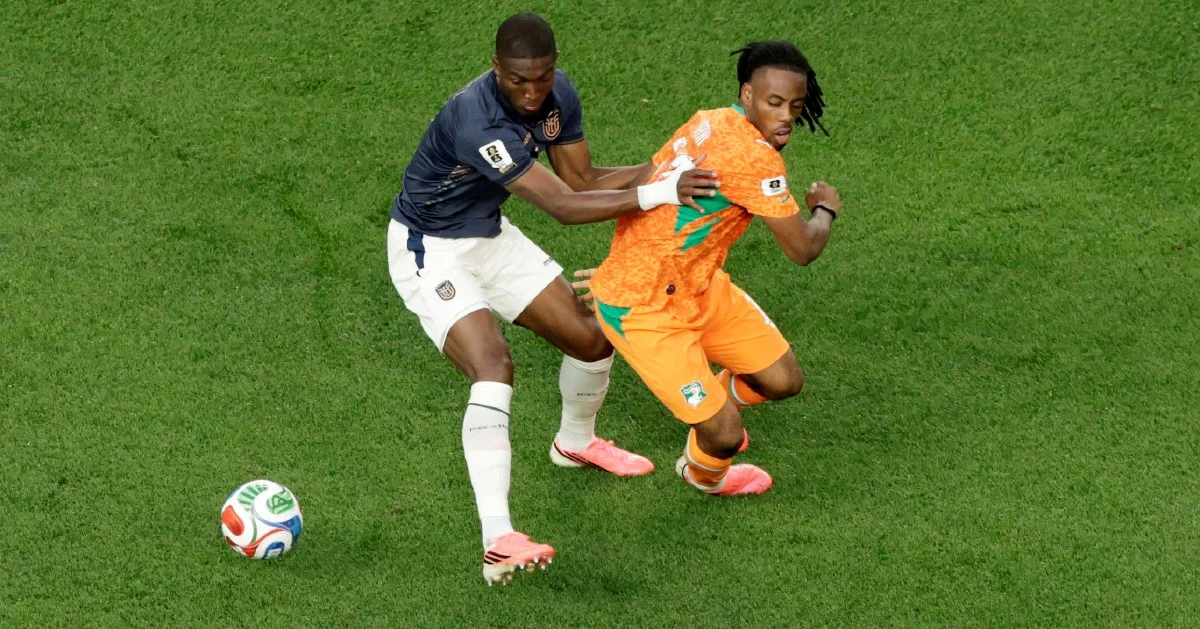
The Ivorian Football Federation has made the decision to keep forward Elye Wahi out of the squad for this weekend's crucial World Cup qualifying encounter against Germany in Canada, citing his involvement in an ongoing investigation into alleged match-fixing activities. The announcement came Thursday, following revelations a day earlier that the player had been identified in connection with suspected sports corruption linked to a Ligue 1 match. The federation's swift action signals a zero-tolerance approach to integrity breaches, even at the critical stage of World Cup qualification when squad depth carries significant strategic value.
Wahi's situation underscores a persistent problem affecting international football: the vulnerability of players to match-fixing schemes, particularly those employed in European leagues where betting markets operate with substantial financial stakes. The player, who competes in France's top division where regulatory oversight has intensified in recent years, now faces serious questions about his conduct and professional future. The investigation's scope remains unclear, though authorities in France have been progressively more vigilant in pursuing suspected corruption across all levels of professional competition.
The timing of this development carries substantial implications for Ivory Coast's World Cup campaign. Removing any player from a squad during qualifying matches creates tactical challenges for coaches attempting to maintain momentum and competitive form. Germany represents formidable opposition, and the absence of depth options in the forward line could influence team selection strategy and overall performance in a fixture with significant points implications. The federation's prioritisation of institutional integrity over short-term competitive advantage reflects evolving international standards around disciplinary accountability.
Match-fixing investigations in European football have become increasingly sophisticated in their scope and methodology. French authorities, alongside international organisations dedicated to sports integrity, have developed enhanced detection mechanisms that identify suspicious betting patterns and irregular behaviour among players. When evidence emerges linking individuals to such schemes, federations typically respond through swift administrative action to protect the sport's credibility and demonstrate commitment to clean competition.
For Southeast Asian football observers, the Wahi case resonates with growing concerns about corruption networks that extend across international leagues and territories. The region has experienced its own struggles with match-fixing allegations, making this incident a potent reminder that integrity threats transcend geographical boundaries. Players earning substantial wages in established European competitions remain occasionally susceptible to approaches from organised betting syndicates offering significant financial inducements.
The investigation's progression will likely influence Wahi's standing within the Ivorian federation and potentially affect his club status at Ligue 1. Regulatory bodies across European football maintain comprehensive frameworks for investigating corruption allegations, with potential sanctions ranging from temporary suspensions to permanent bans depending on investigation findings and severity determinations. Both the federation and relevant French authorities will presumably conduct parallel inquiries before reaching definitive conclusions.
Ivory Coast's qualification prospects depend substantially on results against diverse opposition, and this squad disruption occurs at a consequential moment in the tournament schedule. The federation's decision preserves institutional credibility but simultaneously removes an attacking option during a period when match fitness and continuity provide competitive advantages. This represents the complex balance federations navigate when confronting integrity issues affecting their most valuable athletes.
The broader context reveals how modern football struggles persistently with corruption despite enhanced regulations and monitoring infrastructure. Betting markets continue expanding globally, creating environments where substantial financial incentives encourage irregular behaviour. Players in relatively early career stages, such as Wahi, represent particularly vulnerable demographics when exposed to sophisticated recruitment approaches by individuals connected to organised betting networks.
International football's governing structures have progressively strengthened collaboration mechanisms between national federations, continental bodies, and law enforcement agencies to identify and prosecute corruption schemes. Information sharing protocols and standardised investigation procedures reflect accumulated experience from previous major scandals that damaged football's reputation and public confidence. The Ivorian federation's transparent handling of this situation aligns with these modernised accountability standards.
The implications extending beyond this individual match encompass broader questions about player education and preventive strategies. Federations increasingly implement comprehensive integrity training programmes designed to educate young professionals about corruption risks and appropriate reporting mechanisms. Such educational initiatives aim to cultivate cultural shifts where players recognise match-fixing overtures and proactively engage authorities rather than entertaining such propositions.
Wahi's situation ultimately reflects football's ongoing institutional maturation regarding corruption management. While isolated incidents persist, the speed and decisiveness of contemporary responses demonstrate evolving professional standards that prioritise sport integrity over immediate competitive considerations. The investigation's outcome will probably influence federation policy frameworks and potentially inform international discussions about strengthening preventive mechanisms across professional football globally.