Jalan Burma, stretching nearly five kilometres through the heart of George Town, stands as a microcosm of Penang's multifaceted appeal—blending Michelin-recognized culinary hotspots with architectural remnants of the island's colonial past. For visitors seeking authentic experiences beyond the trodden paths of the Unesco Heritage Zone, this arterial road offers an compelling alternative route through the city's layered history, immigrant communities, and evolving food culture that has earned international acclaim.
Understanding George Town requires navigating its distinct character zones, each revealing different facets of this World Heritage city. The primary heritage corridor encompasses major thoroughfares including Beach Street, Armenian Street, Lebuh Carnavon, Lebuh Chulia and Pengkalan Weld, where visitors encounter meticulously preserved colonial structures now housing galleries, boutique shops, and cafes. Yet this concentrated tourist belt represents only one dimension of the city's identity. The true complexity of George Town emerges when exploring peripheral areas where residential quarters, food courts, and neighbourhood establishments thrive largely undisturbed by guidebook attention.
For culinary-focused travellers, Penang's 74 Michelin-recognized establishments offer an unusually democratic approach to dining recognition. Rather than concentrating accolades among fine dining establishments, the guide's 33 Bib Gourmand listings celebrate neighbourhood food courts and coffee shop stalls where exceptional cooking happens in unpretentious settings. This democratic culinary landscape reflects Penang's authentic food culture, where some of the island's most celebrated dishes emerge from modest preparation areas within communal eating spaces rather than formal restaurants. The two one-star establishments and 39 Michelin Selected venues round out a remarkably diverse recognition portfolio.
The Bib Gourmand category particularly merits attention for Southeast Asian travellers accustomed to exceptional street food. These venues often operate within traditional coffeeshops or food courts, where multiple stall operators share a single space, creating an immersive sensory experience. The appeal transcends mere sustenance—it encompasses the theatrical elements of open-kitchen cooking, where diners observe noodle tossing, wok flames, and ingredient combinations in real time. The aromatic convergence of various cuisines within one space, combined with visual stimulation and the unmistakable energy of communal dining, produces an experience distinctly different from conventional restaurant meals.
Duck Blood Curry Mee on Jalan Burma exemplifies this category's accessibility and quality. Positioned mere steps from newly established hospitality venues, this stall represents the coexistence of traditional food culture alongside modern tourism infrastructure. Similarly, Green House Prawn Mee & Loh Mee—operating from Restoran Old Green House—maintains Bib Gourmand status while operating from a traditional coffeeshop setting. A secondary location nearby operates under a slightly different name, yet locals consistently direct visitors to the original establishment, underscoring how Penang's food culture operates on reputation and authenticity rather than branding consistency.
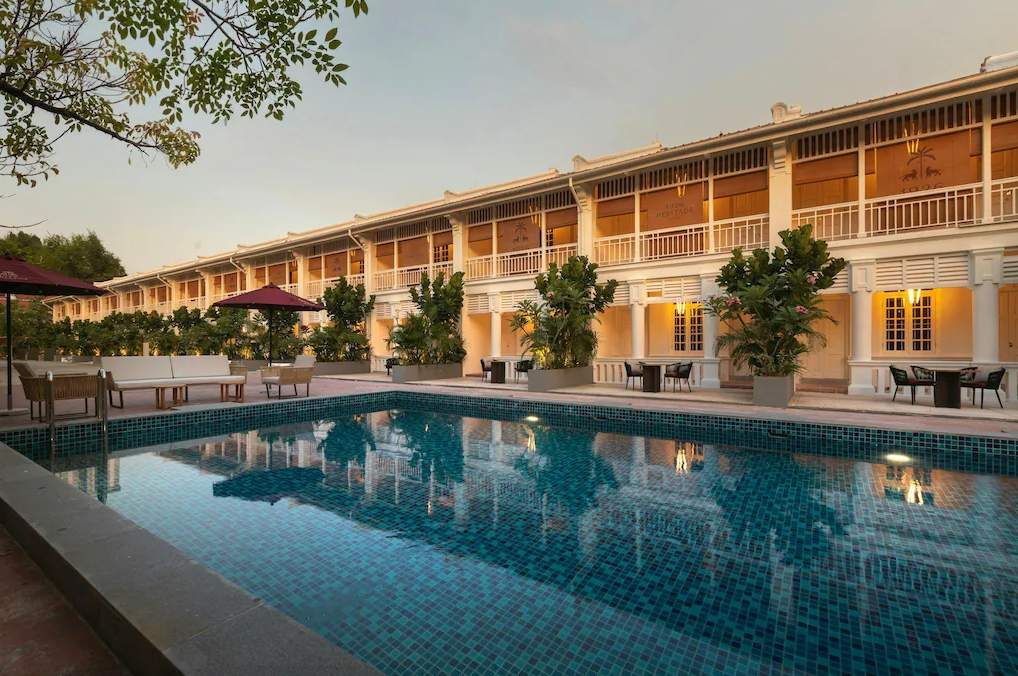
The architectural centrepiece of Jalan Burma's heritage landscape is the restored hotel occupying space originally constructed in 1926. This year marks the building's centennial, a significant milestone for a structure that once housed British and local government administrators. Its Anglo-Malay architectural vocabulary—characteristic of early twentieth-century George Town construction—provides tangible evidence of the colonial period's aesthetic influence on Penang's built environment. The original 24 interconnected terrace houses underwent substantial transformation when the Penang Development Corporation converted the property into a hotel in 1999, while maintaining essential heritage features.
The conversion yielded 78 rooms distributed across six categories, ranging from compact Heritage Rooms suited for solo travellers to the expansive Straits Suite. This adaptive reuse approach preserves architectural integrity while meeting contemporary hospitality expectations, creating spaces where guests directly inhabit colonial-era structures. The presence of modern amenities—including WiFi-connected water filtration systems in rooms—juxtaposes contemporary convenience with period design, embodying how heritage properties navigate preservation while remaining functional for modern travellers. Such conversions have become increasingly important as George Town faces pressures from both tourism development and urban evolution.
Jalan Burma's historical nomenclature reveals Penang's multicultural settlement patterns and the linguistic layering that characterizes the island. Originally designated Burmah Road in colonial administrative records, the thoroughfare acquired multiple names reflecting different linguistic communities: three Malay designations, including Jalan Tarek Ayer (Water Cart Road) and Jalan Air Lembu (Water By Bullock Cart), alongside Hokkien and Cantonese variants referring to the same water transportation function. These naming variations document how different communities experienced and conceptualized the same urban space through their own linguistic frameworks. The nineteenth-century establishment of a Burmese settlement in the Pulau Tikus neighbourhood—visible today in the presence of the Dhammikarama Burmese Temple, established two centuries ago—ultimately transformed the road's primary designation to honour this significant immigrant community.
The Burmese cultural presence persists in the contemporary landscape through subsidiary road names including Rangoon Road, Mandalay Road, and Moulmein Close, creating a geographic palimpsest of immigration history. For Southeast Asian visitors, particularly those from Myanmar, these nomenclatural traces offer tangible evidence of historical population movements and community establishment across the region. The temple itself, now two centuries old, represents one of Penang's oldest Burmese Buddhist structures and continues serving as a cultural and spiritual anchor for descendants of historical Burmese immigrants.
Walking Jalan Burma—approximately four kilometres from the heritage zone toward Pulau Tikus—presents a manageable pedestrian journey through diverse neighbourhood character. Most sections feature adequate pedestrian infrastructure, with only one or two segments lacking formal pathways, making it accessible for leisurely exploration despite Penang's tropical heat. The route showcases residential areas, small businesses, and local gathering spaces largely untouched by tourism infrastructure, providing insight into how ordinary Penang residents experience their city. This experiential contrast with the sanitized heritage zone offers more nuanced understanding of George Town's actual urban functioning.
Accommodation decisions significantly influence how visitors experience Jalan Burma's offerings. Staying within the restored heritage hotel positions guests for convenient exploration of both the formal heritage zone and the more residential character of Jalan Burma itself. The hotel's location facilitates morning visits to celebrated food stalls before crowds arrive, while its restaurant facilities—such as Root House by Gen, offering contemporary Chinese cuisine—provide evening dining options without requiring extensive travel. This integrated approach to heritage preservation and contemporary hospitality development allows visitors to inhabit historical spaces while accessing modern amenities.
Beyond formal tourism circuits, George Town contains neighbourhood gathering spaces like Hin Bus Depot, a weekend marketplace where local vendors sell handcrafted items, vintage goods, and homemade food alongside live music performances. Such spaces represent the city's authentic creative culture, distinct from heritage zone commercialization. These venues attract both locals and culturally-engaged visitors seeking genuine community interaction rather than curated tourist experiences. The market embodies how George Town's cultural vitality extends far beyond colonial architecture and Michelin-recognized restaurants.
For Malaysian and Southeast Asian travellers, Jalan Burma encapsulates contemporary approaches to heritage tourism that move beyond preservation-as-museumification toward living heritage integration. The coexistence of hundred-year-old colonial architecture, Michelin-recognized neighbourhood food stalls, active Buddhist temples, and residential communities demonstrates that heritage cities function as inhabited spaces rather than open-air museums. This model has implications for how other Southeast Asian heritage destinations balance preservation with authentic ongoing use, suggesting that tourism can complement rather than replace local community function when infrastructure and planning prioritize residents' needs alongside visitor experiences.

