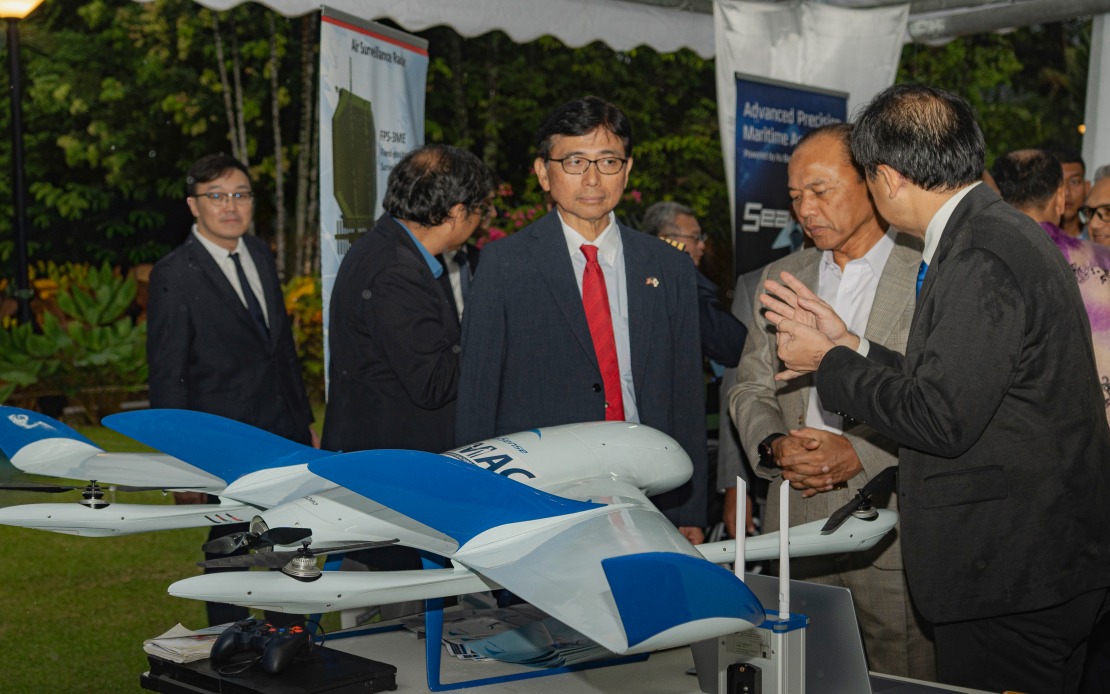
Japan has signalled its intention to substantially deepen security and defence cooperation with Malaysia, according to remarks made by Japan's Ambassador to Malaysia Noriyuki Shikata at the Japan Self-Defence Forces Day Reception in Kuala Lumpur on Wednesday. The announcement underscores Tokyo's strategic pivot towards the Southeast Asian nation as part of its broader Indo-Pacific engagement amid mounting regional security challenges and geopolitical tensions. Shikata's comments reflect a trajectory of expanding bilateral military ties that accelerated following Datuk Seri Anwar Ibrahim's recent visit to Japan, where the Malaysian Prime Minister and his Japanese counterpart Sanae Takaichi reaffirmed their commitment to a closer defence and security partnership.
The timing of Japan's overture is particularly significant given the increasingly volatile security landscape across the Indo-Pacific. Tokyo views Malaysia as a critical partner in maintaining regional stability, not merely because of its geographic position straddling vital sea lanes but also because of Kuala Lumpur's influential voice within ASEAN and its non-aligned foreign policy orientation. By emphasising security cooperation with Malaysia, Japan seeks to build coalitions among like-minded regional powers without appearing to encircle any particular nation—a delicate diplomatic balancing act essential in Southeast Asia's multipolar environment.
The foundation for this strengthened partnership was formally established in 2023 when Japan and Malaysia elevated their bilateral relationship to the status of a Comprehensive Strategic Partnership. This upgrade represented a recognition of shared interests and values between the two nations, particularly regarding the rules-based international order and freedom of navigation. As the two countries approach the 70th anniversary of their diplomatic relations next year, Shikata indicated that Tokyo intends to capitalise on this momentum to forge even tighter connections across multiple sectors, with defence and security positioned at the core of this deepening engagement.
A central pillar of Japan's regional strategy is its Free and Open Indo-Pacific initiative, which emphasises the importance of maintaining unobstructed sea lanes, respecting international law, and ensuring that no single power can dominate the region. Malaysia's ASEAN Outlook on the Indo-Pacific shares many of these principles, creating natural convergence between Tokyo's vision and Kuala Lumpur's approach. Both frameworks prioritise inclusive regionalism and peaceful resolution of disputes, principles that have guided Japanese and Malaysian policymakers in navigating complex regional dynamics. The alignment of these two strategic visions provides a practical framework for cooperation that transcends bilateral interests and addresses broader regional concerns.
At the operational level, Japan and Malaysia have already developed a robust schedule of military exercises and collaborative defence activities that translate strategic alignment into concrete security outcomes. The bilateral maritime exercise MALPAN, conducted regularly in the South China Sea and the Strait of Malacca, represents perhaps the most visible manifestation of this cooperation. The inclusion of the Royal Malaysian Air Force in MALPAN during April expanded the exercise's scope beyond naval operations, encompassing air defence coordination and demonstrating the militaries' commitment to developing interoperability across multiple domains. These exercises serve multiple purposes simultaneously: they build mutual understanding between servicemen, develop common operational procedures, and signal to other regional actors that Japan and Malaysia maintain robust defence coordination capabilities.
Beyond traditional military-to-military cooperation, Japan has introduced innovative security assistance mechanisms tailored to address contemporary challenges. The Official Security Assistance framework, launched in 2023 with Malaysia among its initial beneficiaries, represents a shift towards providing targeted equipment and capabilities rather than purely financial aid. In the past year, Japan supplied unmanned aerial vehicles and rescue boats to Malaysia, practical assets that enhance maritime domain awareness and humanitarian response capacities. Under the 2025 iteration of this programme, Japan has committed to providing ceasefire monitoring equipment to the ASEAN Observer Team and a diving support vessel to the Royal Malaysian Navy, reflecting a nuanced understanding of Malaysia's specific operational requirements and regional responsibilities.
The provision of such specialised equipment carries significance beyond its immediate military utility. By equipping the Royal Malaysian Navy with advanced diving support capabilities, Japan enables Malaysia to undertake more sophisticated maritime operations, including underwater infrastructure maintenance, search and rescue missions, and potentially more complex naval operations. These assets enhance Malaysia's independent capacity to project power and maintain security in its maritime domain, reducing its dependence on external actors while simultaneously deepening bilateral defence relationships. This approach allows Japan to strengthen ties with a regional partner without the complications that might arise from more controversial forms of military support.
Defence industry cooperation represents another dimension through which Japan seeks to entrench its security partnership with Malaysia. The participation of ten Japanese companies in Defence Services Asia 2026, Malaysia's premier defence exhibition, demonstrates Tokyo's confidence in the commercial opportunities within Malaysia's defence modernisation agenda. More significantly, Japan and Malaysia have formalised a bilateral defence industry dialogue through a Terms of Reference agreement, creating institutional mechanisms for sustained engagement between defence manufacturers, government procurement officials, and military planners. This dialogue can facilitate technology transfer, joint development projects, and long-term industrial partnerships that bind the two nations' defence ecosystems more tightly together.
For Malaysia, the deepening security partnership with Japan offers several strategic advantages worth considering. Japan brings advanced military technology, particularly in maritime and air defence domains, alongside defence industrial capacity and proven ability to operate sophisticated systems. Japanese defence cooperation comes without the political baggage or conditions that might accompany security partnerships with more assertive powers. Furthermore, Japan's emphasis on rule-based order and non-coercive approaches to regional security aligns with Malaysia's preferences for a stable, predictable security environment. The partnership also provides Malaysia with additional strategic optionality, allowing Kuala Lumpur to diversify its security relationships and reduce dependence on any single external power.
The emphasis on sea lane security and freedom of navigation that pervades Japanese-Malaysian defence cooperation reflects both nations' fundamental economic interests. Malaysia's prosperity depends critically on the unimpeded flow of trade through the Strait of Malacca and the South China Sea, corridors through which hundreds of billions of dollars in commerce transit annually. Japan similarly relies on these sea lanes for energy supplies and market access, creating a natural convergence of interests around maritime security. By strengthening bilateral naval cooperation and investing in Malaysian maritime capabilities, both nations work towards a security environment that serves their economic interests while maintaining the stability upon which regional prosperity depends.
From a broader Southeast Asian perspective, Japan's deepened engagement with Malaysia carries implications for ASEAN's cohesion and strategic autonomy. Malaysia's status as an ASEAN member and influential voice within the grouping means that enhanced Japanese security cooperation extends Tokyo's reach across the association. However, because such cooperation occurs within a framework explicitly aligned with ASEAN's own Indo-Pacific outlook, it can be perceived as complementary to rather than contradictory to ASEAN centrality in regional affairs. This nuanced approach allows Japan to pursue its strategic interests while respecting the region's sensitivities regarding external interference and great power competition.
Looking ahead, the trajectory of Japanese-Malaysian security cooperation appears set to continue expanding. The approaching 70th anniversary of diplomatic relations provides a symbolic milestone around which both governments can announce new initiatives and deepen existing commitments. The establishment of formal defence industry dialogue mechanisms suggests that cooperation will increasingly extend beyond government-to-government military transactions towards sustained commercial and industrial partnerships. As regional security challenges persist and evolve, the foundation laid through these defence exercises, equipment transfers, and institutional arrangements will likely prove invaluable in enabling Japan and Malaysia to respond collaboratively to emerging threats and maintain the rules-based order upon which both nations' security and prosperity ultimately depend.

