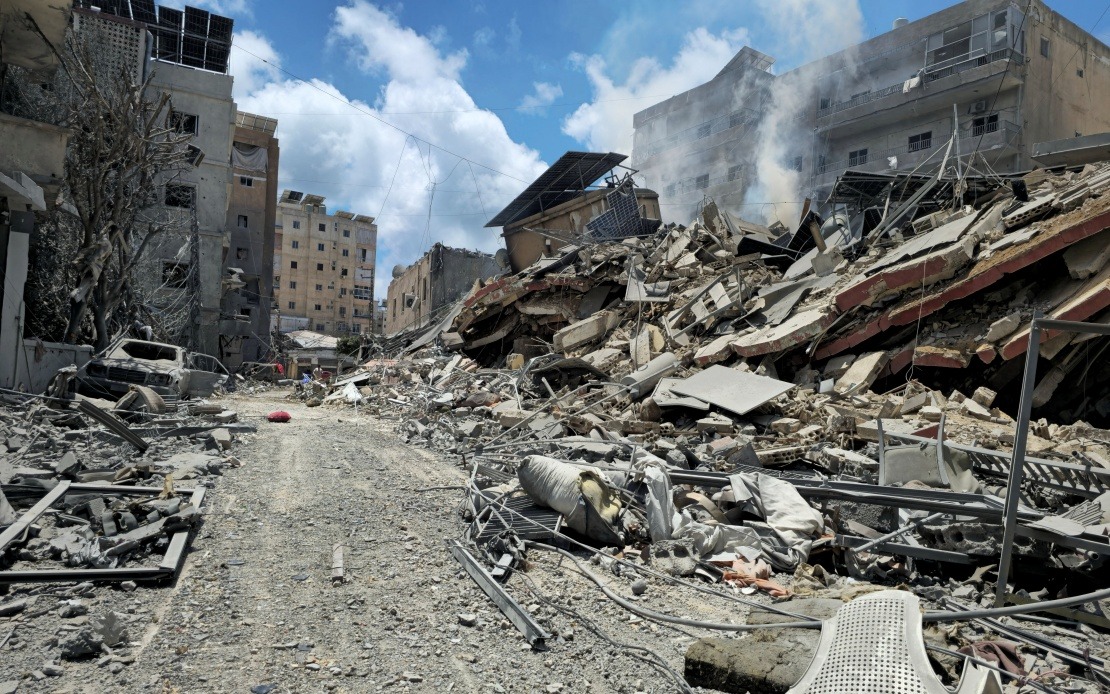
Japan has committed to delivering US$15 million in emergency humanitarian assistance across West Asia, reflecting Tokyo's long-standing strategic interest in the stability of one of the world's most consequential regions. Foreign Minister Toshimitsu Motegi announced the decision on Friday, describing the allocation as a response to mounting humanitarian pressures affecting millions across Iran, Lebanon, and Palestinian territories. The pledge represents Japan's continued diplomatic engagement in a region where economic disruptions and conflict-related displacement have created urgent needs for food security, medical care, and basic supplies.
The financial commitment breaks down into distinct allocations tailored to each territory's particular circumstances. Iran will receive approximately US$10 million, representing the largest share of the aid package and underscoring Japan's maintained diplomatic channels with Tehran despite broader international tensions. Lebanon will benefit from roughly US$4 million, reflecting the country's deepening economic crisis and the strain on its healthcare and social services infrastructure. The remaining US$1 million will be directed to Palestinians in the West Bank, addressing humanitarian needs amid ongoing political volatility and restricted access to resources.
Japan's decision to channel assistance through established international organisations rather than bilateral government transfers reflects a pragmatic approach to delivering aid in politically sensitive contexts. This mechanism allows Tokyo to ensure funds reach vulnerable populations while maintaining diplomatic flexibility and working within frameworks endorsed by the United Nations and other multilateral bodies. Such arrangements have long been standard practice for Japan, which often uses international conduits to deliver humanitarian support to regions where direct government-to-government transfers might prove complicated or contentious.
Motegi's statement emphasised that peace and stability in the Middle East hold vital importance for Japan's broader economic and security interests. This framing is significant for understanding Japanese foreign policy priorities, as the Middle East remains critical to Japan's energy security and regional trade networks. Disruptions to Middle Eastern stability have cascading effects on global supply chains and energy markets that directly impact Japanese consumers and businesses, making humanitarian stabilisation efforts in the region a form of enlightened self-interest alongside genuine altruism.
The humanitarian crisis affecting Iran has been compounded by economic sanctions, currency depreciation, and restrictions on access to international markets and banking systems. These structural challenges have undermined the purchasing power of ordinary Iranian households and strained government capacity to provide basic services. Japan's allocation to Iran acknowledges these realities while attempting to provide direct relief to populations experiencing food insecurity and inadequate access to medicines and medical equipment.
Lebanon faces perhaps the most acute humanitarian emergency among the three beneficiary territories. The country's financial system has effectively collapsed, with the Lebanese pound losing over 90 percent of its value since 2019. This economic catastrophe has pushed millions into poverty, compromised the ability of hospitals and clinics to function, and created severe shortages of fuel, electricity, and clean water. Japanese assistance targeting Lebanon will help address immediate survival needs among a population increasingly unable to afford basic necessities despite living in what was once a relatively developed economy.
The Palestinian territories, particularly the West Bank, continue to experience restrictions on movement, economic access, and resource allocation that create chronic humanitarian vulnerabilities. Japan's US$1 million allocation, while modest in global terms, acknowledges the ongoing displacement and deprivation affecting Palestinian communities. Japanese aid to Palestinian territories has historically reflected Tokyo's commitment to international humanitarian law and concern for civilian populations caught in protracted political disputes.
Japan's humanitarian engagement in West Asia exists within a broader context of Japanese foreign policy emphasising development assistance and conflict prevention. Unlike some major powers that pursue primarily strategic interests in the region, Japan has positioned itself as a stabilising force focused on addressing root causes of instability through economic development and humanitarian support. This approach reflects Japan's post-war constitutional constraints on military intervention and its emphasis on civilian-led diplomacy.
Motegi indicated that Japan intends to maintain active coordination with relevant governments and international organisations to monitor the effectiveness of this assistance and identify additional opportunities for supporting humanitarian improvement across West Asia. This commitment signals that the current allocation represents an initial response rather than a final statement of Japanese engagement with the region's humanitarian challenges. Tokyo recognises that sustained, long-term commitments will likely be necessary to address the structural factors driving humanitarian crises across Iran, Lebanon, and Palestinian territories.
For Southeast Asian observers, Japan's West Asia aid package offers instructive lessons about balancing humanitarian concerns with strategic interests and maintaining diplomatic flexibility in complex geopolitical environments. As a prosperous nation with significant but not military-dominant regional influence, Japan has developed sophisticated tools for projecting soft power and maintaining relationships across politically divided regions. The approach taken toward West Asia mirrors similar Japanese strategies in other parts of Asia where Japan seeks to promote stability while respecting sovereignty and working within multilateral frameworks.
The timing of Japan's announcement occurs amid broader shifts in global geopolitical alignments and renewed attention to humanitarian crises that have received insufficient international resources. Japan's willingness to commit additional funding underscores the persistent gravity of West Asian humanitarian needs and the recognition among major powers that insufficient aid could accelerate regional instability with global consequences. For Malaysia and other ASEAN nations, Japan's continued engagement in West Asia demonstrates how middle powers can maintain influential roles in critical regions through sustained diplomatic presence and development assistance.

