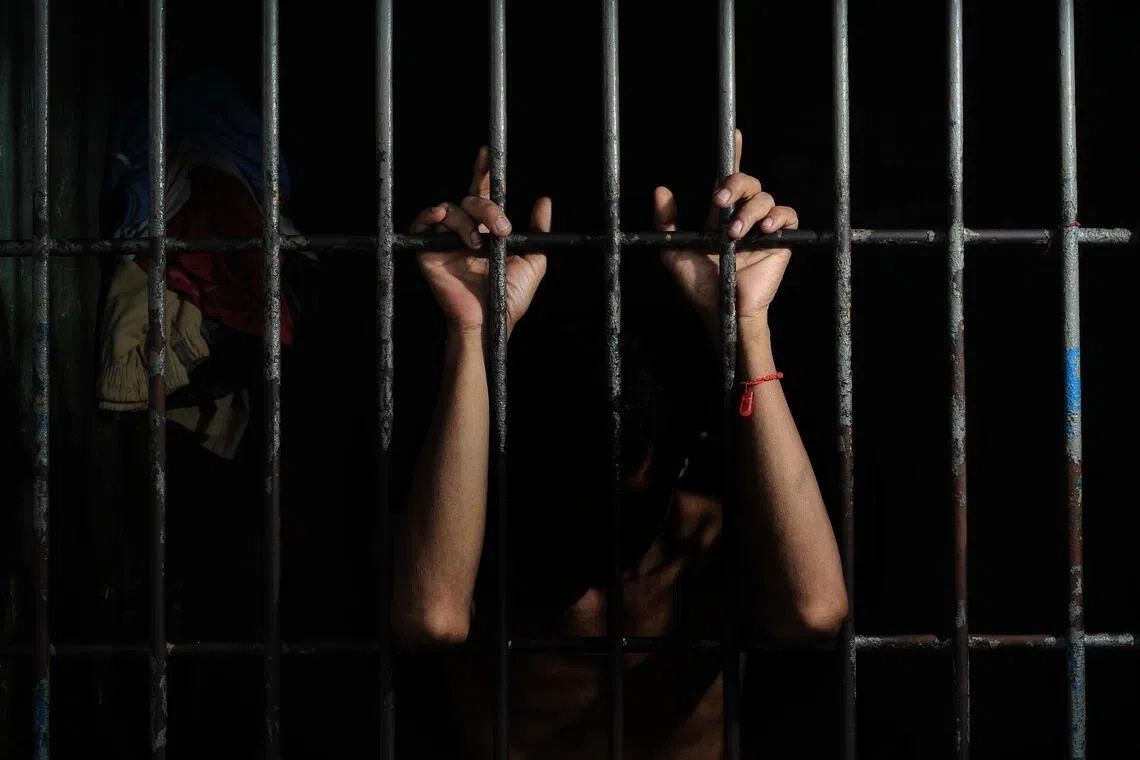
A grieving mother has filed a lawsuit against Japanese authorities seeking 100 million yen in compensation for the death of her 16-year-old daughter, whose body deteriorated so severely during pre-trial detention that she became unrecognisable by the time she passed away. The case, lodged with the Kobe district court on June 17, represents one of the starkest examples yet of the human toll exacted by Japan's contentious approach to criminal interrogation and detention, a system critics argue prioritises securing confessions over protecting the rights and welfare of suspects.
The girl, identified only as Runa in legal proceedings, endured eighteen days in custody in June of the previous year after her arrest at a care facility in Hyogo region, where she worked with people with disabilities. Authorities accused her of assaulting a patient during a Valentine's Day celebration, but the young woman consistently maintained her innocence, asserting that she had merely used gentle hand pressure against the resident's chin to prevent them from biting another person. Despite her protestations, she remained imprisoned while undergoing relentless interrogation, and five months after her eventual release, she weighed merely 20 kilograms—roughly half the normal weight for her age. She died in December, her body having failed to recover from the ordeal.
During her confinement, Runa was systematically isolated from family contact and subjected to psychological pressure designed to extract a confession. Investigators employed coercive tactics, including threats that she would be sent to a reformatory and that she would be prevented from seeing her mother unless she admitted guilt. A lawyer representing the mother revealed that interrogators repeatedly demanded that Runa confess, with one investigator telling her, "You did it, didn't you? Just tell the truth," according to entries the girl made in a journal she kept while detained. This environment of intimidation and emotional manipulation took a documented toll: Runa developed acute stress disorder, eating disorder, and post-traumatic stress disorder—conditions that would plague her in the months following her release and ultimately contributed to her death.
The case illuminates a persistent feature of Japan's criminal justice architecture commonly referred to as "hostage justice," a system whereby suspects who refuse to confess or maintain their innocence often face prolonged pre-trial detention, which effectively serves as leverage to obtain the desired confession. Critics contend that in this framework, the presumption of innocence operates more as a formality than a living principle, and that the psychological and physical coercion embedded within the interrogation process transforms detention into a tool for manufacturing rather than establishing guilt. Runa's lawyer, Masahiro Sasaki, has questioned whether her arrest was legally justified at all, noting that the alleged assault was of an "extremely trifling" nature and that her age should have rendered detention permissible only under the most exceptional circumstances.
More troubling still is the procedural path that kept Runa imprisoned. Prosecutors sought to extend her detention not once but twice, while simultaneously blocking her lawyer's applications to have her released pending trial. Only after she suffered a medical emergency—vomiting and collapse leading to brief hospitalisation—did authorities finally decide to drop all charges entirely, releasing her on grounds of non-prosecution. This sequence of events demonstrates not merely procedural failings but a systemic indifference to a young suspect's deteriorating physical and mental condition, an indifference embedded within prosecutorial and judicial institutions.
The circumstances surrounding Runa's arrest and detention appear particularly indefensible given her personal circumstances. She was sixteen years old with no history of delinquency, lived under parental supervision, and prosecutors could identify no credible risk that she would flee or destroy evidence—the conventional justifications for maintaining custody. Sasaki argues these facts rendered her detention unjustifiable even under Japan's permissive legal standards, yet authorities proceeded regardless. The decision to hold her, interrogate her intensely, and block her release represent failures at multiple institutional levels: investigative, prosecutorial, and judicial.
The term "hostage justice" has gained international currency precisely because international human rights organisations have repeatedly documented and condemned these practices. The Supreme Court's own scrutiny of historical cases has validated these concerns. In the notable case of Iwao Hakamada, whose convictions were quashed in 2024 after decades on death row, the court explicitly ruled that his confessions had been extracted during "inhumane" interrogations. Hakamada's case stands as a cautionary tale about the dangers of systems that depend excessively upon confessions obtained under duress, revealing how innocent people can remain imprisoned for years on the basis of coerced admissions extracted during illegitimate confinement.
Runa's death adds a new dimension to discussions of hostage justice by demonstrating that the harms inflicted by these practices can extend beyond wrongful conviction and extended imprisonment to encompass loss of life itself. The medical evidence documenting her catastrophic weight loss and the psychiatric diagnoses she received establish a direct causal chain between the detention experience and her subsequent decline. Her mother's testimony at the news conference—"My daughter was unrecognisable when she died"—communicates the profound human reality behind abstract policy critiques, a reality that should give pause to any justice system that tolerates such outcomes.
The Kobe District Public Prosecutors Office declined to comment on the lawsuit, stating through official channels that they had yet to receive formal notification of the complaint. This bureaucratic posture, while technically correct as a matter of procedure, suggests an institutional capacity to maintain distance from the human consequences of the system for which prosecutors serve as gatekeepers. Runa's mother, by contrast, has been forthright about her objectives: she seeks not merely financial redress but transparency regarding what occurred to her daughter during those eighteen days, why she was arrested, and what precipitated the series of decisions that left a young woman traumatised, malnourished, and ultimately dead.
The lawsuit arrives at a moment of growing international pressure on Japan to reform its criminal justice procedures. The nation has long maintained that its confession-dependent system produces reliable outcomes and reflects cultural preferences for harmony and remorse within Japanese society. Yet cases such as Runa's, combined with documented wrongful convictions and exonerations, have eroded these arguments. The death of a teenager from emaciation following detention for an "extremely trifling" alleged assault presents a stark rebuttal to claims that Japan's hostage justice system, however culturally rooted, remains compatible with fundamental human dignity and rights.
For Southeast Asian observers and policymakers, the Runa case offers instructive lessons. Several nations in the region employ detention and interrogation procedures that bear similarities to Japan's model, and this high-profile litigation may prompt regional governments to examine their own practices. The case demonstrates that systems permitting prolonged pre-trial detention, intense interrogation focused on confession extraction, and limited judicial oversight of prosecutorial detention decisions carry substantial human costs—costs that eventually become visible, documented, and litigable. Runa's mother's pursuit of justice may yet contribute to broader reforms not only in Japan but throughout a region where criminal procedure frequently prioritises confession-extraction over suspect protection.