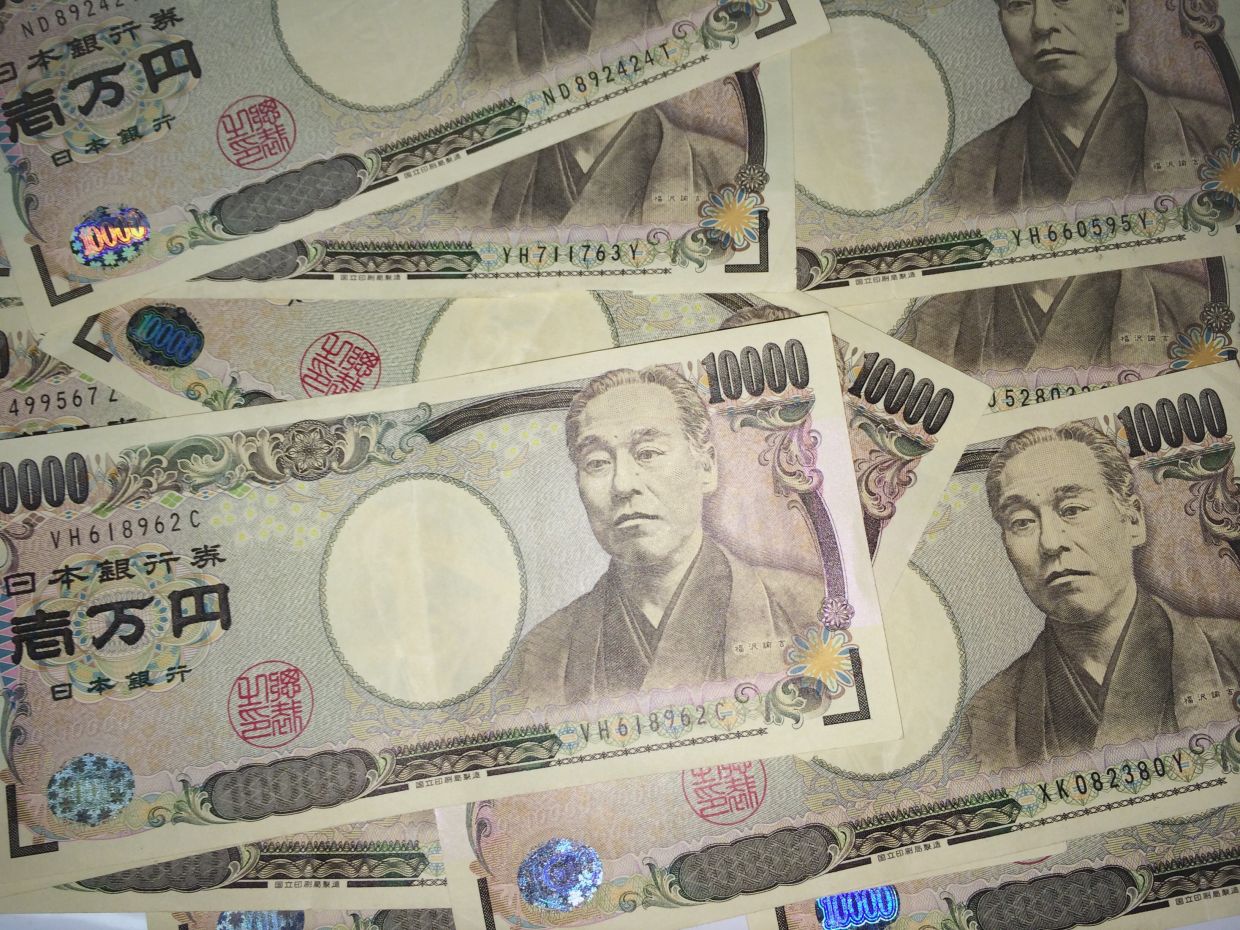
The Japanese yen has retreated to its weakest level in four decades, trading near 161 per U.S. dollar, as the market brushes off both a significant Bank of Japan rate hike and official intervention attempts to arrest the slide. The currency edged up marginally on Friday in thin regional trading, recovering slightly from a two-year trough hit a day earlier, though the broader downward trajectory persists despite policymakers' efforts to stabilise it.
Though geopolitical tensions eased following a U.S.-Iran peace deal earlier this week—restoring normal shipping through the Strait of Hormuz and steadying other currency pairs—the yen has found no meaningful support from either the diplomatic development or improved risk sentiment. Instead, the currency remains trapped in a relentless depreciation cycle that is proving resistant to conventional policy levers. The thin liquidity environment surrounding Friday's U.S. holiday and market closures across much of Asia constrained trading activity, but did little to suggest any imminent turnaround.
The Bank of Japan's decision last week to raise interest rates to a 31-year high should theoretically support the yen by making yen-denominated assets more attractive to investors. However, the rate lift has been overshadowed by mounting doubts about Japan's broader economic direction and fiscal management. Recent spending announcements by Prime Minister Sanae Takaichi have spooked markets, undermining confidence in the currency and fuelling expectations that the Ministry of Finance may need to ramp up dollar-selling intervention in coming weeks. This policy uncertainty has essentially neutralised the supportive impact of tighter monetary conditions.
Market strategists at major financial institutions are preparing for escalating intervention battles along key technical levels. Analysts at IG point to the 161.95 level as a likely flashpoint where Tokyo will first attempt to defend the yen, deploying firepower comparable to the ¥11.7 trillion mobilised during April and May intervention campaigns. Such action would represent roughly 11 to 12 percent of Japan's total foreign exchange reserves expended over a relatively compressed timeframe. The critical question facing policymakers is whether repeated, heavy-handed interventions can restore lasting stability or merely delay the inevitable without achieving meaningful policy objectives.
Looking beyond immediate intervention mechanics, the durability of Japan's currency support framework faces genuine constraints. Reserve depletion at current intervention rates would eventually force Tokyo to become far more selective and conservative with future operations, preserving ammunition for genuine crisis moments. This strategic limitation implies the Ministry of Finance must carefully calculate when and where to deploy remaining firepower, as credibility erosion could undermine the psychological impact of intervention itself. The yen weakness thus reflects not merely technical factors but deeper structural concerns about Japan's policy consistency and resolve.
Inflationary pressures remain surprisingly subdued despite the yen's dramatic depreciation, a paradox that deserves close examination. Core inflation figures released Friday showed the rate remained below the Bank of Japan's 2 percent target for a fourth consecutive month in May, held in check by government fuel price subsidies that partially offset rising raw material costs stemming from Middle East geopolitical frictions. This disinflationary surprise complicates the central bank's communication, as weak price growth undermines the traditional narrative for raising rates aggressively.
Capital Economics' research team projects that once government fuel price caps are eventually removed or expire, inflation will begin a meaningful upward trajectory, reaching roughly 3.5 percent by early 2027. This outlook creates an uncomfortable timing challenge: the Bank of Japan must balance the immediate political reality of subdued inflation against the need to normalise rates proactively before price pressures accelerate beyond control. April meeting minutes revealed that some board members advocated for faster rate increases if Middle East tensions persist, viewing this as necessary insurance against underlying inflation overshooting the 2 percent ceiling.
Bank of Japan Deputy Governor Ryozo Himino reiterated on Friday that the central bank remains committed to continued rate normalisation, monitoring downside risks to price stability. This messaging suggests the Board's attention has shifted from managing short-term currency depreciation toward longer-term inflation containment—a philosophical pivot that essentially concedes defeat on defending the yen's current level through monetary policy alone. The implied separation of monetary and currency management authority creates confusion in global markets and suggests Tokyo may have accepted a higher yen-depreciation outcome as the lesser evil compared to triggering deflation.
Globally, currency markets remained largely range-bound on Friday as risk appetite consolidated following the U.S.-Iran détente. The U.S. dollar index, measuring the greenback against a six-currency basket, held firm at 100.81, marginally below the one-year highs it reached on Thursday. Sterling remained flat after the Bank of England maintained its 3.75 percent base rate, with officials judging it premature to tighten further amid uncertainty over sustained inflation dynamics. The pound's stability contrasts sharply with yen weakness, highlighting the currency-specific nature of Japan's challenges rather than broad dollar strength.
Regional currencies also showed relative stability. The Australian dollar slipped a tenth of a percent to $0.7011, while the New Zealand dollar held steady at $0.5756 despite the broader geopolitical backdrop. The divergent currency performance underscores that Japan's structural issues—fiscal spending plans, moderate inflation, rate normalisation fatigue—are distinct from the broader forces affecting commodity-linked currencies or developed-market peers. For Malaysian and regional investors, the persistent yen weakness and intervention uncertainty adds volatility to yen-denominated assets and complicates hedging calculations for firms with Japanese exposure.
For Malaysian businesses operating in Japan or holding significant yen balances, the multi-decade low presents both opportunities and challenges. The weaker yen enhances competitiveness of Japanese exports to Malaysia and the region while making yen-denominated receivables worth less when converted. However, the intervention instability introduces policy risk that makes forward-planning difficult. Companies hedging yen exposure face elevated option costs, and the probability of further intervention surprises suggests even supposedly "defended" exchange rate levels may not hold reliably. The broader question facing Asian policymakers is whether Japan's persistent currency weakness signals broader structural economic challenges that warrant concern, or merely reflects temporary policy sequencing mistakes.

