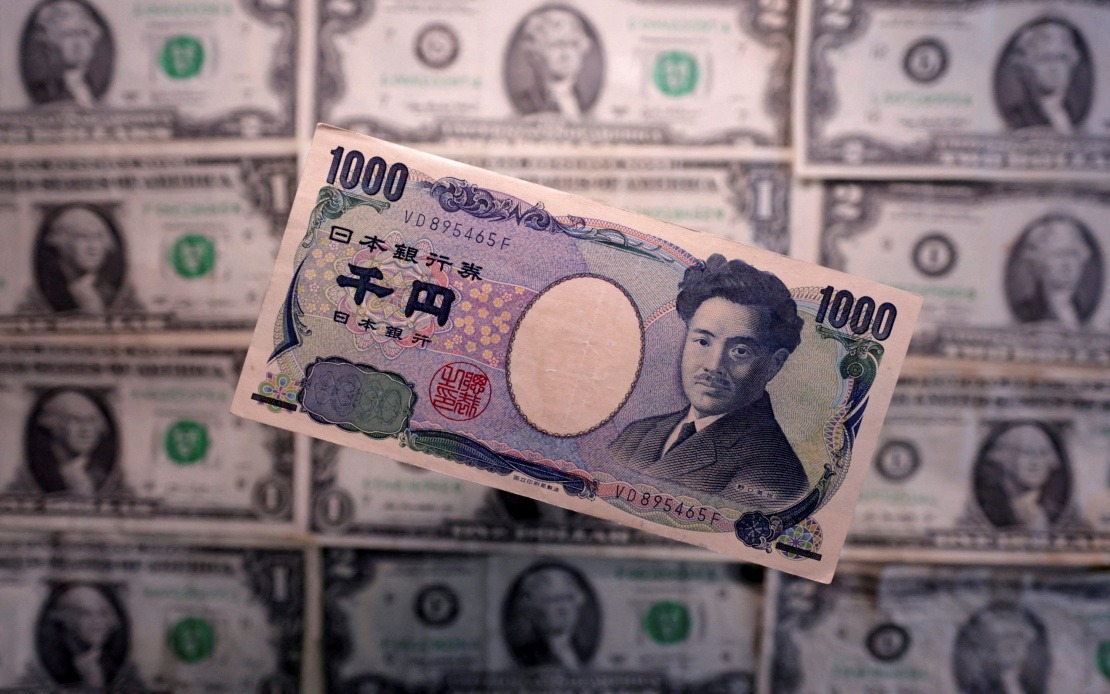
Japan's currency staged an unexpected rally on Thursday evening, with the yen briefly strengthening past the 158 mark against the US dollar in Tokyo trading before settling at 163.73-74 per dollar by 5 pm local time. The sudden appreciation caught the foreign exchange market off balance, with participants scrambling to explain the move and many suspecting that Japanese government authorities had stepped in to defend the currency's value through direct intervention.
The timing of the yen's rebound proved particularly significant given recent economic developments. Just days earlier, Japan's currency had hit its weakest position in approximately four decades relative to the dollar, reflecting persistent concerns about the country's macroeconomic direction under Prime Minister Sanae Takaichi's leadership. The sharp turnaround suggested that policymakers in Tokyo had decided the moment was opportune to act, capitalizing on a favourable market backdrop to arrest the yen's prolonged depreciation.
Several factors converged to create conditions conducive to intervention. The US Federal Reserve had maintained its benchmark interest rate on July 29, a decision that typically favours dollar weakness as investors seek higher yields elsewhere. With the Bank of Japan poised to announce its own monetary policy decision just hours after the yen's surge, market participants reasoned that Tokyo authorities may have viewed this window as ideal for currency support operations. One market observer remarked on the inexplicability of the move, stating bluntly that no one could discern a clear fundamental reason for the sudden buying pressure on the yen.
Japanese officials had previously demonstrated their commitment to currency stability, with documented interventions occurring between April and May when they sold dollars to purchase yen. Those earlier operations served notice that Tokyo would not passively accept unlimited currency weakness, particularly when it threatened to undermine price stability and complicate monetary policy transmission. The Thursday surge appeared consistent with this interventionist posture, suggesting authorities remained vigilant guardians of the yen's value.
The currency pressure Japan faces stems significantly from the fiscal policy direction signalled by Prime Minister Takaichi. On Thursday itself, she announced plans to slash the consumption tax rate on food and beverages to just one percent, down from the current eight percent, for a two-year period beginning in April 2025. This would mark the first consumption tax reduction since the levy's introduction in 1989, representing a dramatic shift in fiscal direction that carries profound implications for Japan's already-strained budget position.
For Malaysian and Southeast Asian observers, the announcement holds particular resonance given the region's exposure to Japanese capital flows and investment patterns. Consumption tax cuts without corresponding revenue identification typically necessitate increased government borrowing, potentially crowding out private investment and raising yields across financial markets. In a region where Japanese banks and investors constitute significant players in local debt and equity markets, changes to Japanese fiscal dynamics can ripple across the broader Asian financial ecosystem.
Market participants have expressed considerable apprehension about the fiscal consequences of implementing such a substantial tax reduction without securing identified funding mechanisms. Japan's public debt already stands at the highest level proportionately among the world's major developed economies, a burden that leaves precious little room for policy manoeuvre when addressing shocks or cyclical downturns. Adding a permanent revenue loss of this magnitude without offsetting measures threatens to accelerate debt accumulation at a moment when Japan's demographic challenges already impose severe structural constraints on long-term growth.
The yen's weakness preceding Thursday's intervention reflected market scepticism about Japan's fiscal trajectory. Investors traditionally sell currencies of nations pursuing expansionary policies financed through borrowing, as such approaches typically inflate currency supplies and erode purchasing power over time. That the yen had slumped to four-decade lows signalled that market participants harboured genuine doubts about Japan's willingness to confront its fiscal imbalances, particularly under a leadership team apparently committed to increased spending.
The intervention itself, if confirmed, demonstrates the limited arsenal available to currency authorities when fundamental fiscal concerns dominate market sentiment. While direct purchasing can temporarily alter exchange rates, such operations cannot indefinitely override market forces if underlying economic conditions remain unfavourable. Japan's experience underscores a broader principle in international finance: currency stability ultimately rests on the credibility of fiscal and monetary frameworks, not merely on central bank operations in foreign exchange markets.
For regional economies including Malaysia, Japan's currency challenges warrant close attention. A weaker yen tends to enhance the competitiveness of Japanese exporters, potentially displacing regional manufacturers in third markets and within ASEAN itself. Conversely, if intervention succeeds in strengthening the yen substantially, Japanese investors may reduce capital flows to regional assets as domestic returns become more attractive. Either scenario carries implications for employment, growth, and financial stability across Southeast Asia.
The announcement of the Bank of Japan's monetary policy decision, scheduled for release hours after the yen's surge, would prove crucial in determining whether authorities could restore equilibrium. Japanese policymakers face an unenviable choice between supporting growth through accommodative monetary policy, which typically weakens currencies, and defending the yen through rate increases that could undermine economic expansion. That dilemma, sharply illustrated by Thursday's market gyrations, encapsulates the deeper structural challenges confronting Japan's economy as it navigates demographic decline, fiscal strain, and geopolitical uncertainty.

