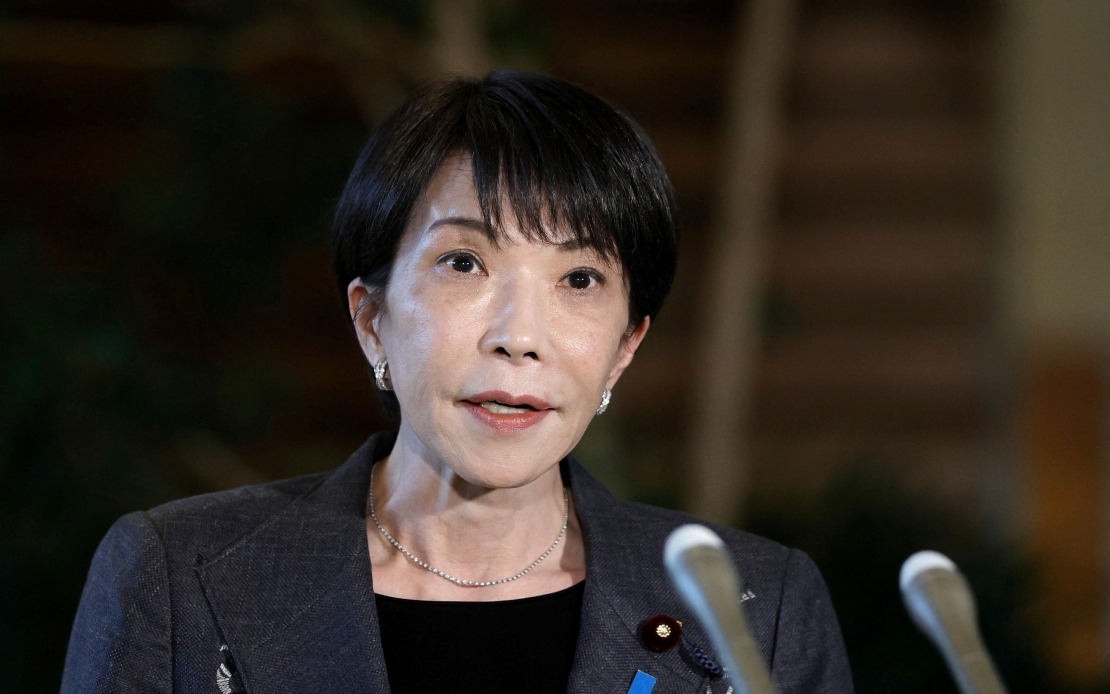
Prime Minister Sanae Takaichi has made a firm commitment to reverse a planned consumption tax reduction on food after two years, signalling the Japanese government's intention to use temporary rather than permanent relief measures to help households grapple with persistent inflation. Speaking during a House of Representatives committee session on Monday, Takaichi explicitly stated that the tax rate would be restored to its original level once the reduction period concludes, a clarification that comes as the ruling Liberal Democratic Party grapples with balancing electoral promises against mounting fiscal pressures.
The assurance marks a significant clarification of the government's tax strategy, which has shifted considerably from the campaign trail. During the February lower house election, the LDP promised voters a zero consumption tax on food products, joining coalition partner the Japan Innovation Party and numerous opposition groups in pledging temporary relief from inflation. However, that straightforward promise has evolved into a more nuanced policy proposal, with the government now planning to reduce the tax rate to just 1 per cent rather than eliminating it entirely when the measure takes effect in April 2027.
The pivot to a 1 per cent rate instead of zero has emerged largely from practical considerations affecting retailers across Japan. Adjusting point-of-sale systems to accommodate a complete elimination of the consumption tax would require substantial time and resources, prompting policymakers to adopt the minimalist approach as a more immediately implementable alternative. The government has therefore proposed pairing the 1 per cent tax rate with substantial annual cash handouts reaching approximately 600 billion yen (US$3.7 billion), designed to approximate the revenue loss and effectively provide households with zero-rate treatment at the checkout.
Democratic Party for the People lawmaker Ken Tanaka raised a prescient concern during the parliamentary exchange, noting that restoring a tax rate after cutting it would inevitably be perceived as a tax increase rather than a simple policy reversal, potentially triggering public backlash. His observation reflects the political reality that tax reductions, once implemented, acquire a constituency of supporters resistant to unwinding them. Takaichi's explicit precommitment to the reversal appears designed to signal the government's seriousness about fiscal discipline, though whether such assurances will hold when the two-year period actually arrives remains a matter for speculation.
Japan's fiscal situation provides the underlying urgency driving this policy calculus. The Japanese government currently carries the highest debt burden among Group of Seven economies, a distinction that has drawn international scrutiny. Recent developments in financial markets have intensified concerns, with Japanese government bond yields surging to levels not seen in decades, while the yen has remained persistently weak against major currencies. These symptoms suggest investor anxiety about Japan's long-term fiscal trajectory, making policymakers increasingly cognisant of the need to demonstrate fiscal restraint.
The LDP's proposal emerged through the cross-party national council on taxation and social security, which has been deliberating on these issues for months. The proposal was presented as a draft contribution to an interim report due for completion later in June, suggesting that the full tax policy framework will receive closer definition in coming weeks. Takaichi has indicated eagerness to proceed with implementing the tax reduction "as soon as possible" once this interim report receives presentation to the broader policy community, signalling the government's determination to deliver tangible relief to voters relatively promptly.
For Malaysian readers, the Japanese experience illustrates the complex tradeoffs between addressing household cost-of-living pressures and maintaining fiscal stability. Southeast Asian governments have similarly wrestled with inflation concerns and debates around targeted relief measures, whether through subsidy schemes, tax adjustments, or direct cash transfers. Japan's approach of combining a modest tax reduction with compensatory cash payments offers one model for distributing resources efficiently, though it also demonstrates how campaign-trail commitments often require modification when confronted with implementation realities.
The timing and context of this policy shift warrant attention from regional observers. Japan's efforts to manage inflation whilst restraining fiscal expansion occur against a backdrop of broader regional economic challenges, currency volatility, and divergent monetary policy trajectories across developed economies. The Bank of Japan's own policy stance influences capital flows throughout Asia, making Japanese fiscal decisions consequential for regional asset prices and currency movements. Malaysia's policymakers and investors monitoring regional economic dynamics should note how Japan balances competing pressures between consumer support and fiscal orthodoxy.
The political dimension merits consideration as well. Takaichi's explicit reassurance about the temporary nature of the tax cut may reflect awareness that permanent tax reductions, once granted, rarely disappear from the political landscape. By firmly stating the sunset provision upfront, she attempts to frame this as genuine temporary relief rather than the opening move in a longer-term tax reduction agenda. Whether this rhetorical positioning proves effective in managing public expectations and constraining future political pressure for extension remains uncertain, though Takaichi's directness suggests the government recognises the credibility stakes involved in its fiscal commitments.

