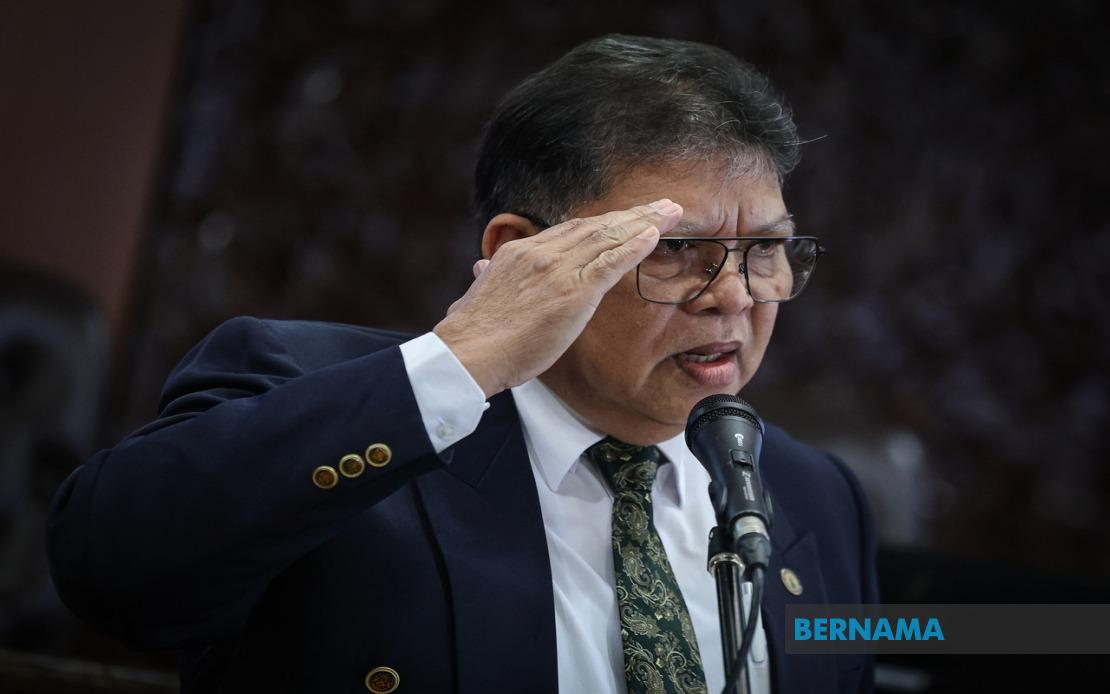
Dewan Rakyat Speaker Tan Sri Johari Abdul has made a significant call for electoral reform, proposing the introduction of proportional representation as a mechanism to ensure minority communities retain meaningful voice in Parliament. Speaking at the Harmony Symposium held at the Parliament building, Johari presented the case for systemic change designed to cultivate a more inclusive generation of political leaders reflective of Malaysia's ethnic and cultural tapestry. His intervention enters a longstanding debate about electoral architecture and representation that carries implications for the country's governance structure and social cohesion.
The driving force behind Johari's proposal rests on demographic projections that paint an increasingly skewed ethnic composition. According to the figures he cited, Bumiputera Malays are expected to comprise 77 per cent of Malaysia's population by 2050, a trajectory that fundamentally alters the electoral mathematics under Malaysia's current constituency-based first-past-the-post system. This demographic shift raises critical questions about the viability of minority representation under existing arrangements, where seats depend heavily on geographic concentration. As constituencies shift in composition, the prospect of minorities securing electoral majority in any meaningful number of districts diminishes sharply, potentially marginalizing their political voice.
Johari articulated his concern with particular emphasis on the downstream consequences of silenced minority voices. He framed the issue not merely as an abstract principle of representation but as a practical governance matter affecting social stability and national cohesion. His argument suggests that when significant population segments find themselves systematically excluded from parliamentary presence, the risks to interethnic relations and democratic legitimacy increase substantially. This concern reflects growing recognition among Malaysian policymakers that electoral systems must actively accommodate diversity rather than allow demographic tides to passively eliminate minority representation.
The Speaker's remarks at the symposium also reflected a temporal reorientation in how Malaysia should approach its unity challenges. Rather than focusing narrowly on contemporary grievances or historical disputes, Johari advocated for long-term visioning spanning decades. He emphasized that the nation must think beyond immediate pressures and consider how institutional arrangements will function across the next five to 100 years. This forward-looking perspective suggests recognition that reactive adjustments to electoral rules as problems emerge may prove inadequate; proactive institutional design now could prevent future representation crises.
Malaysia's ethnic complexity adds another dimension to Johari's argument. The nation comprises 77 distinct ethnic groups, far exceeding the major categories typically foregrounded in political discussion. This granular diversity means that even minority representation becomes insufficient unless the system accommodates plural voices rather than reducing politics to binary or ternary ethnic coalitions. Proportional representation could theoretically allow smaller communities to achieve parliamentary representation thresholds, creating space for more nuanced political expressions of identity and interest.
The symposium itself served as an institutional platform for advancing harmony discourse directly within Parliament's operations. Syahredzan Johan, who chairs the Malaysia Cross-Party Parliamentary Group on Racial and Religious Harmony (KRPPM-KKA) and represents Bangi, emphasized that the event aimed to translate abstract harmony principles into concrete policy recommendations and legislative mechanisms. By hosting such discussions at Parliament, organizers signaled that racial and religious harmony represents not peripheral social work but central governance concerns requiring parliamentary attention and action.
Syahredzan outlined an ambitious reform agenda centered on policy and legal transformation alongside institutional bridging. His vision encompasses coordination between Parliament, the executive branch, civil society organizations, and educational institutions—a whole-of-society approach recognizing that electoral reform alone cannot sustain social harmony without accompanying cultural and institutional shifts. This comprehensive frame suggests that proportional representation represents one component within broader architecture for protecting minority rights and interests.
Proportional representation systems carry distinct advantages and complications relevant to Malaysian context. By allocating seats proportionally to votes received rather than based on geographic majorities, such systems typically produce stronger minority representation. However, they also frequently generate coalition governments requiring negotiation among multiple parties, and some variants introduce complexity in voter comprehension. Malaysia would need to determine whether to adopt full proportional representation, mixed systems combining proportional and constituency elements, or targeted modifications to existing arrangements—decisions carrying distinct implications for stability and representation quality.
The timing of Johari's intervention reflects broader conversations about Malaysian institutional renewal occurring across multiple forums. Questions about electoral justice, representation quality, and demographic adaptation increasingly feature in civil society discussions and some governmental circles. However, electoral reform remains institutionally difficult, requiring constitutional amendment supermajorities and navigating divergent interests across political parties and ethnic communities. Johari's statement from the parliamentary chair carries particular weight, signaling openness to reform from institutional leadership while acknowledging the substantial political lift required to implement change.
For Malaysia's minority communities—including Indians, Chinese, and smaller indigenous and immigrant populations—the demographic trajectory presents existential questions about future political influence. Current parliamentary representation already skews toward majority communities, with minority parties frequently dependent on coalition arrangements with larger partners. Demographic changes would intensify these structural asymmetries absent electoral architecture modification. Proportional representation offers one potential remedy, though implementation details would prove crucial in determining actual protection effectiveness.
Regionally, Malaysia's deliberation about electoral systems may resonate across Southeast Asia, where multiple nations grapple with ethnic diversity and representation challenges. Thailand, Myanmar, and Indonesia have all experimented with different electoral arrangements seeking to balance majority and minority interests. Malaysia's intellectual leadership on this question could contribute to regional understanding of how democracies accommodate deep diversity. Conversely, experiences elsewhere might inform Malaysian reform design.
The practical pathway toward implementing Johari's proposal remains uncertain. Constitutional amendment requires broad political consensus that may prove difficult to assemble, particularly if some parties perceive proportional representation as diminishing their relative strength. Implementation would also require careful design of thresholds, district magnitudes, and seat allocation formulas—technical questions that significantly affect actual outcomes. Yet Johari's public advocacy establishes a reference point for future debate, legitimizing consideration of alternatives that many had dismissed as politically impossible.

