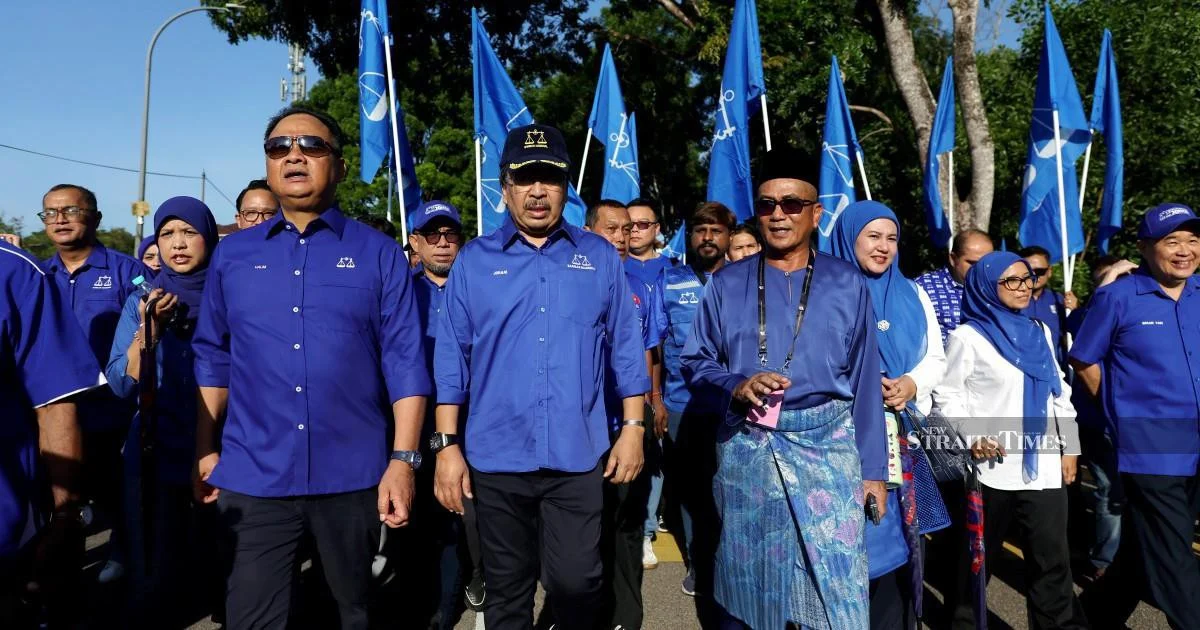
Umno vice-president Datuk Seri Johari Abdul Ghani has stepped up the Barisan Nasional campaign effort in Johor by visiting the Tiram constituency to energise support for the coalition's candidate. His appearance at the Taman Pelangi Indah community hall underscores the party leadership's determination to secure victories across the state as the electoral contest intensifies.
The decision to deploy senior party figures to ground-level campaigning reflects the high stakes involved in Johor's political landscape. Tiram, a state assembly seat within the larger electoral ecosystem of Malaysia's second-largest state, represents the kind of marginal contest where grassroots mobilisation can make the critical difference between victory and defeat. By bringing Johari's profile and organisational experience to the constituency, Umno signals its commitment to retaining influence in areas where BN's traditional support bases may face pressure from rival coalitions.
Johari's role as Umno vice-president positions him as a key strategist within the party's hierarchy, particularly regarding campaign coordination and resource allocation. His personal engagement with voters in Tiram sends a message that the party views this seat as strategically important enough to warrant leadership-level attention. In Malaysian politics, such symbolic gestures carry weight among party grassroots and local communities who interpret high-level visits as indicators of a candidate's viability and the coalition's broader electoral confidence.
The Taman Pelangi Indah community hall engagement represents the type of intimate local campaigning that remains central to Malaysian electoral contests. These sessions typically involve direct dialogue with residents about bread-and-butter issues, development concerns, and community priorities. For Johor voters in Tiram, the presence of a senior national figure provides an opportunity to communicate grievances and expectations that might otherwise remain unheard at state assembly level.
Barisan Nasional's performance in Johor carries implications extending well beyond the state itself. As Malaysia's heartland, Johor holds significant symbolic and practical importance for any governing coalition. Historically, BN's fortunes have been deeply intertwined with its performance in the state, making Johor seats like Tiram barometers of the coalition's broader electoral health. The strategic investments in campaigns like Johari's Tiram visit reflect BN's understanding that consolidating support in traditionally friendly territories remains essential even as the political landscape evolves.
The timing of such campaign visits also matters in the context of Johor's electoral calendar and national political dynamics. Leadership deployments typically accelerate during critical campaign phases, suggesting that BN views this period as crucial for securing support. Johari's presence hints at possible competitive pressure in Tiram, whether from opposition parties or shifting voter sentiment that requires active counter-messaging from senior party voices.
Umno's organisational structure places the party vice-presidency at the intersection of decision-making and execution. Leaders in this position often oversee campaign finance, candidate selection disputes, and coordination between party machinery at state and national levels. Johari's field visit thus represents not merely symbolic support but likely includes strategic assessments of ground conditions, local leadership capability, and resource needs that will inform broader BN campaign adjustments.
The Tiram constituency exists within Johor's broader demographic and geographic context, where urbanisation, economic diversification, and changing voter preferences have created a more complex electoral environment than in previous decades. Constituencies like Tiram, likely encompassing both residential developments and established communities, attract swing voters whose decisions cannot be assumed based on historical voting patterns alone. This reality compels parties like Umno to invest campaign capital in direct voter engagement rather than relying solely on traditional party machinery.
BN's coalition framework, bringing together Umno, MCA, MIC and other component parties, requires careful choreography in seat contests. The deployment of Umno's national leadership in Tiram implicitly signals the party's ownership of this particular contest and its determination to ensure a BN victory that strengthens the coalition's Johor position. Such visits often precede or coincide with broader strategic reviews of campaign messaging, candidate performance metrics, and resource reallocation across contested seats.
The grassroots engagement exemplified by Johari's Tiram visit reflects Malaysian electoral realities where face-to-face politics retains crucial importance despite growing digital campaign elements. Community halls remain spaces where political legitimacy is negotiated, local concerns are articulated, and party leaders can assess genuine voter sentiment beyond polling data. For voters in Taman Pelangi Indah and surrounding areas, such occasions offer rare opportunities for direct access to senior party figures and collective advocacy for constituency priorities.
For Malaysia's broader political observer community, the intensity and targeting of such campaign activities provide early indicators of which constituencies BN considers genuinely competitive and therefore worthy of leadership-level intervention. Johari's visit to Tiram places this seat within BN's roster of priority contests, suggesting either erosion of previously safe margins or strategic importance to overall Johor performance. The outcome in such bellwether seats ultimately shapes the wider conversation about BN's state-level strength and preparedness for future national-level electoral challenges.

