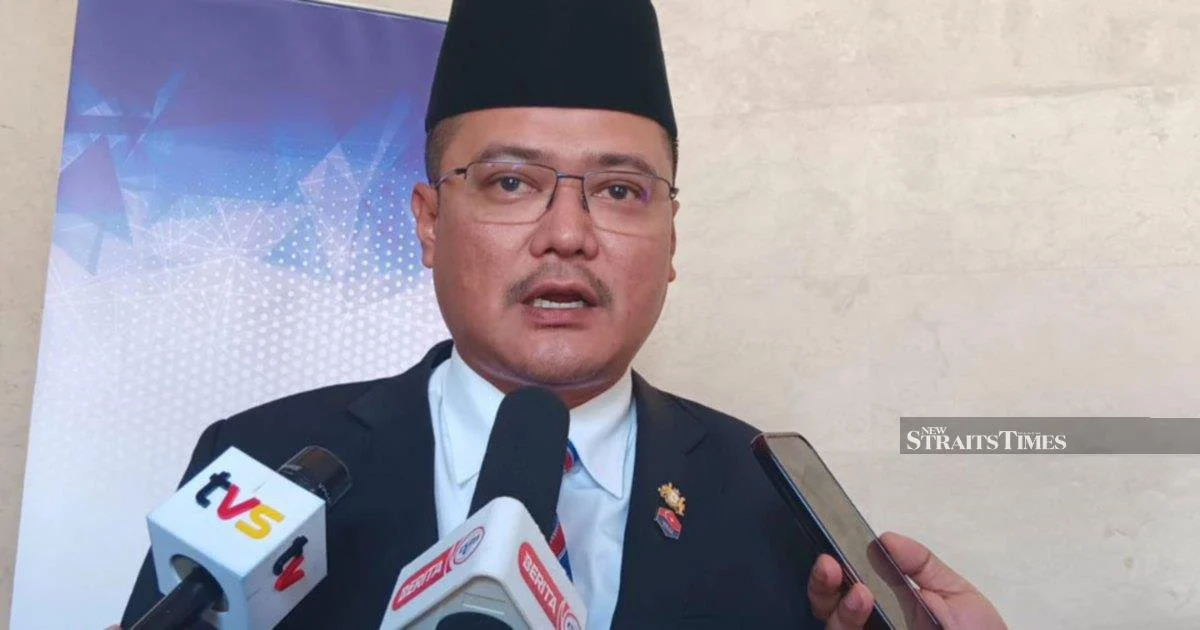
Johor Barisan Nasional has mounted a forceful pushback against allegations levelled by former state legislative assembly speaker Datuk Dr Mohd Puad Zarkashi, characterizing his claims about palace involvement in political matters as fundamentally unfounded and damaging to institutional integrity. The response reflects deepening tensions within the state's political establishment over statements that senior BN figures view as crossing a critical line in terms of constitutional propriety and palace respect.
The nature of Puad's allegations appears to centre on suggestions that the palace has wielded undue influence over political decisions at the state level, a charge that strikes at the heart of Malaysia's constitutional framework. For Barisan Nasional leadership in Johor, such insinuations carry particular weight given the coalition's historical positioning as a defender of traditional institutions, including the sultanate. The coalition's rebuff therefore serves not merely as political point-scoring but as a reassertion of its commitment to constitutional monarchy and proper palace-government relations.
Umno Youth, the party's youth wing, has moved beyond mere condemnation to claim that hundreds of individuals have filed police reports in response to Puad's statements. This escalation signals an attempt to demonstrate grassroots anger at what party officials characterise as an attack on revered institutions. The filing of multiple police reports, if verified, would represent a coordinated response reflecting organisational mobilisation rather than spontaneous public grievance, raising questions about the strategic intent behind such an exercise.
Puad's background as a former speaker of the state legislative assembly lends his allegations a particular gravity, as someone with direct experience of the state's governance machinery. His position previously placed him within the institutional framework he now appears to be critiquing, suggesting that any claims he makes carry implicit insider knowledge. This context explains why Barisan Nasional has responded with such vehemence—allegations from someone with his standing cannot be dismissed as coming from the political fringe.
The incident reflects broader fault lines within Malaysia's political landscape surrounding the relationship between elected representatives, appointed institutions, and traditional power structures. The tension between these actors has periodically surfaced throughout Malaysian politics, though typically such disagreements remain confined to backroom maneuvering rather than public accusation. Puad's willingness to air grievances publicly suggests either a fundamental rupture in political relationships or a calculated gambit to influence ongoing political negotiations.
For Malaysian observers, the Johor conflict carries implications extending beyond state boundaries. The way the country's major coalitions handle accusations touching on palace prerogatives signals whether established norms around institutional deference remain intact. Barisan Nasional's vocal response indicates the coalition views such norms as non-negotiable, particularly as the ruling federal coalition seeks to rebuild credibility following years of intra-party instability and electoral setbacks.
The police report mechanism deployed by Umno Youth represents a strategy familiar to Malaysian politics: translating political grievance into legal form through law enforcement involvement. Whether such reports will lead to substantive investigation remains unclear, though the filing itself communicates a message about the seriousness with which Umno treats Puad's allegations. This approach transforms what might otherwise remain a state-level political dispute into a matter potentially within the criminal justice system's purview.
Puad's emergence as a critic of established structures warrants closer examination, particularly regarding whether he articulates genuine institutional concerns shared by others within government circles or whether he represents an isolated voice. The breadth of BN's condemnation suggests the coalition views his position as aberrant rather than reflective of internal party sentiment, yet such sweeping rebuttal occasionally masks deeper disagreements that remain unresolved.
The timing of this confrontation occurs within a period of significant political adjustment in Johor and nationally. State-level politics in Malaysia frequently serve as laboratories for factional disputes within the major coalitions, making Johor developments worthy of national attention. The Puad incident may therefore presage broader realignments within Barisan Nasional or shifts in how the ruling coalition balances its traditional institutional commitments against evolving political realities.
Moving forward, how both parties—Puad and Barisan Nasional—manage this dispute will reveal much about contemporary Malaysian politics. Should Puad persist in his allegations despite the coalition's condemnation, he risks accelerating his own political marginalisation. Conversely, if Barisan Nasional's response fails to contain the narrative, the coalition faces questions about its capacity to defend institutional arrangements it claims to champion. The outcome will likely influence not only Johor politics but also broader perceptions of how Malaysia's established institutions respond to challenge and criticism.

