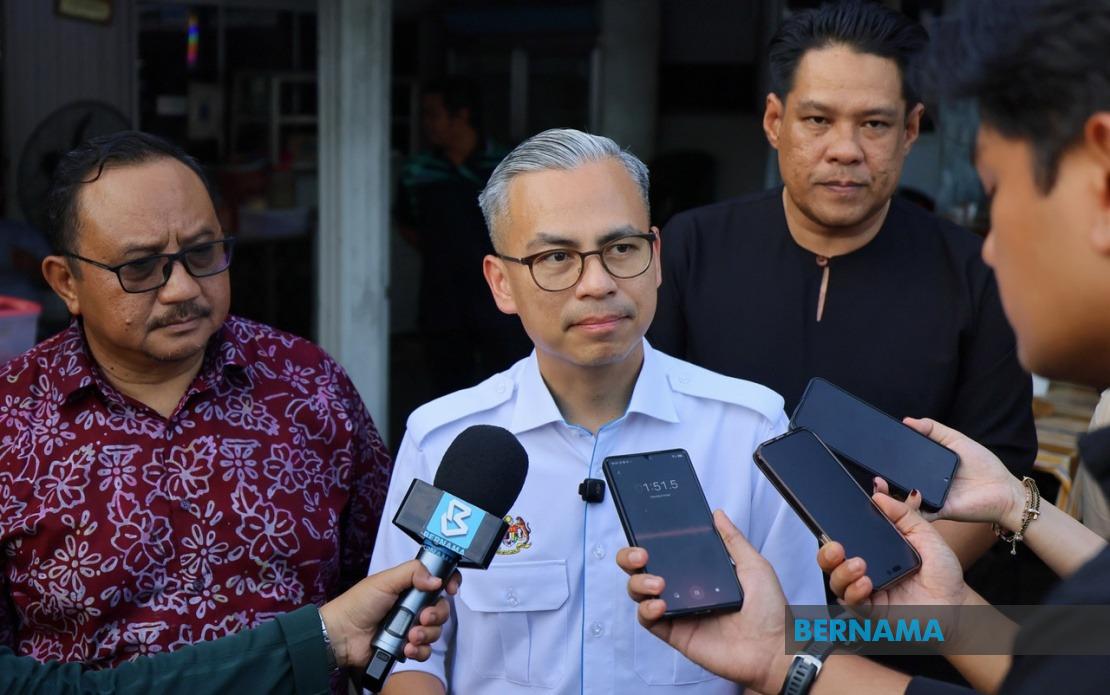
As Malaysia prepares for the Johor State Election scheduled for July 11, Communications Minister Datuk Fahmi Fadzil has issued a clarion call for a more ethical approach to political campaigning, stressing that all competing parties and their supporters must ground their messaging in verifiable facts rather than inflammatory accusations. Speaking at the Jiwa@Komuniti MADANI Casual Chat Programme in Taman Banang Jaya, Batu Pahat, on June 26, Fahmi articulated a vision of democratic contestation that prioritizes decorum and respect for institutional safeguards even as rivals vie for electoral support.
The minister's remarks arrive at a pivotal moment in the electoral cycle, just one day before nomination day opens the floodgates for formal candidacies. His intervention signals the federal government's determination to establish clear expectations for campaign conduct and demonstrates an early commitment to policing the boundary between robust political debate and incitement through falsehoods. Fahmi stressed that this remit extends beyond individual politicians to encompass party machinery and grassroots supporters, whose collective behaviour on social media and in community forums shapes the broader tenor of public discourse during election season.
Underscoring the seriousness with which authorities regard potential violations, Fahmi warned that both the Election Commission (EC) and the Royal Malaysia Police (PDRM) stand ready to invoke legal remedies against any party found committing offences during the campaign period. This dual institutional posture—combining electoral oversight with law enforcement capacity—reflects a recognition that modern election campaigns unfold across multiple domains simultaneously, requiring coordinated vigilance. The minister's language was measured but unmistakable: transgressions will not go unanswered.
A particular concern animating the government's pre-election messaging is the proliferation of false information across digital platforms. Fahmi disclosed that the Malaysian Communications and Multimedia Commission (MCMC) has intensified its monitoring protocols in collaboration with social media providers, targeting the suppression of fabricated content that exploits sensitive national fault lines. The reference to material touching upon Royalty, Religion, and Race—the constitutional tripod known as 3R—reveals anxiety about narrative manipulation on topics where public emotions run deepest and factual precision carries supreme importance.
The infrastructure for supporting legitimate journalism during the election has also been enhanced. Fahmi announced that a primary media center has been established in Johor Bahru to serve as a hub for accredited journalists, complemented by a network of National Information Dissemination Centre (NADI) facilities stationed in each State Legislative Assembly constituency. This decentralized approach recognizes the practical challenges facing reporters covering a distributed electoral contest across multiple constituencies, offering them workspaces from which to research, write, and file stories. By reducing logistical friction, the government hopes to facilitate more thorough, localized reporting rather than driving coverage toward sensationalism or secondhand narratives.
Beyond campaign ethics, Fahmi's visit to Batu Pahat provided an opportunity to address immediate infrastructure grievances. Following representations from Member of Parliament Onn Abu Bakar regarding internet disruptions and dead zones affecting the constituency, the minister committed the MCMC to prompt investigation of these connectivity complaints. Such responsiveness to granular technical issues underscores a broader recognition that electoral participation depends not only on political freedom but also on the material capacity of citizens to access information and communicate their views.
Onn Abu Bakar characterized the minister's presence as a rare chance to escalate local concerns through direct engagement with the relevant federal ministry rather than through the sluggish channels of formal complaint procedures. He noted that grievances often languish unresolved when submitted through conventional mechanisms, but personal intervention by visiting dignitaries creates opportunity for accelerated triage and action. This observation hints at a common disconnect between citizen expectations and bureaucratic throughput, one that election season temporarily shortens through the heightened attention paid to marginal constituencies.
The electoral timeline itself reflects careful administrative choreography. The Election Commission fixed June 27 as nomination day—the deadline by which aspirants must formally register their candidacies—establishing the roster of contenders who would subsequently campaign for the July 11 polling date. This sequence follows the dissolution of the Johor State Assembly on June 1, a procedural formality that formally triggered the election machinery. The compressed interval between nomination and polling concentrates political activity, intensifying competition while theoretically limiting time available for corrosive campaigning.
For Southeast Asian observers, the Johor State Election carries significance beyond regional state politics. Malaysia's federal structure distributes electoral authority across multiple tiers, and state elections frequently serve as bellwethers for shifting voter sentiment that portend subsequent federal developments. The Johor contest will test whether recent political realignments at the national level have solidified or whether electoral dynamics remain fluid. Additionally, the government's emphasis on campaign ethics and digital governance reflects broader regional trends toward more assertive state management of political communication, a pattern visible across Southeast Asia as governments grapple with the challenges posed by social media's speed and reach.
The pre-election exhortation to fact-based campaigning also carries implicit acknowledgment that previous electoral cycles have been marred by misinformation, polarizing rhetoric, and sectarian appeals. By establishing explicit norms before campaigning formally commences, authorities attempt to reset expectations and impose reputational costs on transgressors before violations occur. Whether such preventive messaging succeeds depends considerably on whether enforcement mechanisms prove credible when violations inevitably surface—a test that will unfold across the coming weeks as politicians and activists test the boundaries of permissible speech.

