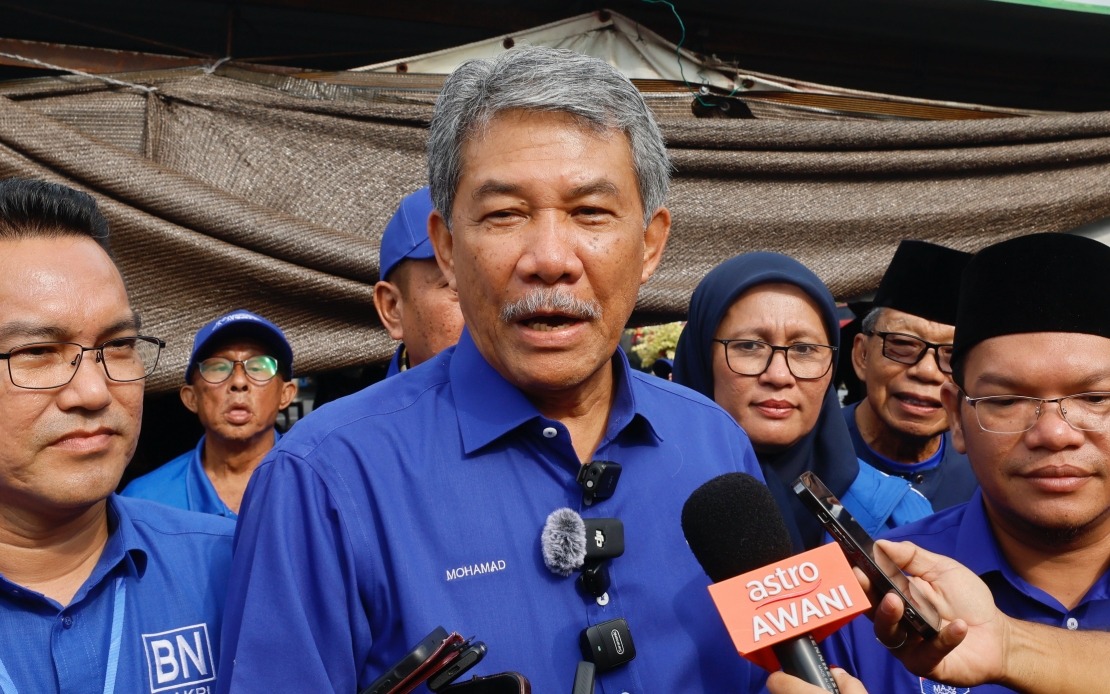
The Johor state election campaign must remain mature and restrained, steering clear of personal attacks on political rivals, according to UMNO deputy president Datuk Seri Mohamad Hasan. Speaking during an engagement with voters in the Tiram constituency, Mohamad stressed that while competing parties are entitled to present their policy platforms and electoral offers to the electorate, the tone and conduct of campaigning must not undermine the cooperative framework that sustains the Unity Government at the national level. His intervention comes as the state prepares for polling day on July 11, with early voting scheduled to commence the following day.
As Foreign Minister and a senior figure within UMNO, Mohamad holds considerable influence within Malaysia's political establishment and his remarks carry weight beyond the party machinery. He articulated a careful balance between legitimate political competition and the preservation of institutional stability, arguing that spirited policy debate and even light-hearted partisan banter are acceptable features of democratic campaigns. However, he cautioned against crossing into territory that becomes unnecessarily divisive or that attacks individuals on matters unrelated to governance and policy performance. This distinction reflects a growing recognition among senior coalition figures that state-level contests, while important, must not become vehicles for broader factional conflicts that could fracture the delicate consensus underpinning Malaysia's current federal administration.
The timing of these remarks is significant given the composition of Johor's competing blocs. The state election involves multiple parties spanning the Unity Government framework, meaning that candidates may be nominally aligned at the federal level while standing in opposition to one another in state contests. This structural complexity creates genuine risk that aggressive local campaigning could spill over into federal politics, potentially weakening coordination on key national policies or legislative priorities. Mohamad's emphasis on prudence appears designed to reinforce informal codes of conduct that preserve institutional relationships even as electoral stakes intensify.
Moreover, Mohamad directly addressed speculation linking the Johor election to efforts aimed at securing clemency for former Prime Minister Datuk Seri Najib Tun Razak. He dismissed such allegations as baseless, emphasising that a state election focused on forming a state government bears no logical connection to questions of federal clemency or pardons. His reasoning rested on constitutional principles: a Menteri Besar, he noted, possesses no authority to grant pardons, as such executive powers vest exclusively in the Federal Government and ultimately in the Yang di-Pertuan Agong. By systematically dismantling this supposed linkage, Mohamad sought to reframe the election as a straightforward contest for state administration rather than as a proxy conflict over national issues.
The assertion that Malaysia remains anchored on the rule of law represents a significant marker in Malaysia's contemporary political discourse. Mohamad's insistence on this principle reflects broader concerns within the political establishment that internal factional disputes could be weaponised to undermine institutional credibility. For Malaysian voters and regional observers, his statement signals that senior coalition members remain committed to constitutional governance and institutional hierarchies, even when facing internal pressure or electoral calculations that might tempt shortcuts or extra-legal approaches. This commitment, however measured or strategic, carries implications for how Malaysia's democracy develops in the coming years.
The 16th Johor state election represents a substantial electoral exercise, with 172 candidates contesting 56 seats in the State Legislative Assembly. The scale of this competition ensures that the campaign will attract national media attention and potentially influence perceptions of the Unity Government's electoral viability. Senior figures like Mohamad therefore have incentives to establish frameworks that protect the coalition's federal position while allowing parties to compete vigorously at state level. His emphasis on mature, dignified campaigning can be understood partly as an attempt to normalise a model of intra-coalition electoral competition that does not threaten broader political stability.
For Malaysian voters in Johor, Mohamad's intervention underscores a tension inherent in the current political system. Elections are supposed to offer clear choices and genuine competition, yet the Unity Government's architecture requires that some of those competitors maintain working relationships regardless of electoral outcomes. Voters must navigate this landscape by distinguishing between legitimate policy disagreements and personal or institutional attacks. Mohamad's framing attempts to offer guidance on where that line should be drawn, though reasonable people may disagree on the precise location.
The broader Southeast Asian context adds another dimension to these local events. Malaysia's political stability has regional significance, particularly given its economic importance and strategic position. Demonstrations of institutional resilience and constitutional commitment, such as Mohamad's statements convey, help reassure investors and regional partners that Malaysia's governance framework remains fundamentally sound despite electoral competition and factional tensions. Conversely, campaigns marked by personal attacks and institutional hostility could raise questions internationally about Malaysia's political health and governance reliability.
Mohamad's comments also reflect a generational shift in how senior Malaysian politicians approach electoral politics. Unlike previous eras characterised by sharper partisan divides and more aggressive campaigns, the current approach emphasises restraint and institutional preservation. This evolution partly reflects Malaysia's democratic maturation and partly reflects the practical necessity of governing through coalition arrangements that require ongoing inter-party cooperation. Whether this model can be sustained through repeated electoral cycles, particularly if results produce significant shifts in factional balance, remains an open question that will shape Malaysian politics beyond the Johor election.

