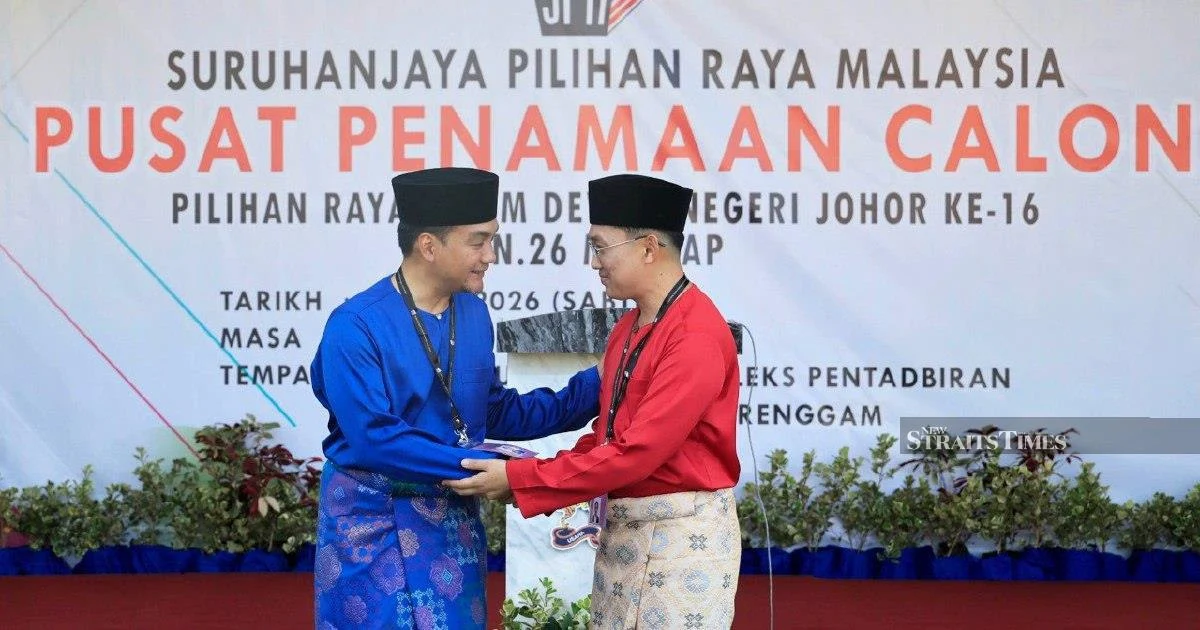
Caretaker Menteri Besar Datuk Onn Hafiz Ghazi has adopted a cautious stance regarding his re-election prospects, publicly acknowledging the inherent unpredictability of the July 11 Johor state election despite leading his party's campaign. Speaking in Simpang Renggam, the incumbent leader stressed that the political contest cannot be treated as a foregone conclusion, signalling an awareness of the shifting voter sentiment and competitive pressures that have characterised Malaysian politics in recent years.
The Machap contest, which appears central to the overall state election dynamics, represents a crucial battleground where Onn Hafiz's political fortunes will be tested. Rather than projecting confidence based on incumbency, the Menteri Besar's measured acknowledgment of political volatility reflects a broader understanding that state-level elections in Malaysia have become increasingly competitive and less predictable than in previous cycles. This rhetorical approach also serves to mobilise his supporters by suggesting that complacency poses a genuine threat to his political continuity.
Johor's electoral context has evolved significantly over the past decade, with voters demonstrating a willingness to shift allegiances in response to governance performance, leadership perception, and broader national political movements. The state, traditionally a stronghold for Barisan Nasional, has seen its political composition become more fluid, particularly following the 2018 general election that transformed Malaysian politics. This shifting landscape means that even entrenched political figures cannot rely on historical voting patterns to guarantee victory.
Onn Hafiz's leadership since assuming office has been marked by attempts to balance various stakeholder interests within Johor's diverse economy and society. However, the articulation of uncertainty regarding electoral outcomes suggests that the Menteri Besar recognises the limits of incumbency advantage and the genuine contestation that characterises contemporary Malaysian politics. His emphasis on the unpredictable nature of the election indicates a sophisticated understanding that voters increasingly evaluate leaders on tangible governance outcomes rather than party loyalty alone.
The choice of language—suggesting that "anything can happen"—is particularly significant in Malaysian political discourse. This phrasing acknowledges both the democratic agency of voters and the non-linear nature of electoral politics, where local issues, community grievances, and individual candidate appeal can outweigh broader party narratives. For an incumbent Menteri Besar, such candour is relatively unusual, as sitting leaders typically emphasise their accomplishments and likelihood of victory to maintain political momentum.
Johor's economic performance and social stability have formed the foundation of Onn Hafiz's governance narrative, yet the acknowledgment of electoral uncertainty suggests that these achievements may not translate uniformly into voter support across all constituencies. The state's diverse demographic composition—including its significant manufacturing sector, port operations, and agricultural interests—means that voter concerns span multiple domains, from employment and cost of living to infrastructure and development priorities.
The timing of this election occurs within a broader Malaysian political context marked by coalition realignments and evolving voter preferences. The Federal government's composition and recent policy decisions can influence state-level voting behaviour, particularly when voters perceive direct connections between state administration and national political trends. Onn Hafiz's candidness about electoral unpredictability may partially reflect awareness of these broader political currents beyond his direct control.
Competition in the Machap state seat and surrounding constituencies will likely intensify as nomination day approaches and rival candidates declare their intentions. The calibre of opposition candidates, their grassroots networks, and their ability to articulate alternative visions for Johor development will all influence the election's trajectory. Onn Hafiz's acknowledgment of unpredictability implicitly recognises that his opponents may present compelling alternatives that resonate with voters.
For Malaysian observers monitoring Johor's election, the Menteri Besar's guarded optimism offers insights into how contemporary state leaders calibrate their public messaging. Rather than projecting invulnerability, incumbent leaders increasingly adopt strategies that acknowledge competitive pressures while simultaneously mobilising party machinery and grassroots support. This approach may prove more effective in maintaining voter engagement than confident assertions of predetermined victory.
The July 11 election will provide crucial indicators about voter sentiment regarding Onn Hafiz's administration and broader political preferences within Johor. Should the incumbent Menteri Besar secure a second term, it would validate his governance approach and provide him with a clearer mandate for continued implementation of his policy agenda. Conversely, any significant erosion of his party's support would signal underlying discontent that transcends personality-based politics.
As campaigning intensifies, Onn Hafiz's campaign team will likely emphasise concrete governance achievements while addressing specific voter concerns that emerge during ground-level interactions. The acknowledgment of electoral unpredictability also serves a strategic function, as it permits flexibility in campaign messaging and allows the Menteri Besar to pivot responses based on emerging voter priorities and opposition strategies.

