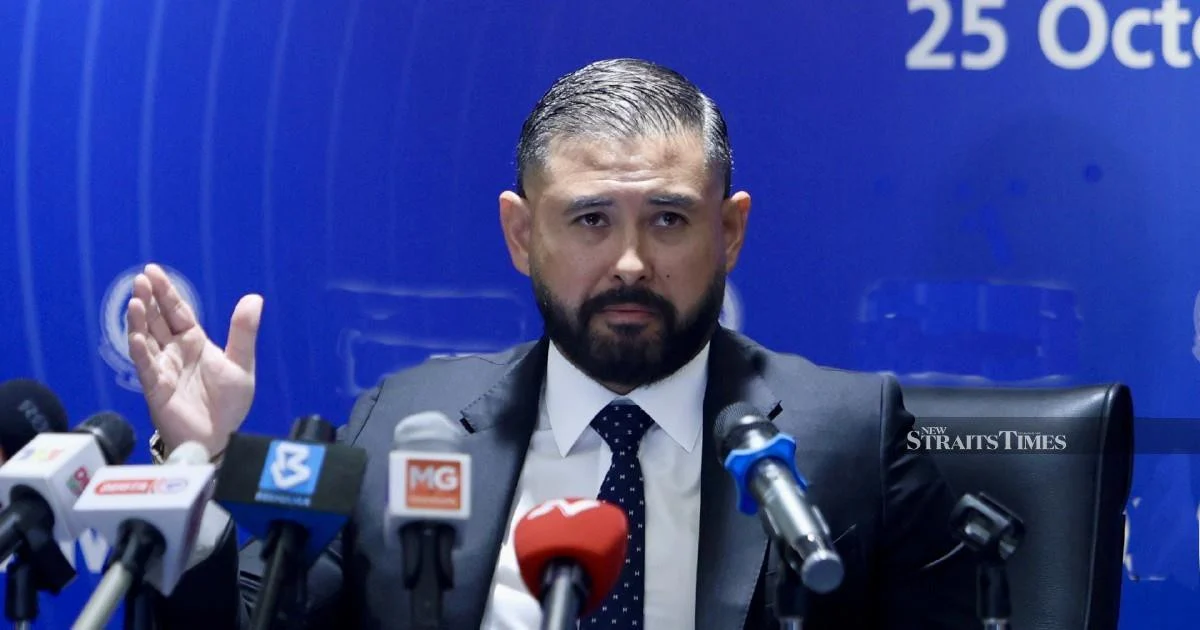
The Regent of Johor, Tunku Ismail Sultan Ibrahim, has directly challenged the Prime Minister's recent assessment of the state's fiscal situation, rejecting the narrative that internal inefficiencies are responsible for Johor's revenue challenges. Rather than accepting the characterisation of widespread leakages within state systems, the regent has pointed to federal government actions and policies as the primary obstacle preventing Johor from retaining and effectively deploying its legitimate revenue sources.
This public disagreement represents a notable escalation in what has become an increasingly visible tension between Johor's leadership and the federal administration regarding how state resources are allocated and distributed across Malaysia's federal structure. The regent's intervention suggests deeper frustration with the mechanisms through which revenue flows between the federal centre and the states, particularly concerning how much wealth generated within Johor remains available for state-level development and governance priorities.
Johor's economic position merits careful examination in this context. The state generates substantial revenue through multiple channels, including port operations in Tanjung Pelepas and Port Klang authority payments, petrochemical production, manufacturing, and tourism. Its geographic location as a commercial and logistics hub in southern Malaysia, coupled with proximity to Singapore, creates significant economic activity. Yet despite these considerable revenue streams, Johor has faced constraints in funding infrastructure projects and addressing development priorities, creating legitimate questions about where financial resources ultimately flow within the federal system.
The regent's assertion that the federal government is effectively "draining" state revenue rather than the state experiencing internal leakages points to several possible mechanisms. These could include the structure of federal-state revenue sharing arrangements, the treatment of federal taxes collected within Johor that are not returned to the state, licensing and royalty agreements that may favour federal coffers over state treasuries, or the administrative costs of federal bodies operating within Johor that are deducted from state allocations. Understanding precisely which mechanisms concern Johor's leadership would clarify the substantive disagreement underlying this public dispute.
The timing of this public disagreement carries significance. Johor has consistently advocated for greater fiscal autonomy and more favourable revenue-sharing arrangements within Malaysia's federal framework. The state has also pursued independent economic initiatives and sought to strengthen its position as a regional economic engine. When federal officials characterise Johor's financial constraints as self-inflicted through mismanagement or leakages, it potentially undermines state arguments for restructured federal-state financial relationships and may be perceived as deflecting responsibility for structural imbalances in how the federation distributes resources.
For Malaysian readers and observers of federal politics, this disagreement illuminates ongoing complexities in Malaysia's federal system. Unlike some federal structures where state governments exercise substantial independent taxation authority, Malaysian states depend heavily on federal allocations and revenue-sharing formulas established in the Federal Constitution. This dependency can create friction when states believe the allocation mechanisms inadequately reflect their economic contributions or development needs. Johor's public pushback suggests the regent believes the current arrangement systematically disadvantages the state.
The broader Southeast Asian context adds another dimension to this dispute. Johor's economic integration with the wider region, including significant cross-border trade and investment with Singapore and broader ASEAN engagement, means that state-level economic management significantly affects regional dynamics. If Johor's leadership believes federal policies constrain its ability to invest in infrastructure, education, and business environment improvements, this could have ripple effects across the region's economic ecosystem. The regent's intervention may therefore reflect concern that federal constraints on Johor's resources limit the state's capacity to compete effectively within increasingly integrated regional markets.
From a governance perspective, the regent's public challenge to the Prime Minister's characterisation raises questions about how federal-state disputes over financial allocations should be resolved. Malaysia's constitutional framework provides mechanisms for addressing federal-state disagreements, but public disputes of this nature suggest that existing channels for resolution may not be addressing Johor's concerns satisfactorily. This could indicate need for more structured dialogue or formal review of revenue-sharing arrangements that has perhaps been lacking.
The distinction the regent draws between leakages and federal drainage also carries implications for how other states perceive their own financial situations. If Johor's leadership believes the federal government is responsible for constraints on state revenue availability, other states facing similar pressures may reconsider whether their own fiscal challenges stem primarily from internal inefficiencies or from federal policies and mechanisms that work against their financial interests. This could broaden conversations about federal-state fiscal relationships across Malaysia more generally.
Looking forward, this public disagreement likely signals intensified negotiations or discussions between Johor's administration and federal authorities regarding revenue arrangements. The regent's willingness to publicly challenge the Prime Minister's framing suggests the state is prepared to escalate pressure for change if existing dialogue channels are not producing results. Whether this leads to formal review of federal-state revenue-sharing mechanisms or remains confined to political positioning remains to be seen, but the regent's statement clearly indicates Johor considers current arrangements unsatisfactory and is unwilling to accept sole responsibility for its fiscal challenges.

