The race for control of Johor's state government has reached its climactic phase, with political parties and candidates across the spectrum executing final campaign pushes on July 10 as the official campaigning period winds down. With polling scheduled for the following day, the competing coalitions mounted simultaneous efforts to secure voter support through a mix of grassroots engagement, spiritual appeals, and high-profile endorsements in what has become an intense contest for the 56 available state assembly seats. The campaign deadline of 11:59 pm on the evening of July 10 marked a natural breaking point after two weeks of intensive political activity that swept across the state's diverse constituencies and voter communities.
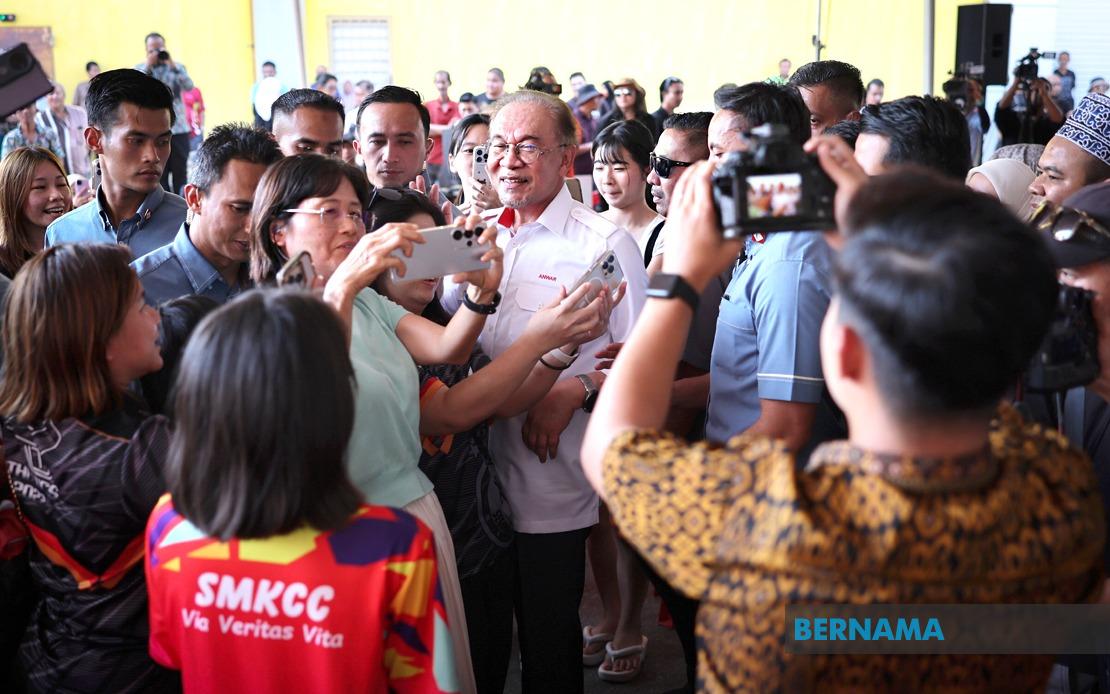
Pakatan Harapan's leadership chose to conclude their campaign efforts with a coordinated tour demonstrating organisational strength and party unity. Prime Minister Anwar Ibrahim, serving as the coalition's chairman, orchestrated a final five-location blitz across strategically significant constituencies, beginning with Bukit Gambir and proceeding through Bukit Batu and Layang-Layang before culminating in a grand finale event in Pasir Gudang. The decision to concentrate PH's final messaging around these specific areas reflected careful strategic calculation about where the coalition believed marginal gains could still be achieved. Through social media, Anwar invoked spiritual dimensions of the electoral process, asking for blessings to smooth the path forward for his coalition's candidates as they headed into polling day.
The Pakatan Harapan campaign's grassroots element was evident in parallel efforts by individual candidates adopting more intimate engagement strategies. Suhaizan Kaiat, the PH-backed contender for the Larkin seat, deliberately chose an accessible, informal approach by walking through a shopping mall and directly engaging with ordinary citizens, accompanied by Amanah Vice President Dzulkefly Ahmad. This tactical choice reflected an understanding that last-minute persuasion often occurs through personal connection rather than formal political gatherings. Suhaizan characterised the accumulated feedback from his campaign trail as representing voter expectations that any winning candidate must be prepared to fulfil, framing electoral support as a mandate carrying specific responsibilities.
Barisan Nasional's final campaign phase revealed a markedly different strategic orientation, with party leadership emphasising spiritual and moral dimensions of the electoral choice. Deputy Prime Minister Ahmad Zahid Hamidi attended a supplication event in Kulai that blended religious observance with political messaging, positioning BN's campaign within a framework of faith-based governance. Incumbent Johor Menteri Besar Onn Hafiz Ghazi, seeking re-election from the Machap seat, adopted a notably humble tone in his final message to voters. Through a video post, he explicitly apologised to Johor's population for any deficiencies in his administration's performance, a rhetorical choice that simultaneously acknowledged voter concerns while attempting to frame any future mandate as a fresh opportunity for improved governance.
The Malaysian Meteorological Department's forecast for polling day conditions—predicting clear morning weather with afternoon thunderstorm potential—added a practical dimension to campaign planners' final preparations, as weather patterns can meaningfully influence voter turnout in different ways across various constituencies. This technical detail, though seemingly minor, represented the kind of granular operational consideration that campaigns monitor during their final hours.
Pekat Satu Malaysia, or Bersatu, positioned its final campaign message around voter responsibility and informed decision-making. Party President Muhyiddin Yassin urged Johoreans to synthesise the information accumulated during the two-week campaign period and make deliberate choices about which party deserved their mandate. This framing elevated voting beyond simple preference selection, instead characterising it as a conclusion to an evaluation process in which voters had gathered comparative data on competing political visions. The emphasis on voter agency and conscious choice reflected Bersatu's positioning as a coalition partner capable of presenting distinct governance alternatives.
The Bersama coalition, competing as a separate force from both BN and PH, staged its finale event featuring prominent party figures Rafizi Ramli and Nik Nazmi Nik Ahmad. Rafizi's commitment to use his final campaign speech for synthesising and countering issues raised throughout the election campaign indicated Bersama's strategy of engaging substantively with the policy terrain that had dominated discussions. Rather than focusing solely on mobilisation rhetoric, this approach suggested Bersama sought to position itself as intellectually rigorous and policy-focused, potentially appealing to voters frustrated with what they perceived as shallow political discourse.
MUDA, the younger-oriented political movement, concluded its campaign through a flagship 'Puteri Wangsa Grand Finale Lecture,' with party President Amira Aisya Abd Aziz directing voter attention toward the fundamental empowerment that electoral participation represents. MUDA's framing of voting as the exercise of absolute power by the state's citizens reflected the movement's broader ideological emphasis on popular sovereignty and democratic agency. This messaging choice positioned voting not merely as a practical political act but as an expression of fundamental citizen authority, potentially resonating particularly with younger voters concerned with democratic participation and representation.
The 16th Johor State Election involved a total of 172 candidates competing for 56 state legislative assembly seats, creating multiple contests across different constituencies with varying competitive dynamics. This multiplicity meant that campaign intensity varied geographically, with certain constituencies receiving disproportionate attention from major parties while others saw less concentrated effort. The diversity of campaign approaches visible across the major political forces—ranging from Anwar's large-scale rally strategy through intimate grassroots engagement to spiritual appeals and policy-focused discourse—reflected broader competitions not just for votes but for defining what electoral choice fundamentally means.
The midnight deadline for campaign activities created natural closure to an extended period of political mobilisation that had saturated Johor's public sphere for fourteen days. This enforced silence that would follow—preventing any further campaign messaging until after polls closed—created psychological and strategic pressure on all parties to maximise their final hours of voter contact. Campaign organisations shifted from outreach mode to get-out-the-vote operations, with sophisticated parties already mobilising volunteer networks to ensure their identified supporters would actually appear at polling stations. The transition from persuasion to mobilisation represented a fundamental shift in campaign logic during these final hours.
For Malaysian observers beyond Johor, this state election carried implications for the broader national political trajectory. Johor has historically served as a political bellwether, and results would signal whether established coalitions remained resilient or whether newer political forces like MUDA or Bersama were successfully consolidating voter support. The range of campaign strategies visible across competing forces suggested continued flux in Malaysian politics, with no faction confident enough to rely on traditional approaches alone. Each major political grouping had calculated that final-hour messaging needed to address voter anxieties about governance quality, democratic participation, economic management, and political integrity—issues that transcended the specific state election to reflect broader national concerns that would continue shaping Malaysia's political competition in subsequent contests.

