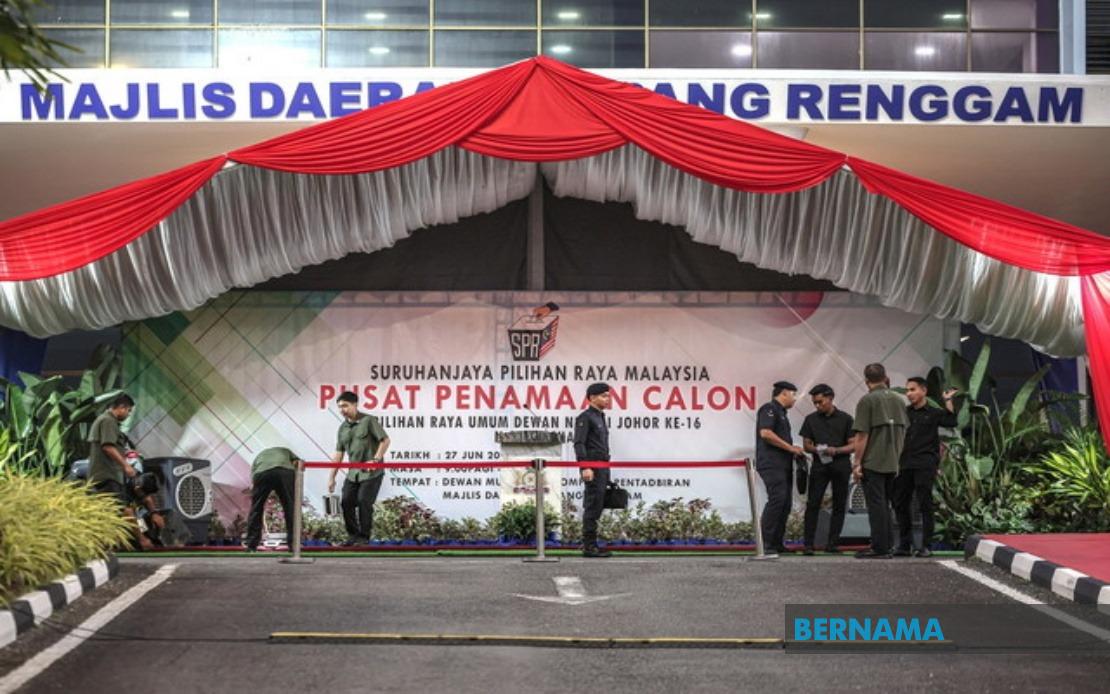
The 16th Johor State Election swung into action on June 27 when all 56 nomination centres across the state unlocked their doors at precisely 9am, marking the formal launch of candidate registration for the contest. Political party supporters began assembling outside these centres from as early as 6.30am, demonstrating the grassroots enthusiasm surrounding the election and the competitive nature of seats being contested.
Candidates had a compressed timeframe to lodge their nomination papers, with a one-hour window from 9am to 10am to complete the submission process with the returning officer at their designated centre. The tight scheduling reflects standard electoral procedures designed to maintain efficiency during the registration phase. Nomination papers could be submitted by the candidate personally, accompanied by both a proposer and seconder, or with just one of these representatives present, providing flexibility in how parties managed their filing requirements.
Once the Election Commission verifies all submitted nominations and confirms which candidates meet the eligibility criteria, the official campaign period will commence. This crucial 14-day stretch runs until 11.59pm on July 10, giving political parties and independent candidates two weeks to present their manifestos and canvass voters across the state. The condensed campaign timeline demands intense activity from party machinery and media coverage, with limited time to shape voter sentiment before polling begins.
Weather posed a potential complication for nomination day operations. The Malaysian Meteorological Department had forecasted rain in major urban and district centres including Johor Bahru, Muar, Batu Pahat, Kota Tinggi, Pontian, Tangkak and Kulai during the morning hours when nominations were being submitted. Meanwhile, Segamat, Kluang and Mersing were expected to remain clear. The forecast also warned of afternoon thunderstorms across most districts, including Johor Bahru, Segamat, Kluang and Kota Tinggi, which could have dampened party mobilisation efforts and complicated logistics for transporting candidates and documentation to nomination centres.
Security arrangements reflected the Election Commission's commitment to orderly proceedings throughout nomination day. Police personnel, reinforced by volunteers from the People's Volunteer Corps (RELA), deployed around nomination centre perimeters to maintain strict crowd control and traffic management. These precautions aimed to prevent disruptions, confrontations between rival party supporters, or any incidents that might undermine the integrity of the electoral process during this opening stage of the campaign.
The voter roll for this election demonstrates Johor's substantial political significance within Malaysia's electoral landscape. The Election Commission registered a combined 2,727,926 eligible voters across the state, comprising 2,703,175 ordinary civilian voters along with 12,041 military personnel and their families, plus 12,710 police officers and their relatives. This diverse voter base spans urban concentrations, suburban areas, and rural constituencies, each with distinct socioeconomic priorities and political concerns that candidates must address during their campaigns.
The electoral calendar established by the Election Commission structures the remaining weeks of the campaign precisely. Early voting has been designated for July 7, allowing military and police personnel, along with those unable to vote on polling day, to exercise their franchise in advance. This staggered approach reduces pressure on voting infrastructure and accommodates those with operational commitments. The main polling day falls on July 11, when the bulk of Johor's electorate will visit polling stations to determine which candidates and parties will represent their constituencies in the state assembly for the next term.
For Southeast Asian observers and Malaysian political analysts, the Johor election carries broader implications beyond state boundaries. Johor constitutes Malaysia's second-largest state by population and possesses significant economic weight as an industrial and manufacturing hub with strong cross-border ties to Singapore. Electoral outcomes here frequently signal wider trends affecting peninsular Malaysian politics, particularly regarding the balance between established parties and emerging political forces, as well as voter sentiment on economic management and development priorities.
The nomination process unfolding across Johor's 56 centres represents the culmination of months of political preparation by competing parties and independent candidates. Organisations have selected their contenders, prepared campaign strategies, mobilised grassroots supporters, and readied their campaign machinery for the intensive fortnight ahead. The nomination deadline formalises candidate lists and transforms what has been largely internal party activity into an open, officially-recognised electoral contest subject to Election Commission oversight and public scrutiny throughout the campaign and voting phases.

