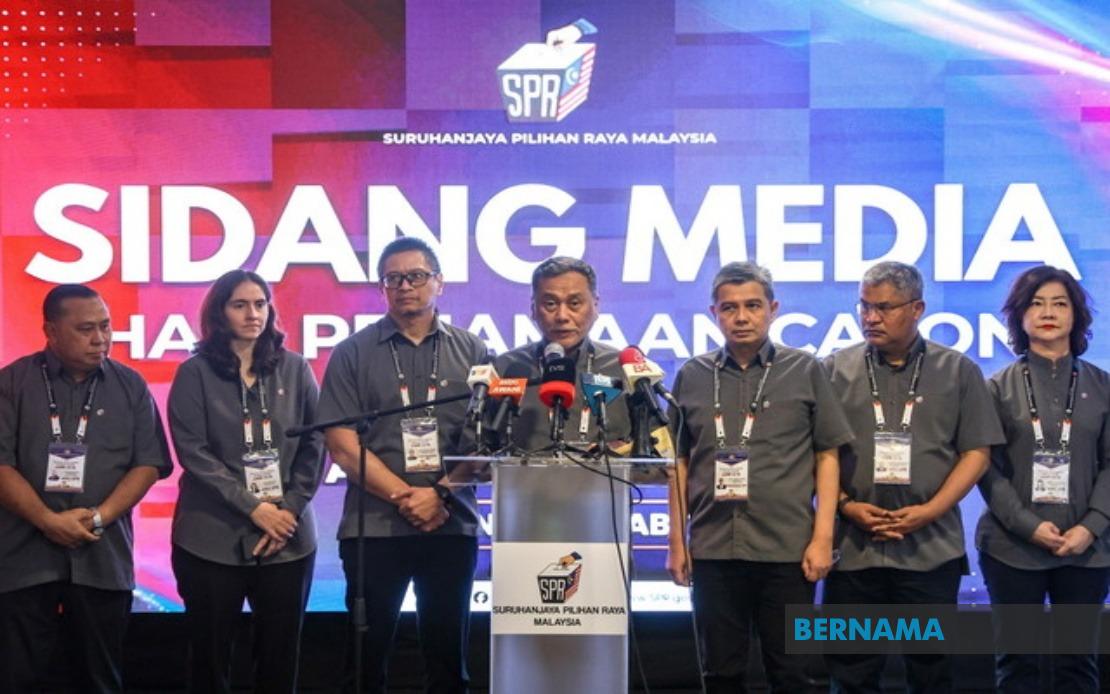
The Election Commission has given the green light for 172 candidates to compete in Johor's 16th state election, following the completion of nominations across all 56 polling centres on June 27. Election Commission chairman Datuk Seri Ramlan Harun confirmed that every nomination paper submitted met the required standards, with zero candidates rejected during the process that wound up at 10 am. The composition of candidates reflects the evolving political landscape in Malaysia's southern state, with representation spanning the major coalitions and smaller parties vying for relevance in the electoral arena.
The candidate pool comprises 138 men and 34 women, highlighting an ongoing gender imbalance in political representation despite gradual improvements across the board. This ratio underscores persistent challenges in encouraging women's participation in electoral politics throughout the country. Although Malaysian political parties have made public commitments to gender inclusivity, the numbers suggest that substantive change in candidate selection processes remains uneven, with some organisations demonstrating greater commitment than others to balanced representation.
The two major coalitions dominate the race. Barisan Nasional, the ruling coalition at the federal level, has fielded the maximum possible 56 candidates—one for each state seat. Pakatan Harapan, the opposition bloc that controls the federal government following the 2022 general election, has matched this effort with an identical slate of 56 contenders. Their parity in candidate numbers reflects the intensity of competition between these two heavyweight alliances and signals expectations of a genuinely contested election rather than a coronation for either side.
Perikatan Nasional, the coalition that includes PAS and other parties, is positioning itself as a significant challenger with 33 candidates across the state. This represents a meaningful attempt to capture ground in Johor, where PN has invested considerable resources and political capital. The presence of three major coalitions competing simultaneously introduces tactical complexity, as voters in many constituencies will face multiple credible options rather than a straightforward binary choice.
Beyond the main coalitions, a patchwork of smaller parties and independent candidates rounds out the contest. Parti Bersama Malaysia is fielding 15 candidates, representing a notable effort by this newer political entity to establish itself as a viable force. MUDA, the youth-focused party that gained traction in recent elections, is contesting just four seats, suggesting either limited infrastructure in Johor or a strategic decision to concentrate resources in selected battlegrounds. Parti Orang Asli Malaysia and Parti Sosialis Malaysia each have one candidate in the race, maintaining symbolic participation even if they are unlikely to win seats. Additionally, six independent candidates are running, providing local figures with a platform outside party structures.
The electoral contest will take diverse forms across the 56 constituencies. Fourteen seats are anticipated to feature straight fights between two candidates, offering voters a clear choice between competing visions. Twenty-seven constituencies will see three-cornered contests, amplifying voter choice but potentially fragmenting support. Twelve seats will feature four-way battles, and three constituencies will have five candidates competing, creating crowded fields where even second-place candidates may accumulate substantial vote shares without winning. This varied electoral architecture means that different constituencies will experience fundamentally different campaigns and dynamics.
For Malaysian observers watching from outside Johor, this election carries significance beyond the state borders. As Malaysia's second-largest state by population and a significant economic powerhouse, Johor's political direction influences national dynamics. The performance of each coalition in this election will provide crucial data about voter sentiment and coalition strength heading toward potential future federal contests. A strong showing by any coalition would boost its credibility nationally, while disappointing results could prompt internal reckonings about strategy and messaging.
The presence of competing coalitions and smaller players reflects Malaysia's increasingly fragmented political environment. Unlike previous eras when two-party dominance prevailed, modern Malaysian elections involve multiple credible options across the political spectrum. This fragmentation can enhance democratic choice and voter engagement, as various constituencies and demographic groups have greater opportunity to find representation aligned with their preferences. However, it also complicates coalition-building after elections and can produce less decisive mandates than previous political configurations.
The nomination process itself proceeded smoothly with no disqualifications, suggesting that candidates and parties adhered to Electoral Commission requirements. The acceptance of all 172 nomination papers contrasts with some previous elections where controversial candidates or procedural issues have led to rejections, indicating relatively orderly political conduct in the lead-up to polling. This administrative smoothness provides a stable foundation for the campaign period ahead.
The gender composition of the candidate pool warrants continued scrutiny as the campaign unfolds. With women representing only about 20 percent of candidates, Johor's election mirrors broader Malaysian patterns where women remain underrepresented in electoral politics at all levels. Political science research consistently demonstrates that women candidates face different campaign dynamics, media treatment, and voter reception than their male counterparts, often requiring strategies tailored to navigate these structural inequalities. How effectively female candidates in Johor navigate these challenges may offer insights applicable to national political discourse about representation and inclusion.
The Johor state election now moves into its campaign phase, with candidates and parties competing to mobilise supporters across diverse constituencies. The mix of major coalitions, regional parties, smaller national entities, and independents ensures that Johor's political narrative will remain contested and unpredictable throughout the campaign. Voters in the state will confront genuine choices across multiple dimensions, from coalition preference to individual candidate quality to policy platforms. The 172 candidates collectively represent different visions for Johor's governance and development trajectory.

