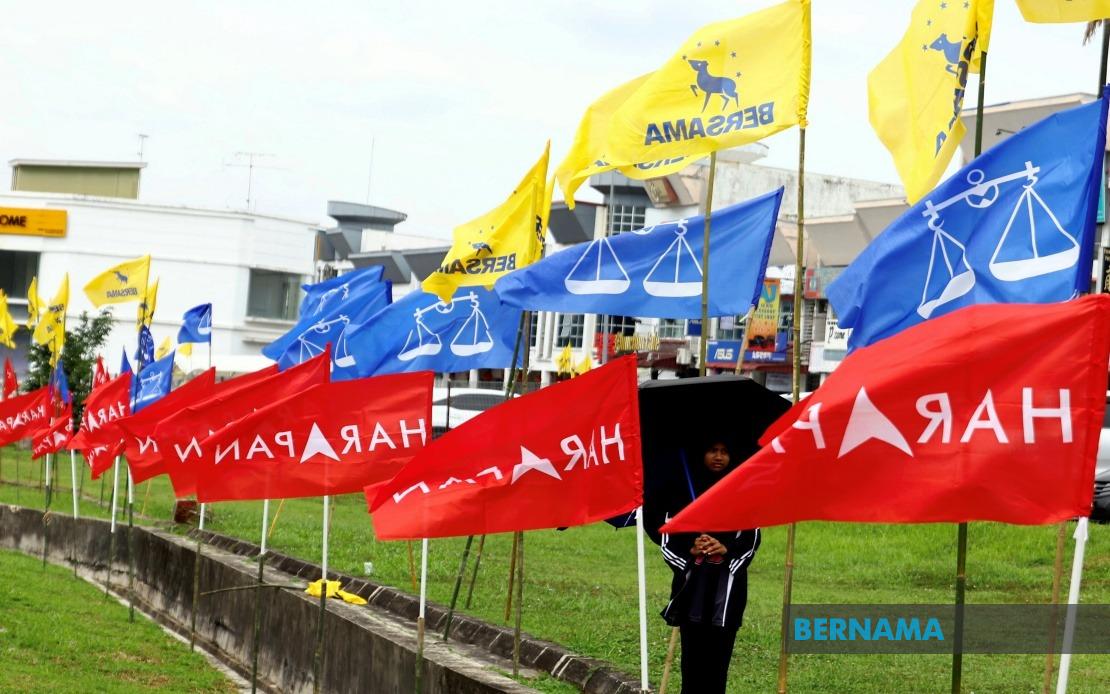
Tomorrow morning, Johor enters a critical moment in its political calendar as polling stations across the state prepare to open their doors at 8 am, bringing an end to an intense fortnight of campaigning that began on 27 June. The 16th Johor state election represents more than a routine electoral exercise; it will shape the direction of the nation's most economically significant state for the next five years. With the campaign officially concluding at 11.59 pm tonight, political parties have exhausted their opportunities for ground mobilisation and online canvassing, leaving the outcome now squarely in the hands of voters.
The scale of this election underscores Johor's importance within Malaysia's political landscape. Across 1,076 polling centres, approximately 2.7 million registered voters will decide the fates of 172 candidates—a notably smaller field than the 239 candidates who contested in 2018. These candidates vie for 56 state assembly seats, with the major coalitions fielding 56 representatives each. The reduced candidate count reflects the consolidation of electoral competition around the principal political blocs: Barisan Nasional and Pakatan Harapan, alongside emerging challengers such as Perikatan Nasional with 33 candidates, Parti Bersama Malaysia with 15, and various smaller parties and independent contenders.
The timing of this election carries implications extending well beyond Johor's borders. The contest has been framed as a referendum on political stability and economic management at both state and national levels. Prime Minister Datuk Seri Anwar Ibrahim and Deputy Prime Minister Datuk Seri Dr Ahmad Zahid Hamidi both made high-profile campaign appearances, signalling the elevated stakes that both the ruling coalition and the opposition perceive. The Election Commission anticipates announcing full results as early as 10 pm tomorrow, allowing for a rapid determination of which coalition has secured mandate to govern.
Throughout the campaign fortnight, political parties converged on remarkably similar messaging themes, with the cost of living crisis, economic recovery, job creation, and public welfare dominating their respective platforms. This consistency in messaging reflects a shared recognition among all major contenders that Johor voters—particularly those in economically challenged constituencies—are experiencing genuine financial pressures. The uniformity of policy rhetoric, however, contrasts sharply with the competing claims about which coalition possesses superior track records and competence to deliver relief.
Early voting mechanisms have already captured a portion of the electorate, with 20,607 members of the Malaysian Armed Forces, the Royal Malaysia Police, the General Operations Force, and their spouses casting ballots last Tuesday. This defence and security personnel contingent represents a traditionally significant bloc whose preferences can move marginal seats, particularly in Johor's more strategically sensitive constituencies bordering Peninsular Malaysia's southern reaches.
Political analyst Dr Nazreena Mohammed Yasin from Universiti Tun Hussein Onn Malaysia identifies voter turnout as the critical variable that will determine whether campaign momentum translates into actual electoral outcomes. She emphasises that turnout effects cannot be universally applied across all constituencies, as different demographic and geographic areas respond distinctly to mobilisation efforts. In some localities, higher participation may disproportionately benefit specific parties with superior ground organisation, whilst in others the effect proves marginal. The 2022 Johor election witnessed a 54.92 per cent turnout—a baseline that analysts will scrutinise tomorrow when comparing participation across constituencies. Particularly instructive will be whether turnout exceeds this figure, potentially indicating elevated voter engagement or conversely whether it remains depressed, suggesting campaign fatigue or voter apathy.
The mechanics of party organisation on polling day will prove decisive in tightly contested races. Dr Nazreena underscores that the efficiency of party machinery in mobilising supporters and managing the logistics of voting operations carries outsized importance in marginal seats. Beyond organisational capacity, the undecided voter population—fence-sitters who delay their choices until the final moment—possesses potentially determinative power in constituencies with narrow victory margins. The magnitude of shift in victory margins between this election and the previous contest will itself provide analytical insight into whether voter support for particular parties has strengthened, eroded, or fundamentally shifted.
Associate Professor Dr Mazlan Ali of Universiti Teknologi Malaysia observes that both major coalitions have strategically emphasised political stability as their core campaign narrative, a messaging choice reflecting their positions within the federal Unity Government and their respective state-level track records. This stability framing potentially advantages the incumbent government formation whilst inviting scrutiny of coalition credibility and coherence. However, Dr Mazlan notes that beyond manifestos and campaign pledges, voters increasingly evaluate parties based on demonstrable track records and delivery on previous promises. The electorate's apparent demand for proof of competence rather than mere rhetoric constitutes a significant shift in democratic maturity among Malaysian voters.
Dr Mazlan anticipates that heightened public interest in this election—driven by awareness of Johor's strategic importance and the broader implications for federal politics—will generate higher voter participation, thereby magnifying the significance of individual votes. When turnout rises, electoral outcomes tend to reflect more accurately the genuine distribution of voter preferences across the population rather than being skewed by the voting patterns of the most mobilised demographic segments.
The pre-dissolution composition of the Johor State Legislative Assembly provides the baseline for assessing shifts. Before dissolution on 1 June, Barisan Nasional held 40 of the 56 seats, Pakatan Harapan held 12, Perikatan Nasional held three, and MUDA held one. The question now before voters is whether this distribution will be substantially reordered, representing either a consolidation of the incumbent coalition's dominance or a significant challenge to its control. Constituencies where the previous contests produced narrow victories will attract disproportionate analyst attention, as these battlegrounds frequently determine which coalition commands the assembly.
As voters prepare to exercise their democratic franchise tomorrow, the Johor election represents a litmus test of Malaysian political preferences at a moment when the federal government faces economic pressures and rising public expectations for responsive governance. The state's economic significance—as host to critical port infrastructure, manufacturing hubs, and petrochemical complexes—means that governance quality directly affects not merely Johor residents but the entire Malaysian economy's competitiveness and growth trajectory.

