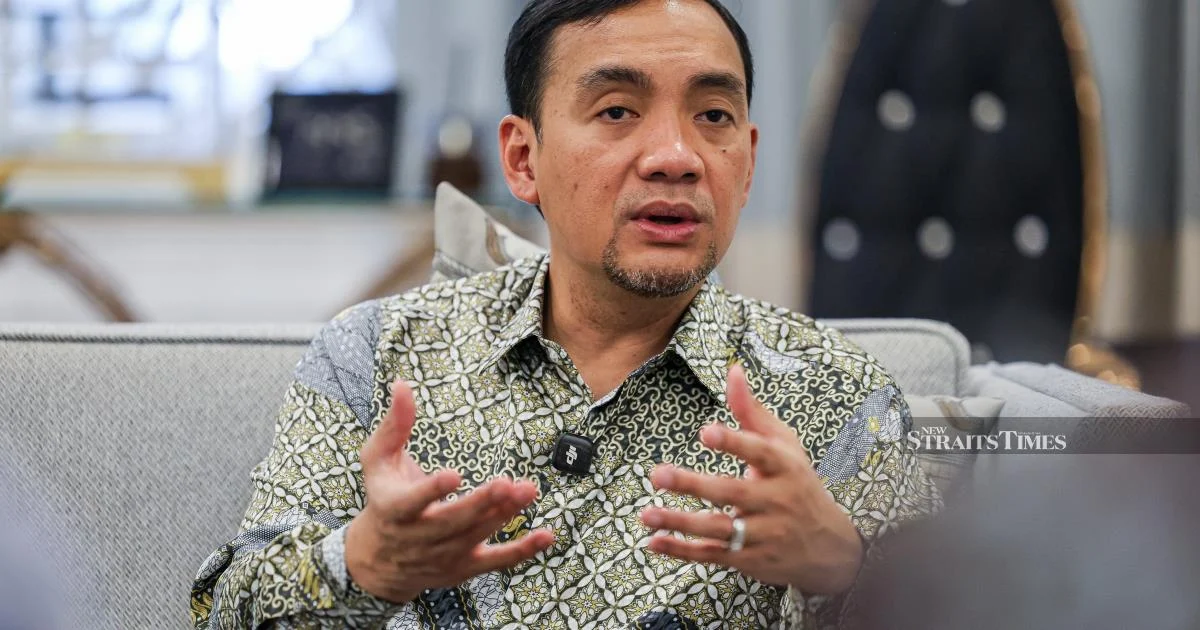
Johor caretaker Menteri Besar Datuk Onn Hafiz Ghazi has categorically dismissed the prospect of Barisan Nasional partnering with the Democratic Action Party to govern Johor if voters return the coalition to power, signalling a hardening of coalition politics in Malaysia's second-largest state by economic output.
The unequivocal stance comes as political negotiations intensify ahead of state elections expected this year. Onn Hafiz's pronouncement reflects deeper ideological chasms that continue to divide Malaysia's major political blocs, a fault line that has proven difficult to bridge despite previous instances of pragmatic cooperation at the national level. His emphasis on ideology rather than practical governance considerations underscores how Malaysian coalition politics remain rooted in fundamental philosophical differences, even when electoral mathematics might suggest otherwise.
For Johor specifically, the rejection carries significant implications. The state has historically served as a testing ground for political alignments, with its outcomes often foreshadowing national trends. By publicly foreclosing the option of working with DAP, Onn Hafiz is consolidating BN's electoral messaging around a clearer partisan identity, potentially appealing to voters uncomfortable with cross-coalition arrangements. This strategy reflects lessons learned from the 2022 federal election, when fluid coalition arrangements and unexpected partnerships created voter confusion and disengagement.
The DAP, as the dominant Chinese-majority party in Pakatan Harapan, represents a fundamentally different political philosophy from BN's traditional model. DAP's secular, reformist orientation and emphasis on constitutional review contrasts sharply with BN's defence of existing institutional frameworks and constitutional monarchies. These differences extend beyond mere party preference to encompass competing visions of governance, community relations, and the state's trajectory. Onn Hafiz's invocation of ideology therefore reflects genuine substantive disagreements rather than mere partisan posturing.
For Malaysian readers, particularly those in Johor, this declaration matters considerably because it shapes electoral choices and coalition possibilities. Voters who might have considered tactical voting or coalition-switching face clearer parameters. Those uncomfortable with DAP's positions on constitutional matters, religious authority, or institutional reform might find BN's straightforward positioning more reassuring. Conversely, those seeking broader political change face a starkly binary choice rather than a spectrum of options.
The timing of Onn Hafiz's statement also deserves examination. By articulating opposition to DAP collaboration now, rather than waiting for post-election negotiations, he establishes negotiating boundaries well in advance. This approach prevents scenarios where surprise coalitions emerge after election results become apparent—a dynamic that generated considerable backlash nationally following the 2022 federal election. Transparency about coalition intentions, regardless of specifics, tends to strengthen public confidence in electoral legitimacy.
Regionally, Johor's political direction carries implications beyond state borders. As Malaysia's industrial powerhouse and southern gateway, Johor's governance model influences investor confidence and development trajectories. Clearer ideological positioning, whether one agrees with BN's framework or not, provides the predictability that business communities and potential investors value. This consideration extends to Singapore, Johor's crucial neighbour, which closely monitors state-level governance quality and institutional stability.
Historically, BN has governed Johor continuously since Merdeka, accumulating institutional advantages and voter habits that transcend individual election cycles. However, this incumbency also creates complacency risks. Onn Hafiz's firm stance against DAP collaboration might represent an attempt to energise the BN base by emphasising distinction from opposition alternatives. Yet such hardline positioning requires successful governance delivery to maintain electoral support—voters increasingly punish purely oppositional messaging without accompanying performance improvements.
The DAP, for its part, occupies an interesting position within this dynamic. The party's presence in Johor remains limited compared to Penang or Selangor, where it governs or co-governs. Onn Hafiz's preemptive rejection of DAP collaboration may paradoxically reinforce DAP's outsider status, potentially allowing the party to position itself as a force for systemic change untethered to existing arrangements. This dynamic could complicate BN's electoral calculations if discontented voters interpret the DAP rejection as evidence of closed-door politics.
Understanding these political currents requires appreciating how Malaysian politics has evolved since the 1990s. The rise of identity-based politics, institutional tensions, and generational shifts in voter preferences have fractured the consensus that once surrounded BN governance. Onn Hafiz's ideological argument resonates with certain constituencies precisely because it acknowledges that meaningful disagreements exist—a refreshing departure from cynical, purely transactional politics. Whether such ideology translates into electoral support depends ultimately on governance performance and the opposition's ability to present compelling alternatives.
As Johor heads toward electoral renewal, political trajectories in the state will ripple through national politics. BN's performance here offers the coalition an opportunity to demonstrate that clarity about principles and boundaries can coexist with effective governance. For DAP and the broader opposition, Johor presents a testing ground for developing alternative narratives that appeal beyond traditional support bases. Voters, meanwhile, will render their verdict on whether ideological positioning matters more than concrete delivery on economic opportunity, infrastructure, and public services.