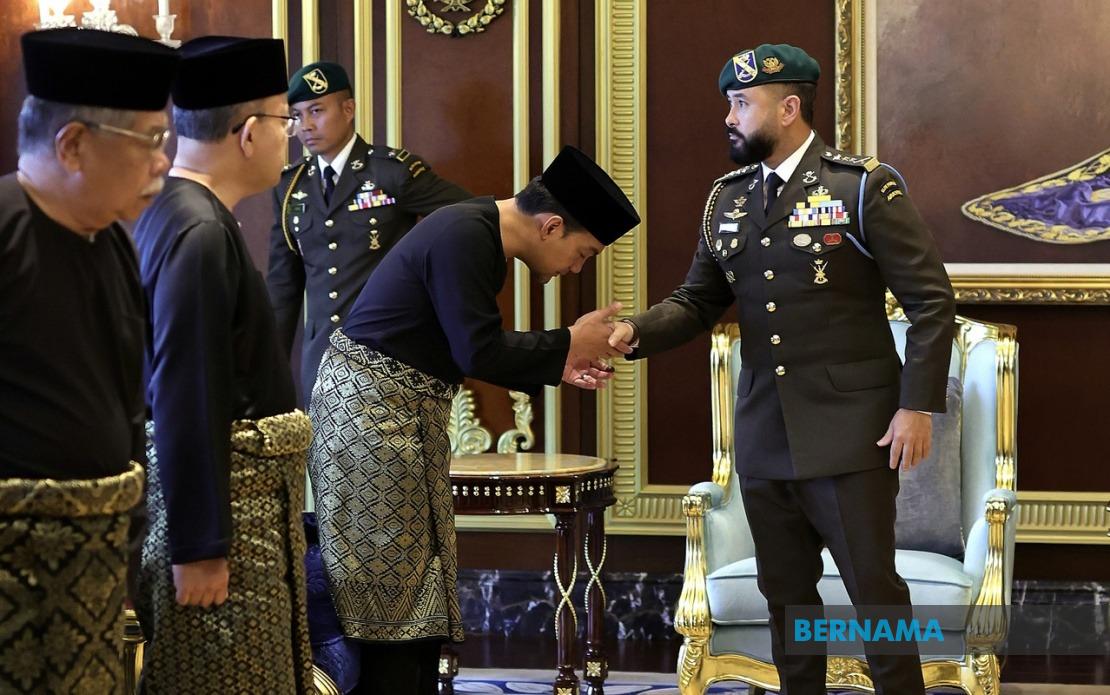
The incoming members of Johor's State Executive Council will formally assume their positions tomorrow at a ceremony held at Istana Bukit Serene, marking an official transition to the state government's next chapter. The swearing-in represents a constitutional milestone following Barisan Nasional's commanding performance in the state election held last Saturday, where the coalition secured overwhelming legislative control with a 48-seat majority from the 56-member state assembly. The Regent of Johor, Tunku Mahkota Ismail, will preside over the proceedings, underscoring the ceremonial importance of the occasion within Johor's constitutional framework.
Menteri Besar Datuk Onn Hafiz Ghazi, who personally took his oath of office just four days earlier on July 12, will lead the incoming team. His administration secured a fresh mandate to govern the state following what proved to be a decisive endorsement by Johor voters. The Menteri Besar's swift advancement from being sworn in himself to overseeing his cabinet's collective oath demonstrates the accelerated pace of transition following the electoral outcome. Senior government officials including Johor Council of Royal Court president Datuk Dr Abdul Rahim Ramli and state secretary Datuk Mohammed Ridha Abd Kadir have confirmed their attendance, signalling institutional continuity alongside the political transition.
The palatial venue of Istana Bukit Serene carries significant symbolism for Johor's governance, as the royal residence traditionally hosts major state constitutional ceremonies. Access arrangements for the international and domestic media have been carefully coordinated, with the palace opening both main entrances from 9.30 am to facilitate comprehensive coverage of the event. This openness reflects contemporary Malaysian governance practices where transparency in cabinet formations is increasingly emphasised and expected by the public and press alike.
Barisan Nasional's landslide victory represents a substantial validation of the coalition's approach in Johor, one of Malaysia's most economically significant states. The capture of 48 seats from a possible 56 translates to an 85.7 percent supermajority, a commanding position that grants the incoming administration considerable legislative flexibility. Such a dominant mandate typically translates into accelerated policy implementation capabilities and reduced legislative obstruction. For Johor specifically, this suggests the Onn Hafiz government will have substantial room to pursue its developmental agenda without meaningful parliamentary resistance.
The composition of the incoming cabinet will carry implications for how several key policy areas are managed over the next term. Johor, as Malaysia's third-most populous state and home to significant manufacturing, petrochemical, and port operations, faces ongoing priorities in infrastructure development, economic diversification, and governance efficiency. The quality and experience profile of cabinet appointees will largely determine the administration's capacity to address these challenges while managing inter-state rivalries and federal-state coordination on matters ranging from water security to industrial development.
For Malaysian political observers, the scale of Barisan Nasional's Johor victory provides an important data point about coalition performance across different state contexts. Following the coalition's federal victory in the 2022 national elections, its strong showing in Johor demonstrates sustained voter confidence in BN as a governing vehicle. However, the circumstances in Johor—including incumbent advantages and specific state-level campaign dynamics—cannot be automatically extrapolated to other regional contests. The coalition will likely study the campaign strategies and messaging that proved effective in driving this outcome for potential application in future state-level competitions.
The transition to a new cabinet also provides opportunity for administrative renewal and recalibration. Some existing state executive councillors may be retained while others may be replaced, reflecting either performance evaluations or political considerations around representation and coalition balance. The cabinet-making process, typically conducted behind closed doors before public announcement, involves balancing factors including individual track records, factional sensitivities within the coalition parties, representation of various demographic and geographic interests, and specialisation in critical portfolios. Watchers of Johor politics will scrutinise the final lineup for signals about the Menteri Besar's leadership priorities and management philosophy.
The appointment of a full cabinet structure also regularises the state's administrative apparatus after the election campaign period. During election seasons, governing capacity is often constrained by campaign demands and interim arrangements, so a completed cabinet installation allows civil servants and state agencies to operate under clear leadership and defined portfolios. This administrative normalisation typically produces renewed focus on implementing pending development projects, processing pending approvals, and advancing the state's economic agenda.
Regional implications extend beyond Johor itself, as the state's governance outcomes influence broader Southeast Asian perceptions of Malaysian stability and institutional functionality. Johor's role as a crucial economic hub serving Singapore's entrepôt economy, hosting major petrochemical clusters, and managing critical port infrastructure means that governance quality directly affects regional business confidence and investment flows. A smoothly executed cabinet transition conducted according to constitutional procedures reinforces confidence in Malaysia's institutional resilience and democratic processes, particularly among foreign investors evaluating regional stability.
The swearing-in ceremony tomorrow will conclude the formal constitutional requirements for cabinet installation, though the substantive work of governing begins in earnest thereafter. With nearly five-and-a-half years remaining until the next state election, the incoming Johor administration will have adequate time to implement medium-term programmes and establish a governance record. The magnitude of their electoral mandate provides both opportunity and responsibility to deliver outcomes that justify the confidence placed in them by Johor voters.

