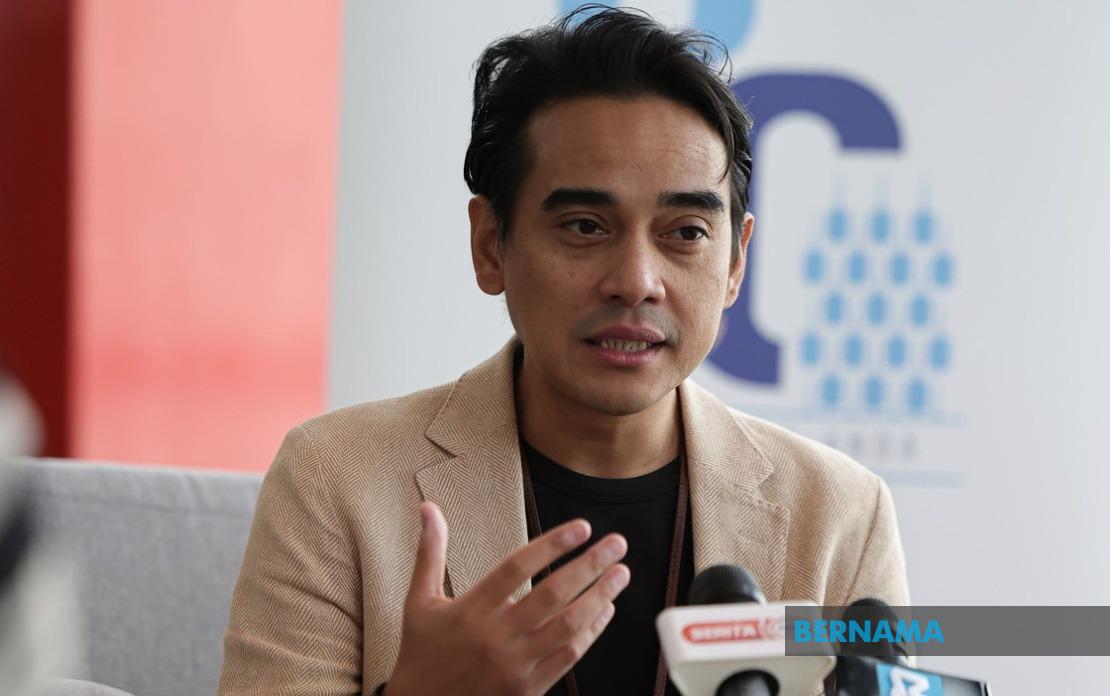
The rapid integration of artificial intelligence into newsrooms presents not a threat to journalism itself but rather a professional evolution that demands adaptation from individual journalists, according to Ashwad Ismail, Director-General of Broadcasting. Speaking in Kuala Lumpur on June 17, Ismail emphasised that media practitioners who fail to develop competency with AI tools risk displacement by colleagues who successfully harness the technology to enhance their reporting capabilities and productivity.
Ismail's assessment reflects a growing global recognition that AI's impact on journalism depends fundamentally on how practitioners approach the transition. Rather than viewing the technology as a replacement for human journalists, he positioned AI as an instrument that augments human skills and elevates the calibre of journalistic output. His perspective aligns with industry trends where newsrooms worldwide are experimenting with AI for tasks ranging from initial data analysis to story research and content distribution, freeing journalists to concentrate on investigative work, original reporting, and editorial judgment.
The stakes of this technological shift are particularly significant for Malaysian and Southeast Asian media organisations competing on a regional stage. As digital disruption accelerates across the region, newsrooms that successfully integrate AI capabilities may gain competitive advantages in speed, accuracy, and audience reach. Conversely, organisations and individual journalists that resist or ignore AI development risk becoming marginalised in an increasingly automated information ecosystem.
Ismail highlighted a critical concern facing the industry: the potential for widespread job displacement if the sector fails to manage technological transition responsibly. However, he framed this challenge not as inevitable but as a function of professional readiness. The implication is clear—journalists who proactively acquire AI literacy and operational skills position themselves as indispensable rather than redundant. This reframing shifts responsibility from blaming technology to empowering individual practitioners to shape their own professional trajectories.
The implementation of AI in newsrooms, Ismail argued, must be accompanied by robust ethical guidelines and institutional frameworks. These guardrails serve multiple purposes: ensuring the technology enhances rather than replaces human judgment, maintaining journalistic integrity and accuracy standards, and protecting newsroom cultures that value editorial independence. Without clear protocols, AI deployment risks introducing biases, reducing editorial oversight, and accelerating the publication of unverified information—outcomes that would undermine public trust rather than strengthen it.
For Malaysian media organisations, the challenge of establishing AI governance becomes particularly acute given the region's diverse regulatory environments and varying levels of technological infrastructure. Newsrooms must navigate not only technical implementation questions but also questions of editorial philosophy: what tasks should be automated, what decisions should remain in human hands, and how can AI assist journalists without compromising the relationship between reporters and their communities?
Ismail emphasised that rebuilding public confidence in media institutions cannot rely solely on technological solutions. Instead, news organisations must recommit to foundational journalistic practices that have traditionally sustained credibility and audience loyalty. Strengthening hyperlocal reporting—coverage that reflects the concerns, stories, and experiences of specific communities—represents a crucial counterbalance to algorithmic homogenisation and national-level news aggregation. This approach acknowledges that while AI can optimise distribution and enhance data analysis, the human touch remains central to journalism's democratic function.
Meaningful community engagement emerges as equally vital to this trust-rebuilding strategy. When news organisations invest in understanding their audiences, soliciting feedback, and responding to information needs at a local level, they create relationships that transcend transactional news consumption. These connections generate audience loyalty that cannot be replicated through algorithmic personalisation alone, and they provide journalists with rich source material and story ideas grounded in genuine community concerns rather than trending topics or algorithmic recommendations.
The broader implications for Southeast Asian journalism are substantial. The region's media landscape already reflects significant disparities in technological capacity, financial resources, and institutional stability. As AI adoption accelerates globally, these inequalities could deepen if smaller newsrooms or less well-resourced organisations cannot afford or access AI tools effectively. Conversely, strategic investment in AI literacy and skills training could level certain playing fields, allowing smaller publications to compete more effectively in speed and scale of coverage.
Ismail's remarks also arrive as HAWANA 2026, an industry conference scheduled to conclude on June 20 at PICCA Convention Centre in Penang, brings together over 1,200 media practitioners, ASEAN delegates, and official participants. The gathering provides an institutional platform for discussing these technological and professional challenges across the region. Prime Minister Datuk Seri Anwar Ibrahim is scheduled to officially open the event's concluding session, signalling government engagement with media industry transformation.
The conversation Ismail initiated reflects an emerging consensus among media leaders: the question facing journalism is not whether AI will reshape newsrooms but how quickly individual journalists and organisations can acquire the skills and frameworks to manage that transformation deliberately and ethically. This framing moves beyond either techno-utopianism or fearful resistance, instead positioning professional development and institutional responsibility as the decisive factors determining journalism's future viability in an AI-augmented information ecosystem.